
- 0
- 1,833 word
Traditional Flower-and-Bird Appreciation Column
❖ ❖ ❖
Family Lineage: A Literary Tradition That Never Served the Yuan
Shen Zhou, courtesy name Qi'nan and sobriquets Shitian (Stone Field) and Baishiweng (Old Man of White Stone), was known together with Wen Zhengming, Tang Yin, and Qiu Ying as one of the "Four Great Masters of the Ming." In 1427, Shen Zhou was born to an esteemed literary family in Xiangcheng, Changzhou County, Suzhou Prefecture, South Zhili, in the Ming dynasty (present-day Yangchenghu Town, Xiangcheng District, Suzhou, Jiangsu Province). His great-grandfather Shen Liangchen was a close friend of the late-Yuan master Wang Meng; his grandfather Shen Cheng, his uncle Shen Zhenji, and his father Shen Hengji all carried on the family legacy through poetry, prose, and painting. For generations the Shen family cultivated the land through scholarship and farming, accumulated estates, and managed their affairs with skill, while never holding office in any generation. To put it simply, the Shens were great landowners of Xiangcheng.
"Auspicious Reclusion, Upright and Fortunate": The Artistic Code of a Family
From the "Dun" (Retreat) hexagram, fifth line, of the Book of Changes: "Auspicious reclusion; upright and fortunate." A graceful withdrawal, holding to the right path, brings good fortune. The "Image Commentary" interprets it as "Auspicious reclusion, upright and fortunate — because of rectifying one's resolve": through withdrawal one corrects one's aspirations, upholds integrity, and steers clear of peril. This credo of "auspicious reclusion, upright and fortunate" accompanied Shen Zhou throughout his life. When he was twenty-eight, during the Jingtai era, the prefect Wang Hu recommended him for office on account of his "worth and excellence." Casting divination, Shen Zhou drew the fifth line of the Dun hexagram; seeing the words "auspicious reclusion, upright and fortunate," he said joyfully, "Then I shall retreat," and firmly declined, never serving in office nor sitting the imperial examinations thereafter. This also bore out the Shen family's hermitic ethos of generations who refused office: his grandfather Shen Cheng, his uncle Shen Zhenji (whose very name contains "Zhenji," upright and fortunate), and his father Shen Hengji all took their pleasure in reclusion. "Auspicious reclusion, upright and fortunate" was the spiritual credo of three generations of the Shen family, and Shen Zhou, through divination, gave the family's choice the sanction of "Heaven's mandate."
Thereafter the regional inspectors Wang Shu and Peng Li offered him repeated invitations of honor, all of which he politely declined. He built the "Bamboo Studio," where he roamed freely among woods and springs, devoting himself wholly to poetry, calligraphy, and painting, living out the way of "auspicious reclusion." His Bamboo Studio also became a gathering place for refined scholars and luminaries.
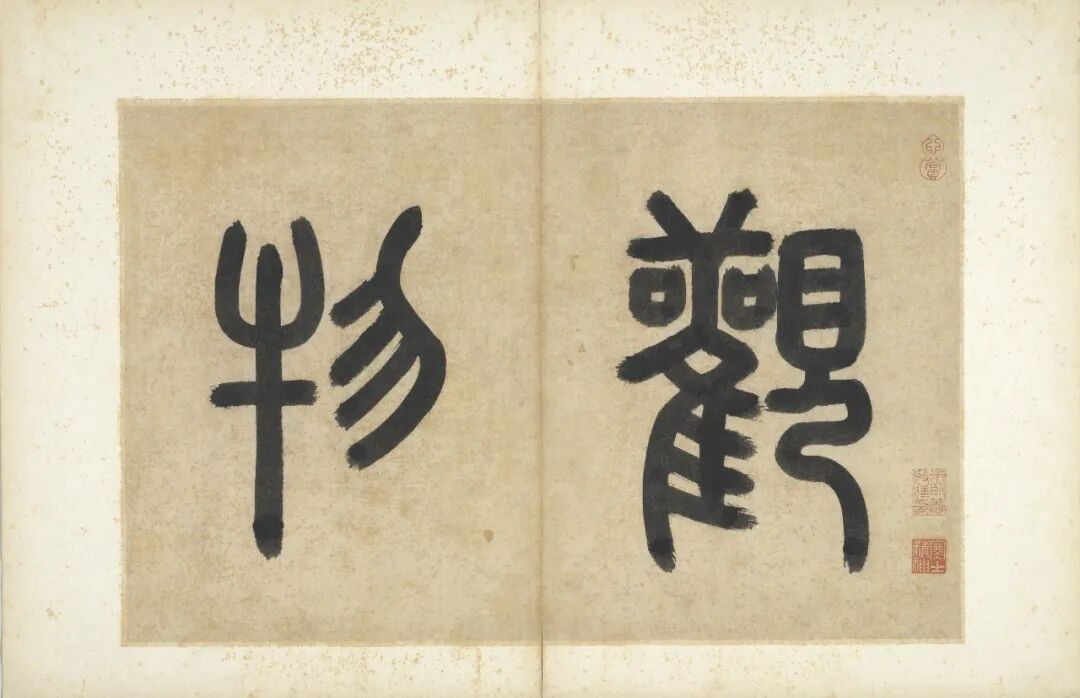
Literary Man First, Painter Second. Ming literati carried the Way through writing, voiced their aspirations through poetry, expressed their meaning through calligraphy, and regarded painting as a pursuit of leisure. In the colophon of his "Album of Sketches from Life," Shen Zhou wrote: "Amid all creatures that stir and all that put forth growth, my brush may steal a share of the workings of creation. Tomorrow, sitting alone by the small window, the spring breeze fills my face and my heart grows still. A playful brush. These leaves follow each thing's form, merely to while away the pleasures of a hermit's idle, well-fed leisure. If you seek me through painting, then I dwell beyond ink and color." By this he means to say: painting is only the surface; my true intent lies not in the picture but in the literary heart, the poetic spirit, and the character of the man — so to measure me by painterly skill is to seek the wrong person.
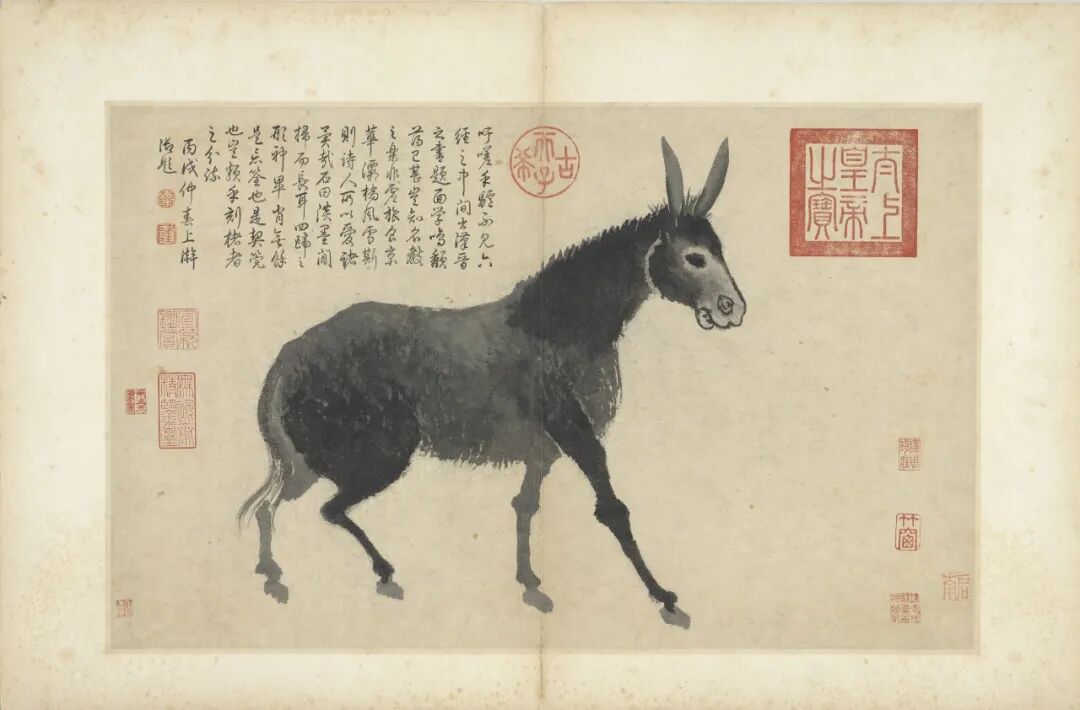
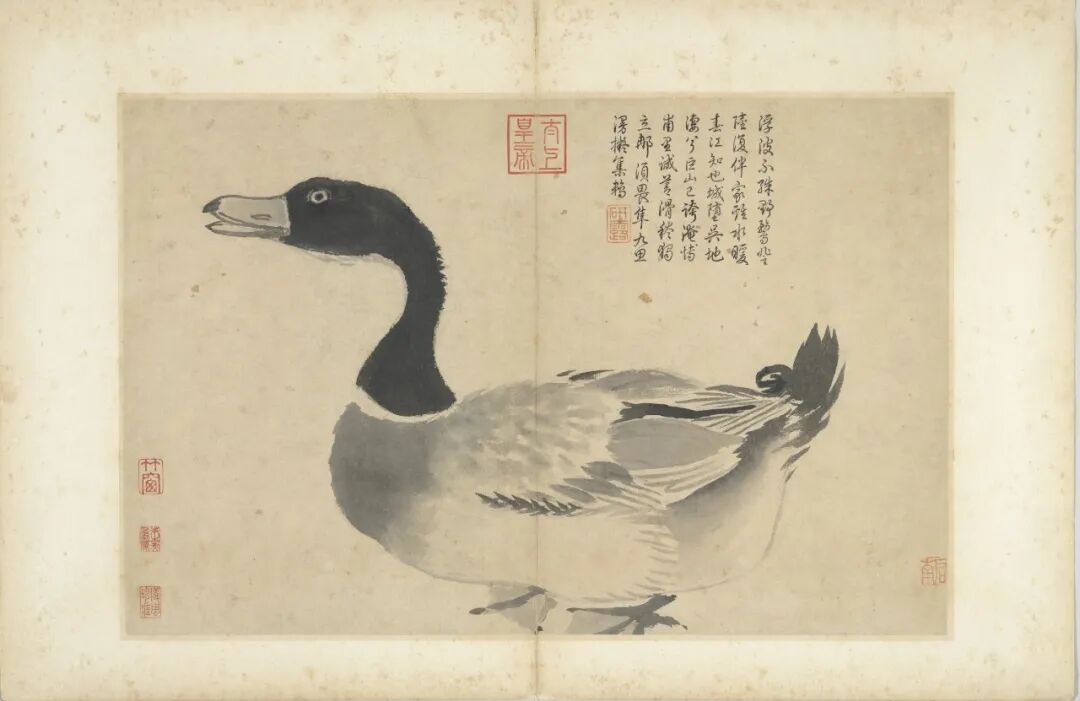
From the "Album of Sketches from Life" one can already sense the endearing awkwardness of Shen Zhou's painting, endowed with the calligraphic brushwork unique to literati painting: fluid, free, and vivid, it captures the living pulse of natural things, and paired with poems and prose it becomes a delightful little album. The author believes it would be most worthy of inclusion in elementary-school art textbooks, to heighten students' appreciation of beauty in everyday life.
"Album of Sketches from Life"
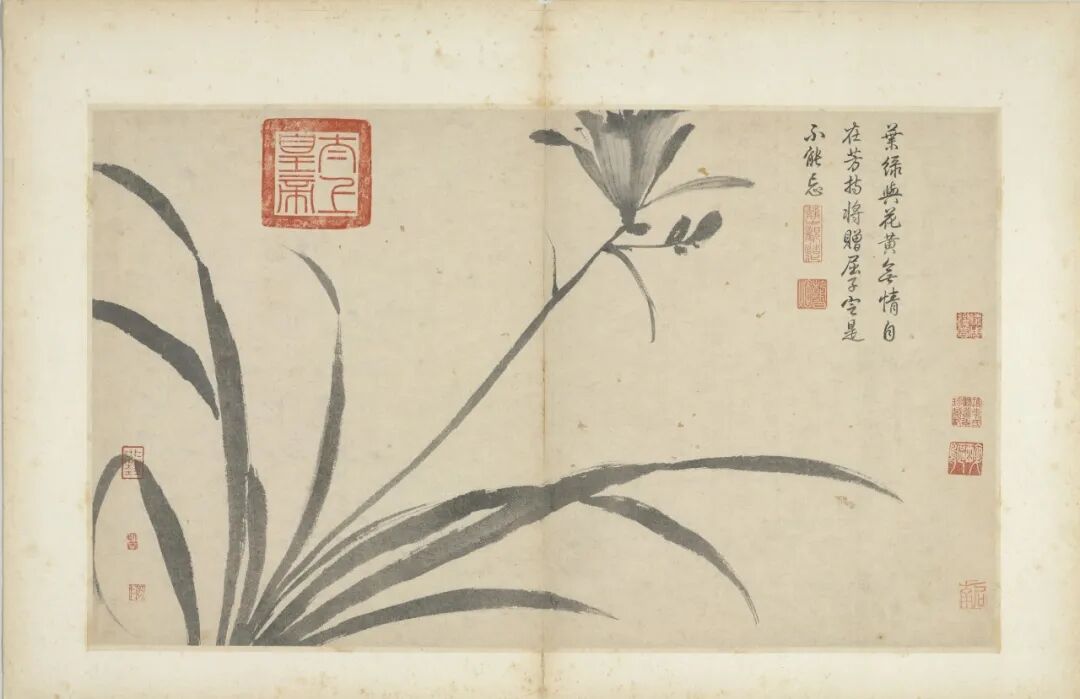
"Daylily," from the "Album of Sketches from Life"
The work above depicts the daylily, included in the "Album of Sketches from Life," employing the "boneless" (mogu) technique — a close-up of a broken-off sprig of daylily, the whole picture dotted and washed in ink, with a fitting balance of dark and light. Shen Zhou, who faithfully observed Confucian and Daoist principles, was a devoted son. The painting is paired with a poem and inscription: "My mother loved the daylily; before the hall a thousand blossoms grew. To give this meaning to another, I grind ink and dot the spring's brilliance." Borrowing the flower to voice his feelings, he expresses gratitude for his mother's love.

"Donkey," from the "Album of Sketches from Life"

"Duck," from the "Album of Sketches from Life"
The Beauty of Childlike Simplicity. Looking at Shen Zhou's paintings, one sees forms of an endearing awkwardness: blunt, forceful brushwork and thick, weighty ink. Those "blunt and vigorous" lines, like old trees with gnarled roots, are steeped in archaic charm. Dong Qichang appraised him thus: "Master Shitian copied every famous work of the worthy masters of the preceding dynasty, and always with astonishing fidelity, sometimes even surpassing them. Only that light ink of Ni Zan's, he himself admitted, was hard to learn. For the Master's seasoned brush and dense thought differ in flavor from Ni Zan's seeming lightness and sparseness. Yet this particular leaf, so untrammeled and delicate, is the truest of all — surely the most triumphant brushwork of his life." That very "surpassing them" is precisely this unique "childlike charm" — the aspect of life in its original innocence, once all ostentation has been washed away.
One Flower, One World

"Ink Chrysanthemum"
A single autumn chrysanthemum, leaning out slightly from the lower-left corner, its branches and leaves sparse and open, its blossom reserved, as though still carrying a breath of frost. The ink tones are aptly balanced, and above it is his own inscription of a seven-character quatrain: "I painted this single autumn stalk beneath the eastern fence; its chill fragrance and late color are faint as nothing at all. I give it to you that you may cherish it, and go home to it and open the wine jar."

"Releasing the Dove"
"Releasing the Dove" captures a moving instant: beside a Taihu rock, the autumn hibiscus and cockscomb blaze in bloom, while a white dove, just released from its gilded cage, spreads its wings to fly. Shen Zhou inscribed a poem: "Just like release from a gilded cage, the flying servant of old renown. In the little garden's wind and sunlight, its bright hues shine against the blossoms."

"Wax Plum Blossoms in a Vase"
An antique vase covered in "cracked-ice" crazing holds several sprigs of wax plum. The petals are dotted in the boneless manner, as though suffused with sunlight; the branches are drawn with the intent of calligraphy, powerful as the strokes of seal and ancient scripts. He inscribed a poem by Huang Tingjian: "Its body is perfumed with mountain musk; its color tinged with rose dew. Draped loose, it does not fill the lapel, yet now and then a hidden fragrance drifts." The vase is antique, its grain is of ice, the flower is of winter, and the poem is of the Song. Shen Zhou gathered these elements, threading across time and space, upon a small sheet of silk. The wax plum in the vase, having endured cold and heat, yet holds its fragrance within. This is the most ordinary sight in a scholar's study, yet within this single branch and single vase one may glimpse the boundless cosmos.

"Sketches of Radish and Bamboo Shoots"
A single radish and a single bamboo shoot lie quietly upon the paper. No background, no devices — only the vegetables themselves. This is the plainest kind of "sketching from life." Yet Shen Zhou has painted the moisture of the soil and the freshness of the morning dew, so that one can almost imagine the crisp sweetness of chewing them. He drew literati painting down from the "refinement" of lofty mountains and flowing waters, of plum, orchid, bamboo, and chrysanthemum, back to the "trueness" of everyday life.
"Vase of Chrysanthemums"
Shen Zhou's inscription reads: "Boiling tea (yuè) and viewing the chrysanthemums in the mountain chamber of the Venerable Zi Ke, playfully I painted this." This records how Shen Zhou, brewing tea and savoring it while admiring chrysanthemums in the meditation hall of a monk of profound attainment, was moved to idle brushwork on the spur of the moment. Although Shen Zhou calls this a game of brush and ink, painted on impulse, that is precisely the most common self-deprecating modesty of the Wu School literati.
Landscape Painting. Shen Zhou was also a noted collector; his "Bamboo Studio" once housed the Yuan master Huang Gongwang's "Dwelling in the Fuchun Mountains," and he produced a copy of it. The reason for the copy lay entirely in a misfortune of his own: he had once asked a friend to inscribe the painting, only to have it secretly taken by the friend's son. Though grieved to part with it, he was so kind-hearted that he never revealed the name of the one who had appropriated it, instead spending three years completing a replica. As for landscape painting, according to the authoritative art records of successive dynasties, Wang Meng — foremost of the "Four Great Masters of the Yuan" — was Shen Zhou's most essential model in his early years.
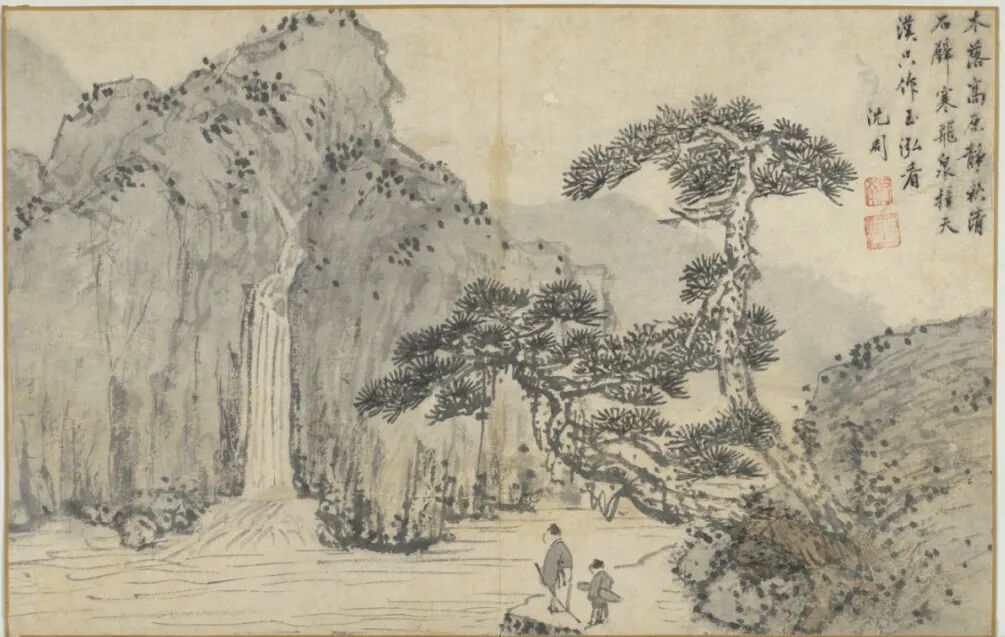
"Lofty Mount Lu"
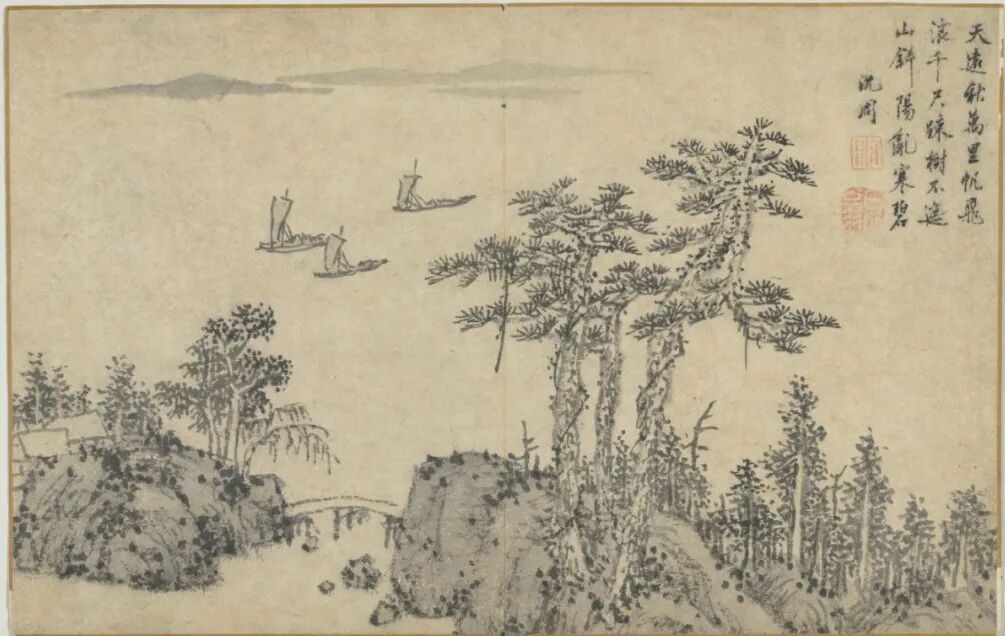
In his middle years, Shen Zhou's freehand landscapes followed chiefly the model of Huang Gongwang, which was also the pivotal transition by which he moved from meticulous brushwork to freehand expression. In his late years, he "learned from the ancients without rigidly clinging to them," completely breaking free of fine and detailed brushwork, turning fully toward expressive freedom. His compositions grew simple, distant, and airy, often flat, far-reaching small scenes; his ink work, saturated and moist with age, grew bolder; his brushwork became all the more seasoned and incisive, favoring coarse strokes, and he founded the system of literati freehand landscape painting.
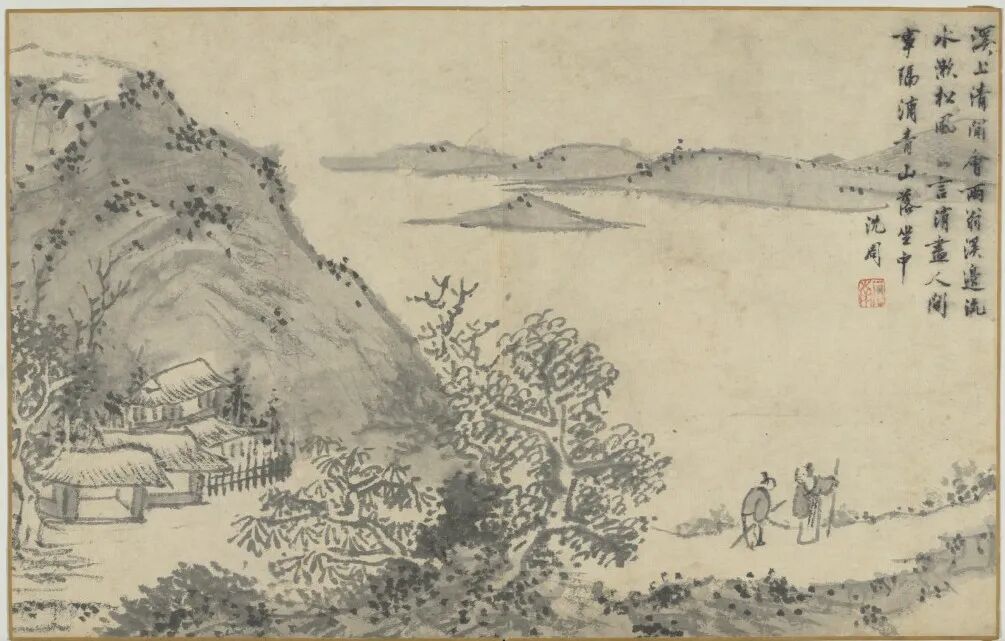
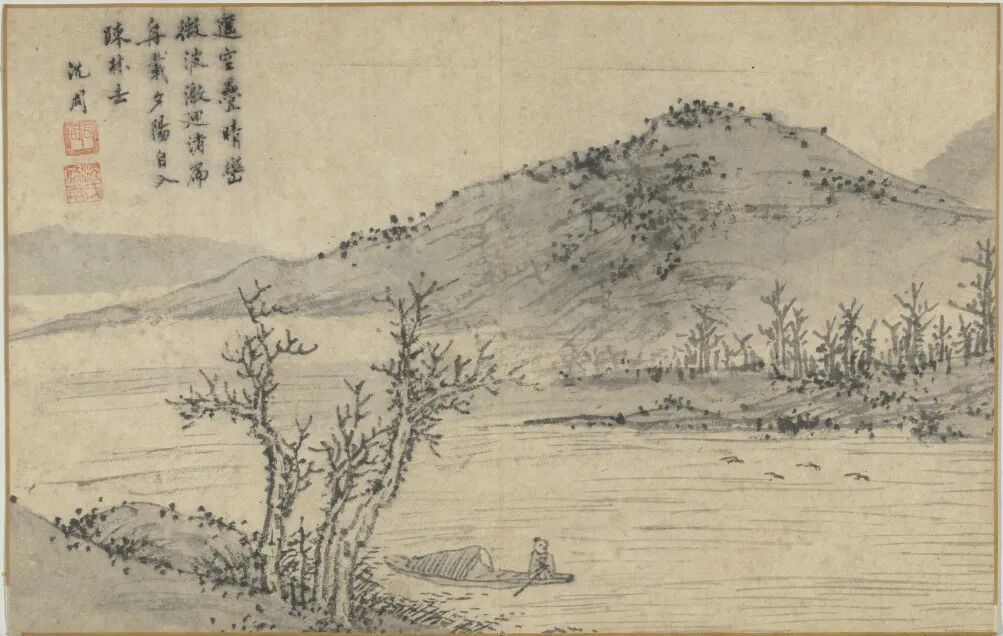
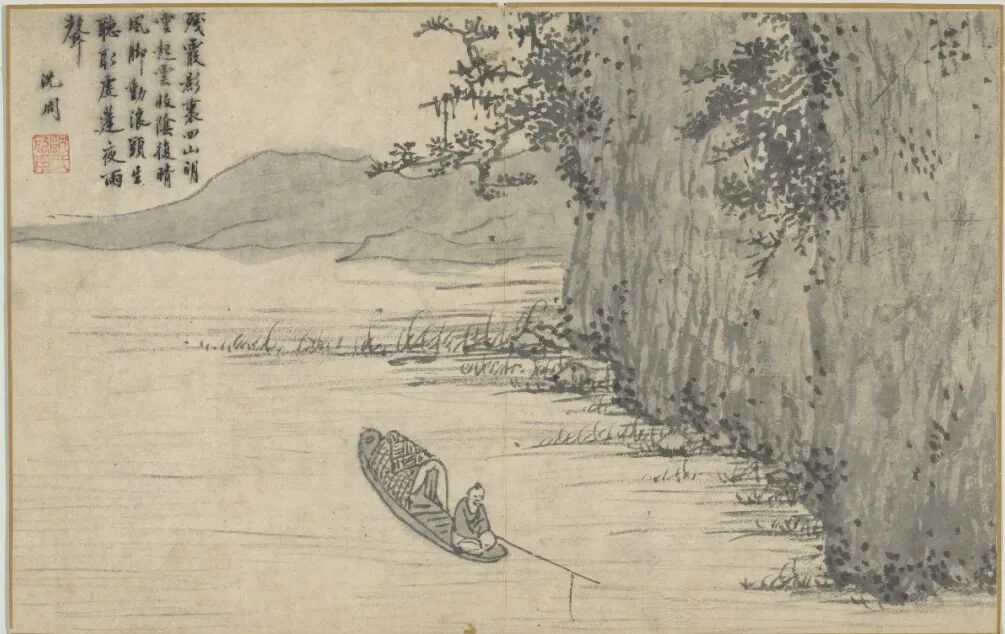
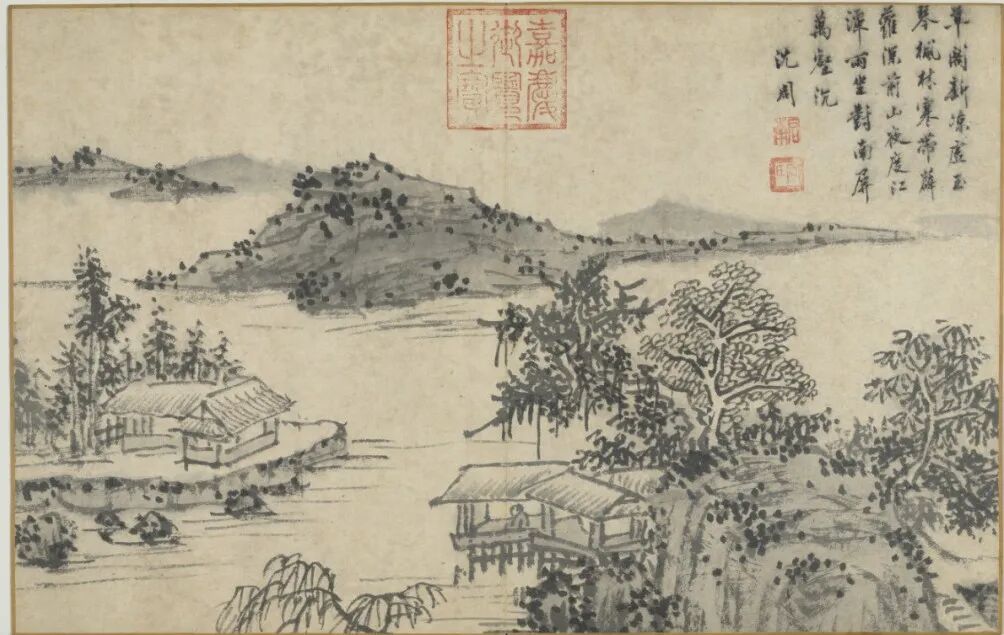
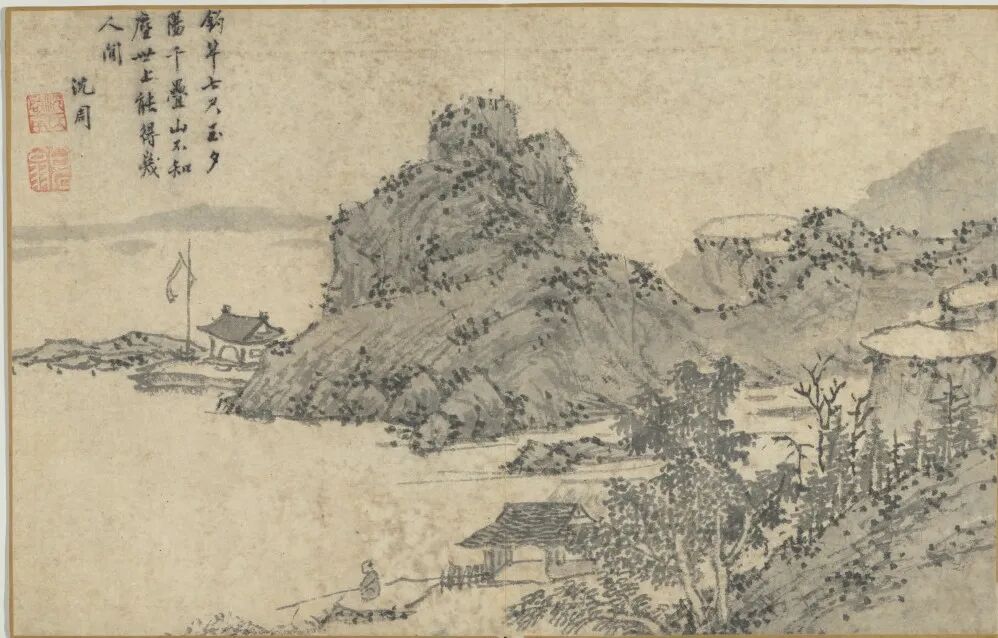
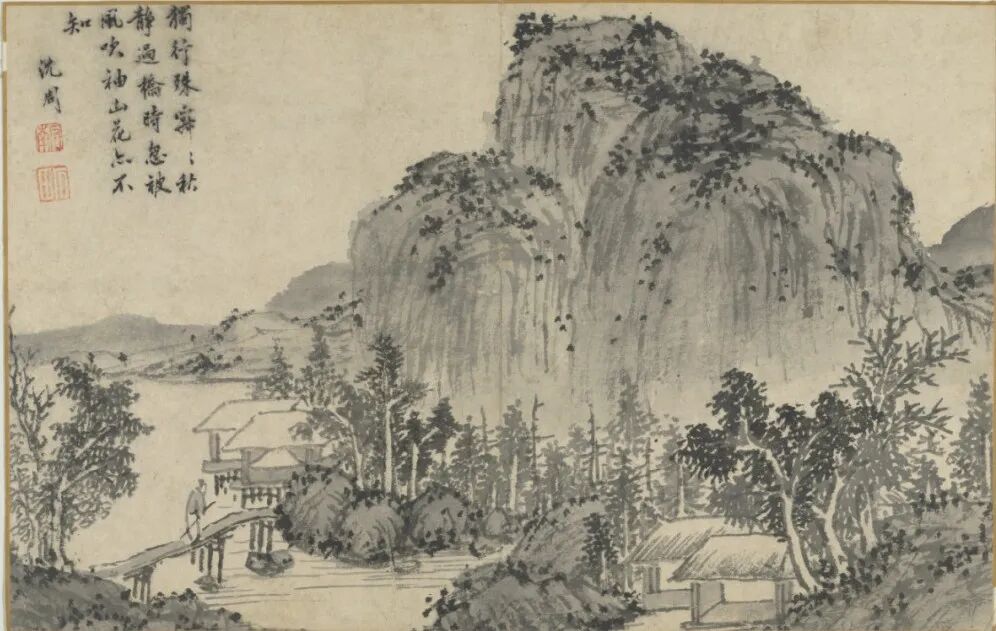
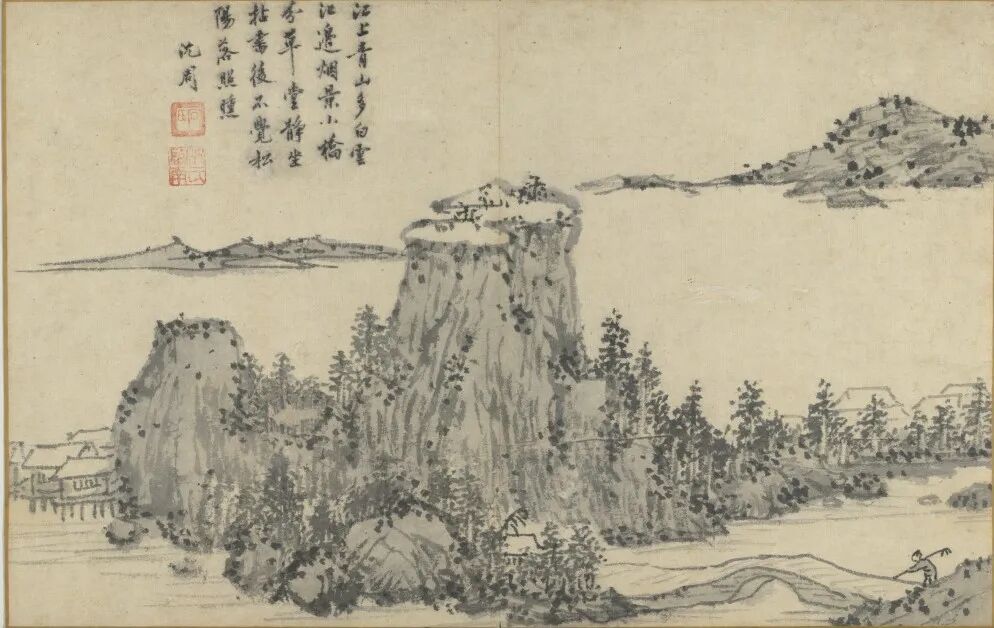
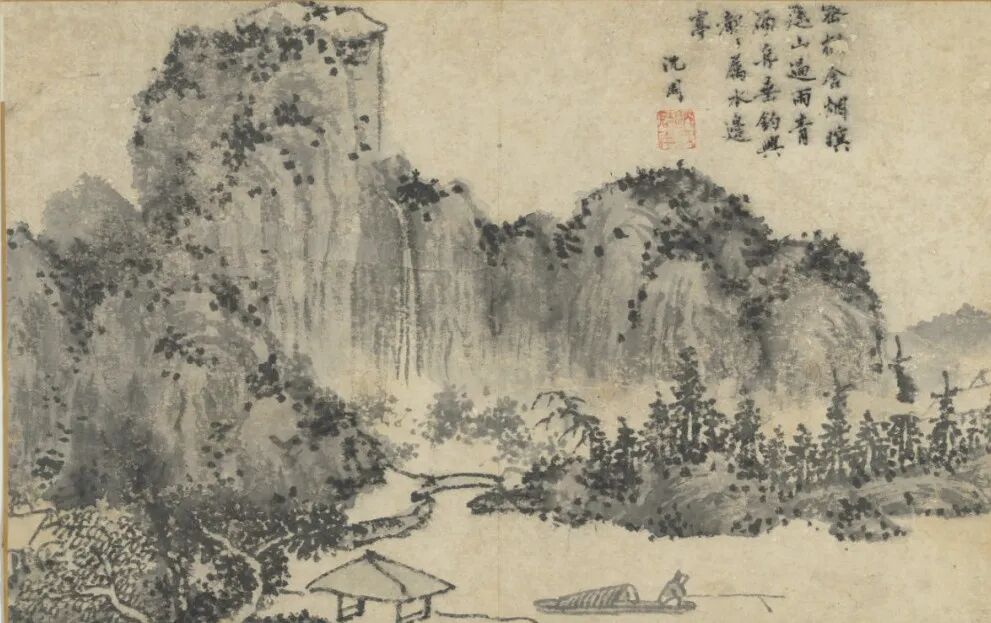
"Album of Landscape Paintings"
Artistic Legacy: The Living Wellspring of the Wu School
After Shen Zhou, Wen Zhengming inherited his sincerity and depth, and Tang Yin captured his brilliance and spirit, and together they "founded the school," carrying the Wu School forward to its fullest flowering. Of the "Four Great Masters of the Ming," three were his pupils or were deeply influenced by him. More importantly, he laid down the fundamental tenor of the Wu School — rooted in the literati, expressing one's aspirations through painting, holding fast to the unity of poetry, calligraphy, painting, and seal, and standing firm upon the character of the recluse.
© Jinlan Art and Culture Research
Images courtesy of the National Palace Museum, Taipei
March 22, 2026
3rd day of the 2nd lunar month, Year of the Horse (Bingwu)
#TraditionalFlowerAndBird #InkPainting #ChineseTraditionalCulture #Culture #Art #ShenZhou #FreehandBrushwork #WuSchool #FourGreatMastersOfTheMing #Landscape
Author
