
- 0
- 1,505 word
Traditional Flower-and-Bird Appreciation Column
❖ ❖ ❖
The late-life xieyi (freehand) ink-wash paintings of Bada Shanren are of exceptionally high artistic value, and his artistic style profoundly influenced modern and contemporary Chinese painters—many of them masters, among them Xugu, Huang Binhong, Zhang Daqian, Qi Baishi, Huang Shen, and Zheng Xie (Zheng Banqiao). Bada Shanren’s freehand brushwork is extremely pared down: he writes the form through the spirit and creates the scene through the idea. In terms of artistic expression, he supplied inspiration to the Chinese ink-wash freehand tradition; from the angle of artistic cultivation, he also nourished his own soul through painting and calligraphy.
In his later years Bada Shanren lived mainly in his home province of Jiangxi, and it was natural that his works should circulate in that region. But how did his art spread across the length and breadth of the country, moving so many people? What was his circle of friends in his old age? In fact, apart from Jiangxi, there was another pivotal centre of dissemination—Yangzhou, the cultural and commercial centre of the time—and this phenomenon is rooted in Bada Shanren’s dealings with the Hui-merchant community. Because the Hui merchants valued culture and the arts, had an intrinsic demand for artworks, and occupied an important position in Yangzhou, they became a major force in spreading and promoting Bada Shanren’s art. The celebrated Anwan Album (Album for the Late Years) was itself a work Bada Shanren gave to a Hui merchant, and even his painting disciples Huiyan and Peilan were descendants of Hui merchants.
Among those who sojourned in Jiangxi, the Hui merchants Wu Jingqiu and Fang Lucun became Bada Shanren’s most important agents. Bada Shanren wrote a poem:
“The rain-filled boat finds no lodging, the clouds moving pavilion rests upon the lotus. At this moment, gazing south to the farthest horizon, already it is a scene of the mountains of Anhui.”
He sighed that his works of art, riding a small boat, sailed out of the Xijiang River, passed through the waters of Huizhou and Jinling, and set out for the wider world.
Lucun, whose given name was Fang Shiguan, was of a gentle and kind disposition, fond of helping others; he was a celebrated Hui-merchant literatus.
In two letters written to Lucun one can see Bada Shanren’s gratitude for and dependence upon his friend.
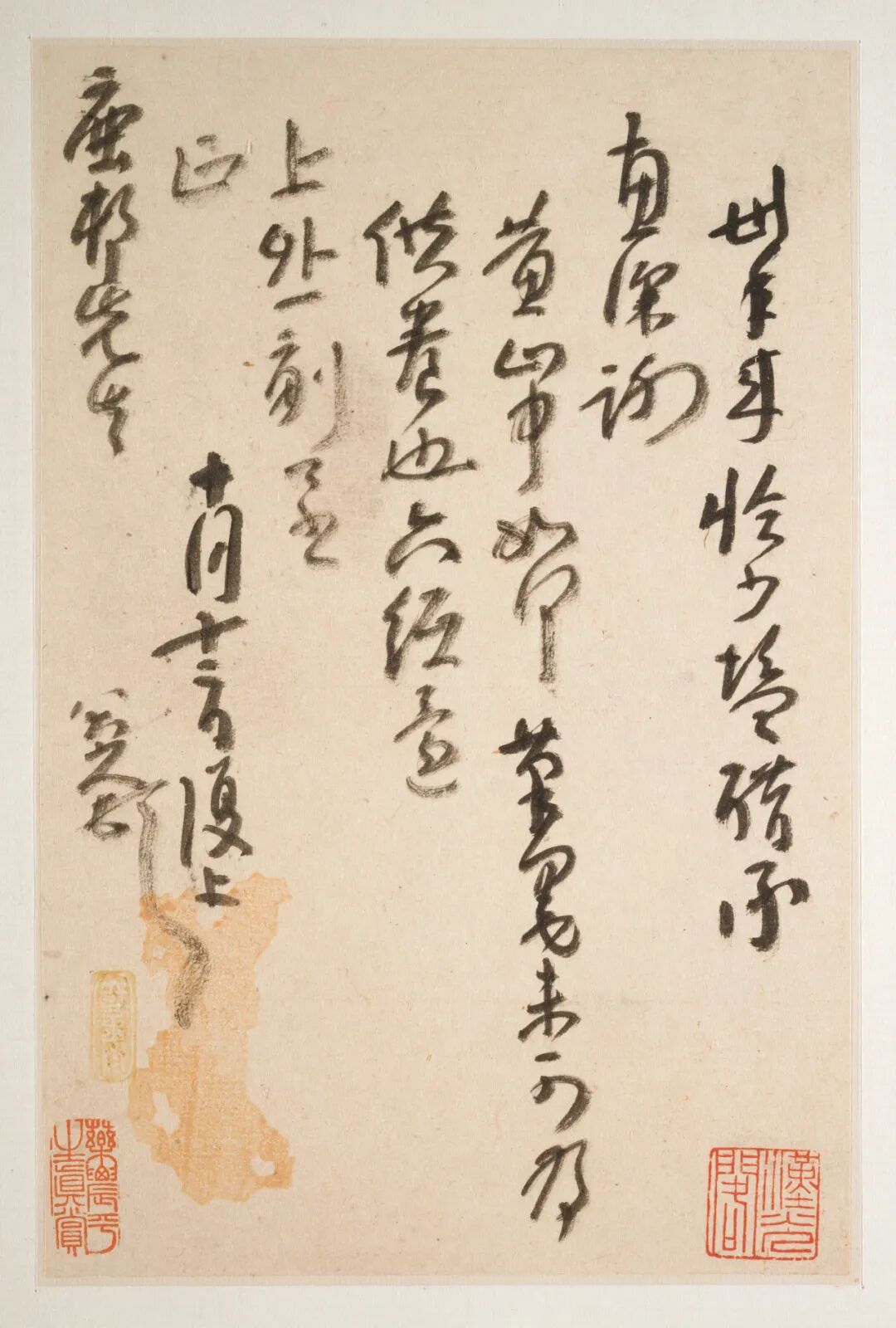
“For thirty years we have been short of salt and vinegar; I am deeply grateful for your kindness. How are things in the Yellow Mountains? Brush and ink cannot serve as a means of livelihood. I return the six sheets, and submit this additional one for your correction. On the twelfth day of the tenth month, I write again to Master Lucun; Bada Shanren bows.”
From the letter one can see that Bada Shanren made a hard living from painting and lived in great poverty, yet Lucun, as his closest friend, was always helping him in life.
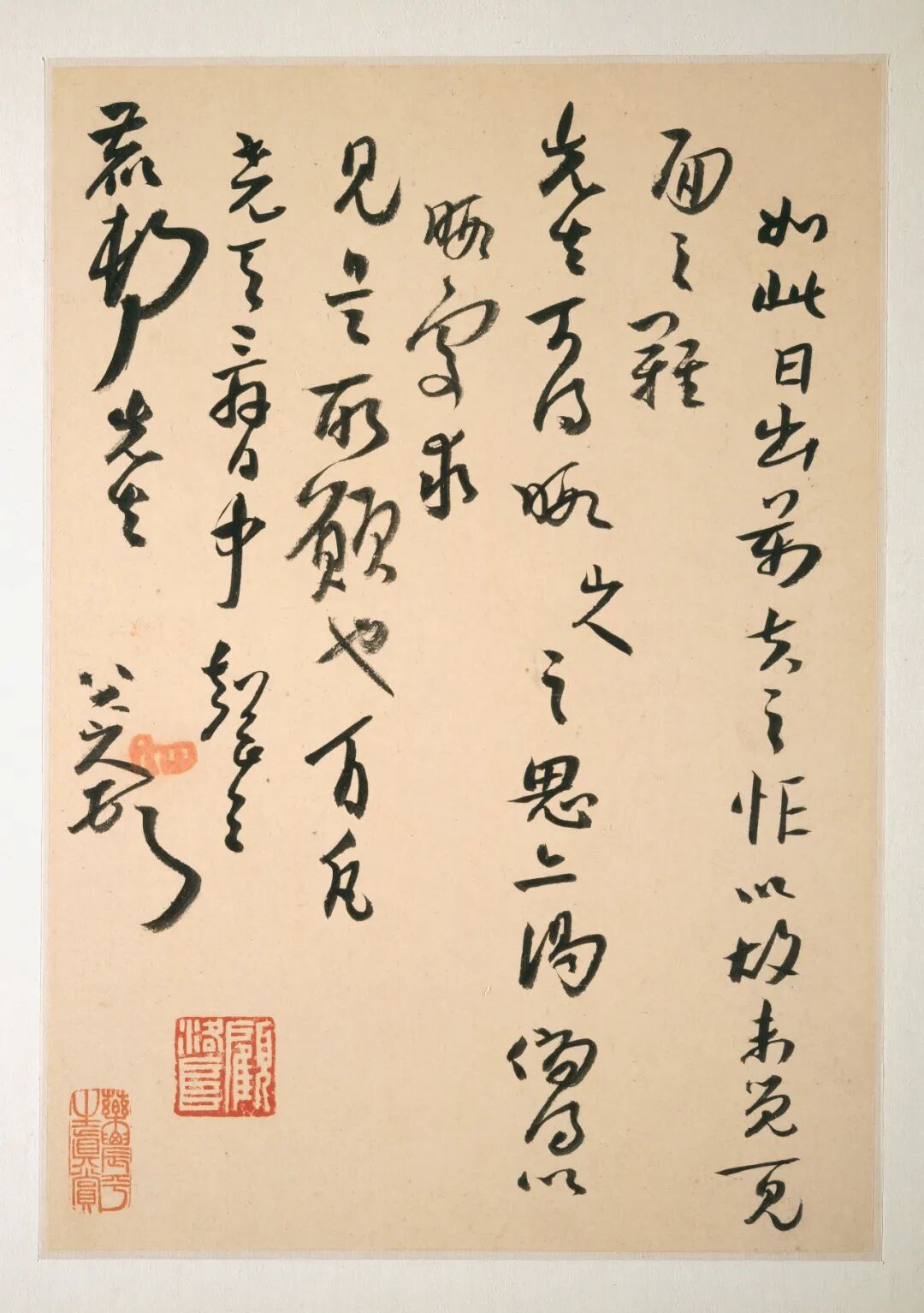
“Busy as ten thousand men in a single day, I have not realized how hard it is to arrange a meeting. Does my master have any leisure? The mountain-man’s longing is also keen. If you could spare a moment to meet, that is what I desire. All these myriad matters I pour out in the age of Yao and Shun. Master Lucun, Bada Shanren bows.”
This letter expresses Bada Shanren’s longing for Master Lucun and his wish to meet him at leisure.
Another important Hui-merchant friend of Bada Shanren was Wu Jingqiu, who, like Lucun, excelled in calligraphy and was especially gifted in poetry, making his living through trade; moreover, Jingqiu had very many friends in Yangzhou. Though Bada Shanren and Shitao had never met face to face, they exchanged correspondence and paintings and calligraphy, and Jingqiu was the bridge between them. In his later years Bada Shanren took part in the activities of the Donghu Painting-and-Calligraphy Society and poetry society, and Wu Jingqiu was also an active figure and an important organizer there.
With the assistance of his Hui-merchant friends, Bada Shanren’s paintings and calligraphy spread to Jinling, Yangzhou, and elsewhere. Thereafter many people came in admiration to seek his paintings and to associate with him through poetry and art. Among them was a patron who gave Bada Shanren no small help in his later years and was also a close friend of Shitao—Cheng Jun, a venerable Hui merchant and art collector.
By the 1690s Bada Shanren’s standing in the art circles of Yangzhou and elsewhere was extremely high; he was almost the painter-calligrapher most revered by all the Hui merchants. A Hui merchant named Huang Yanlü, upon obtaining a work by Bada Shanren, exclaimed with delight:
“Bada’s ink is wonderfully subtle, unmatched in ancient and modern times; I have sought it for a long time, yet have had no introduction.”
Collecting Bada Shanren’s works had almost become a vogue.
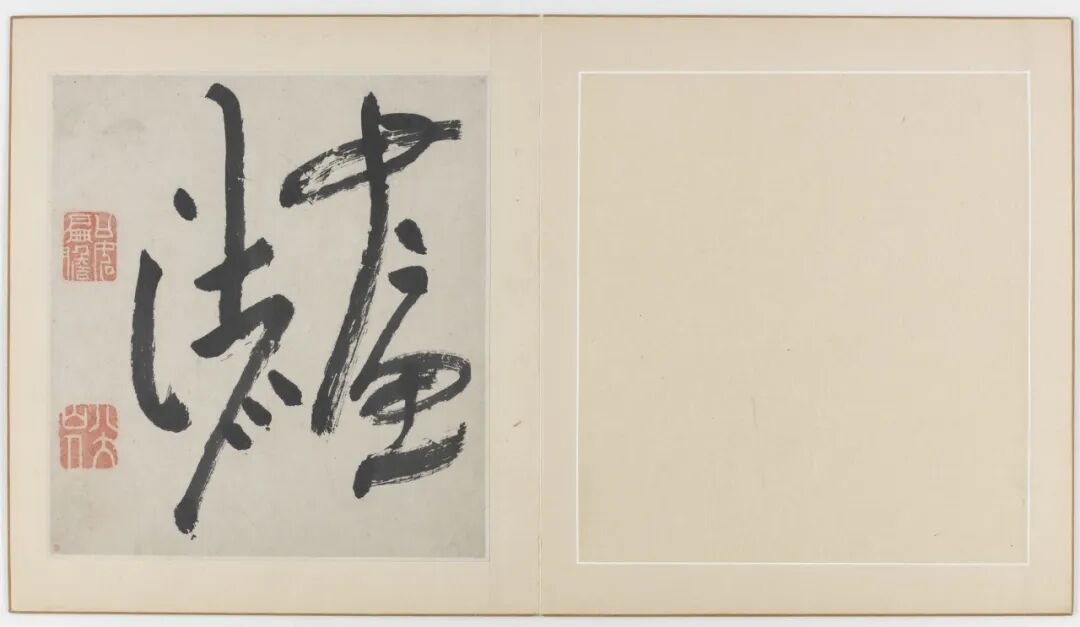
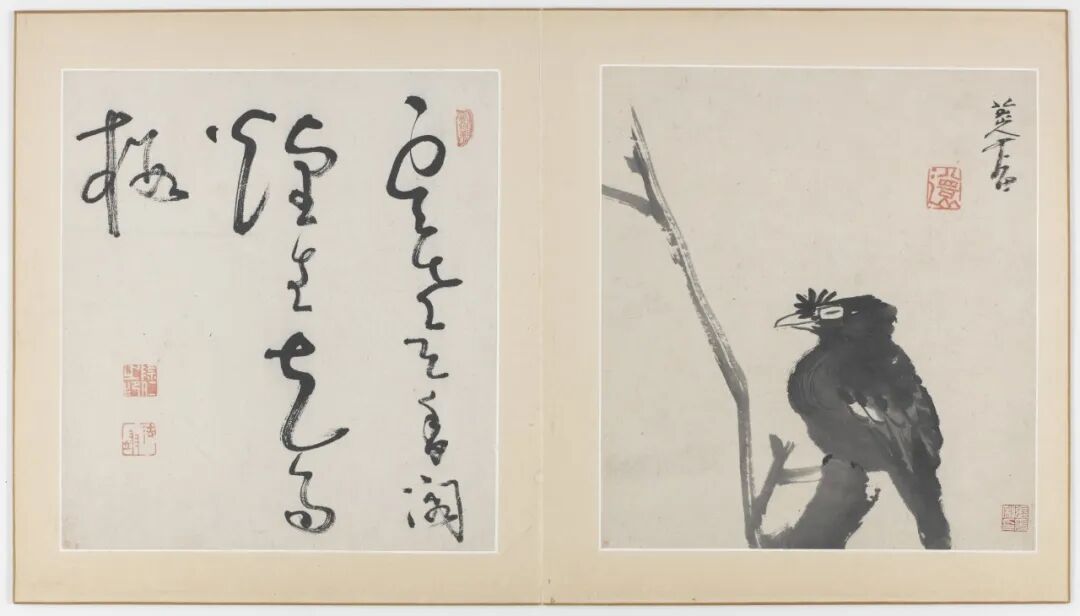
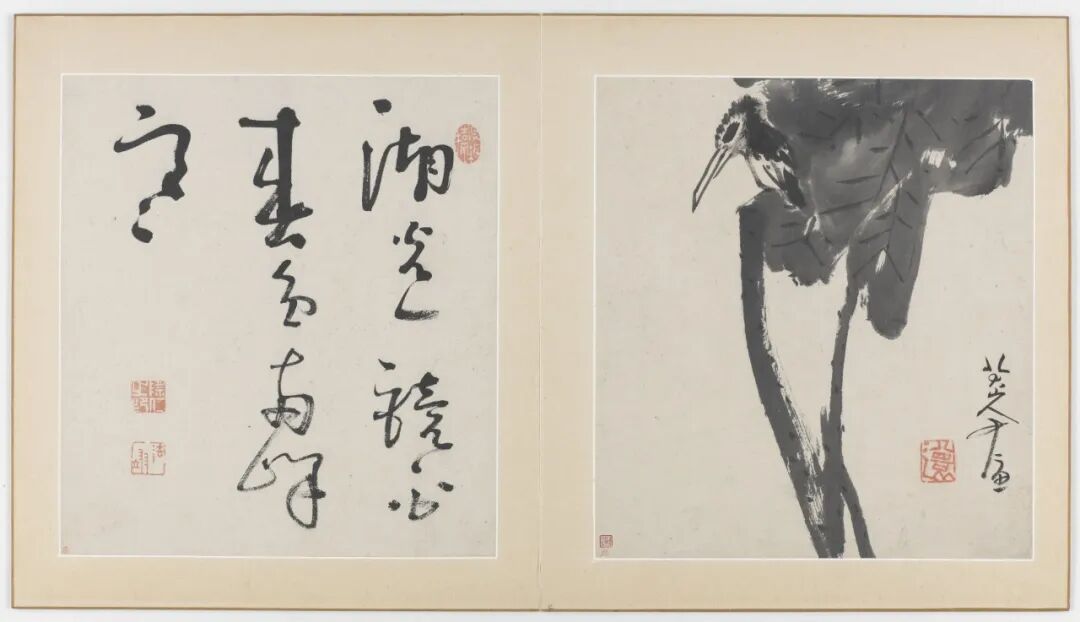
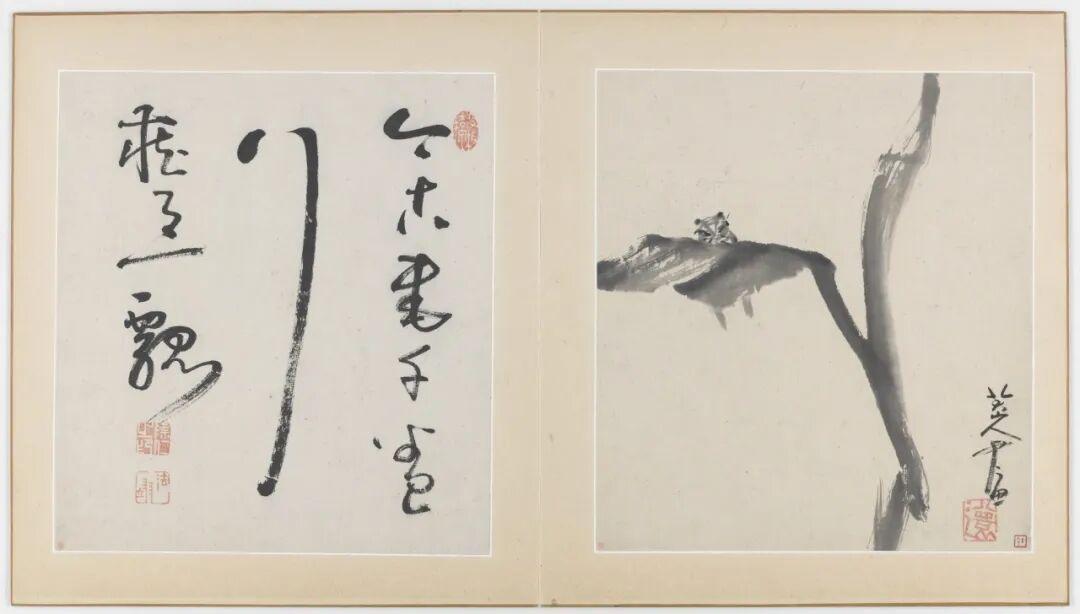
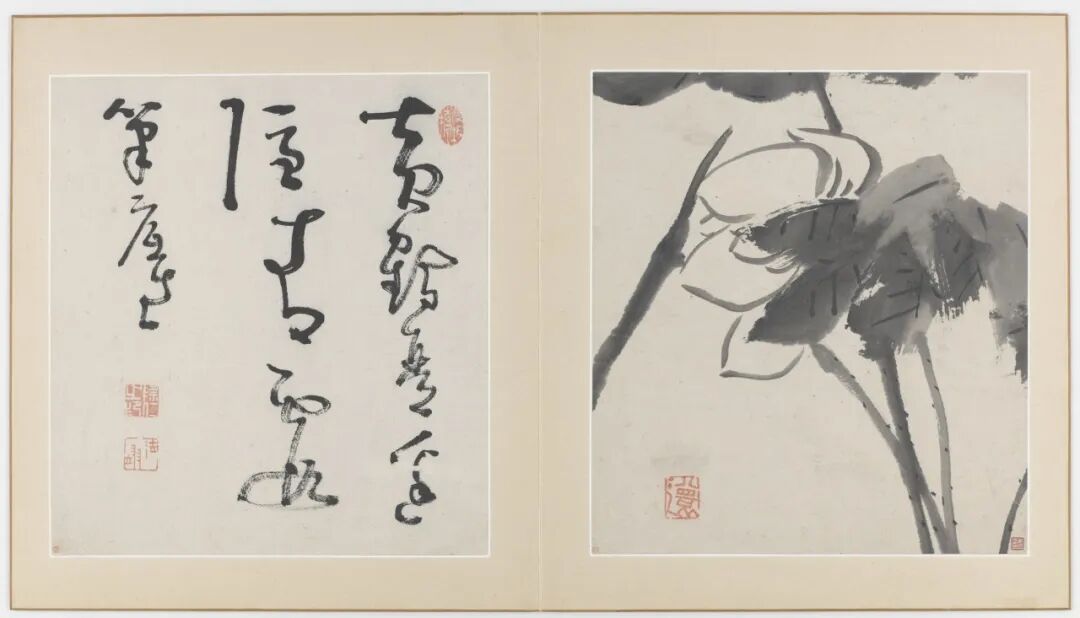
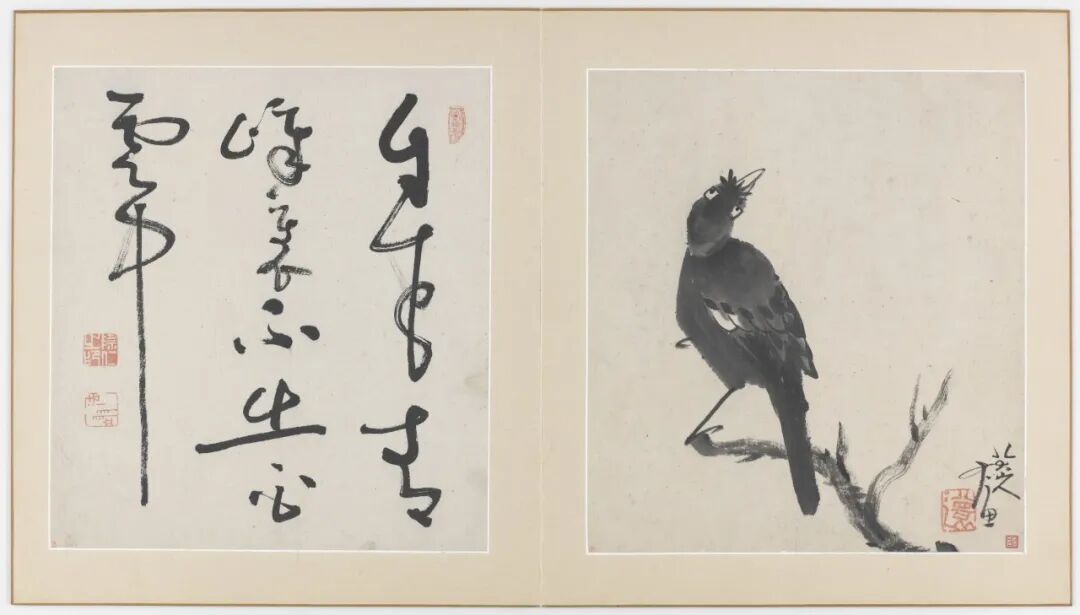
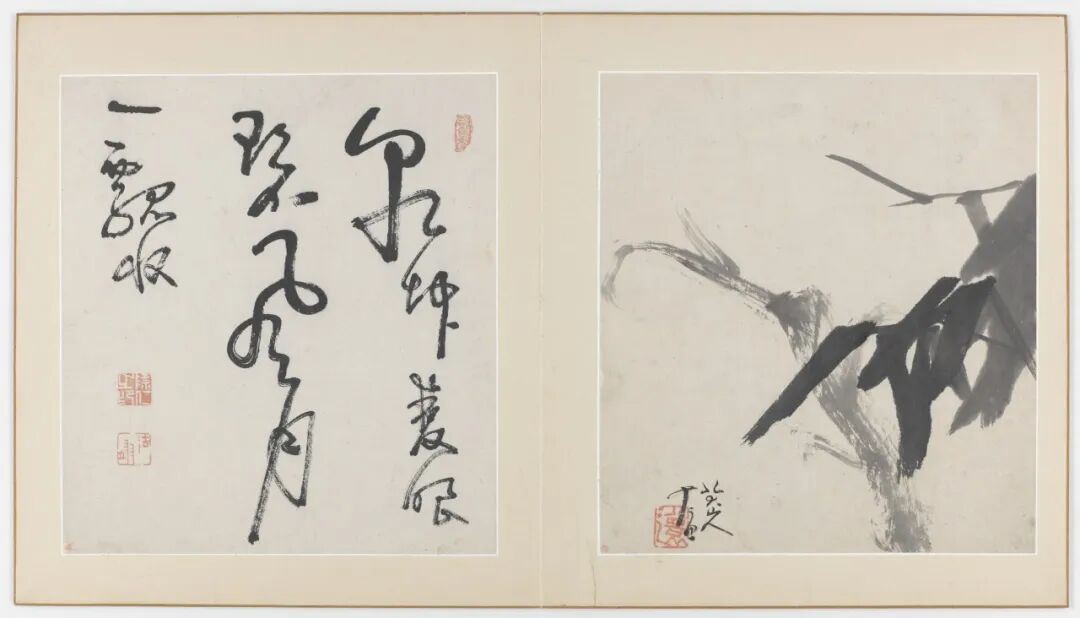
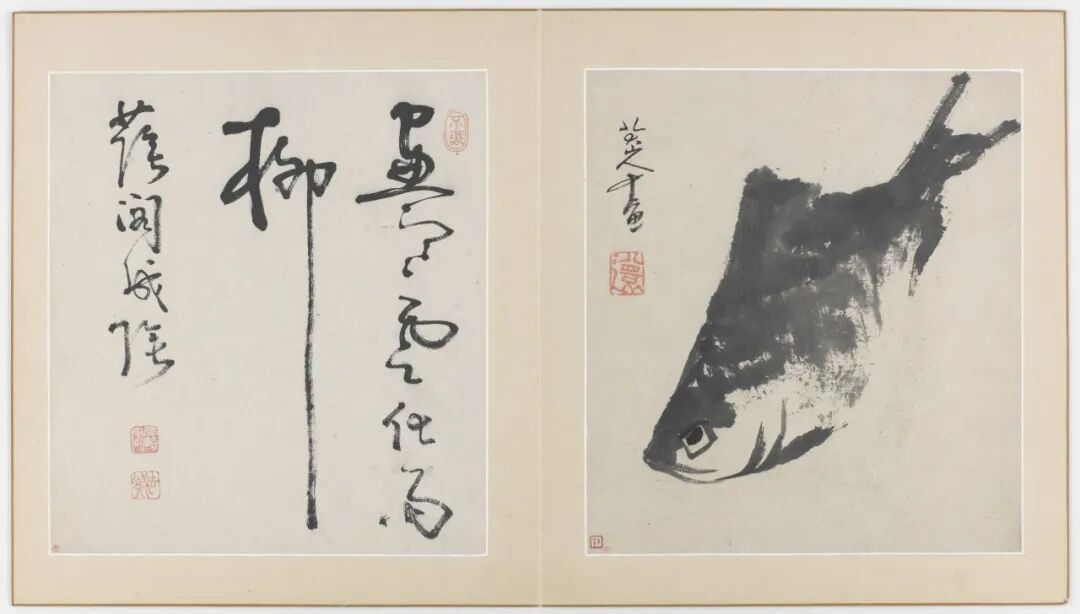
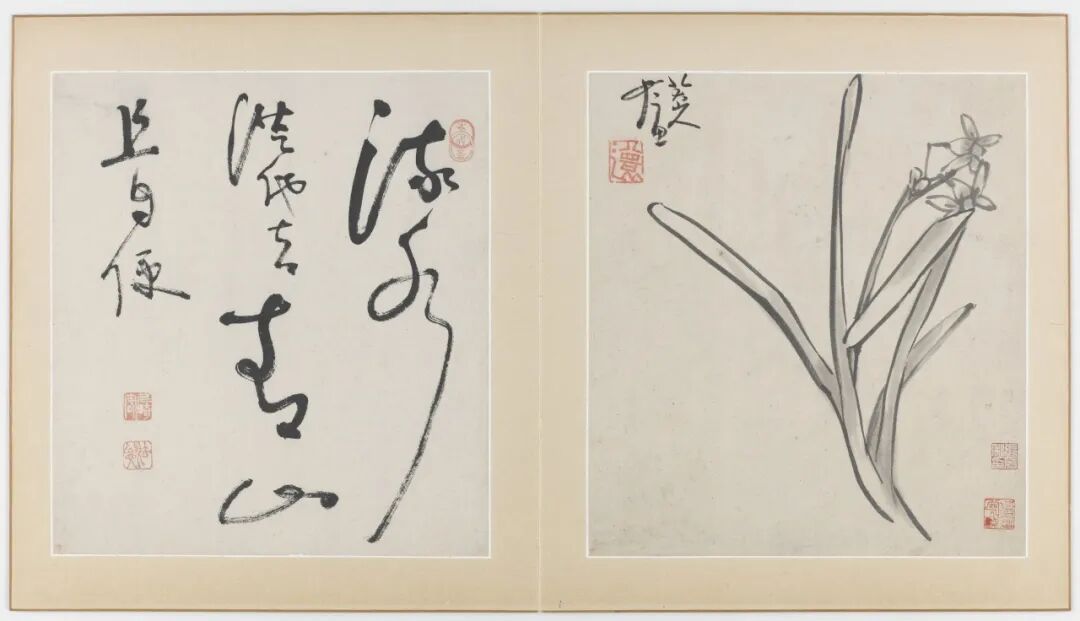
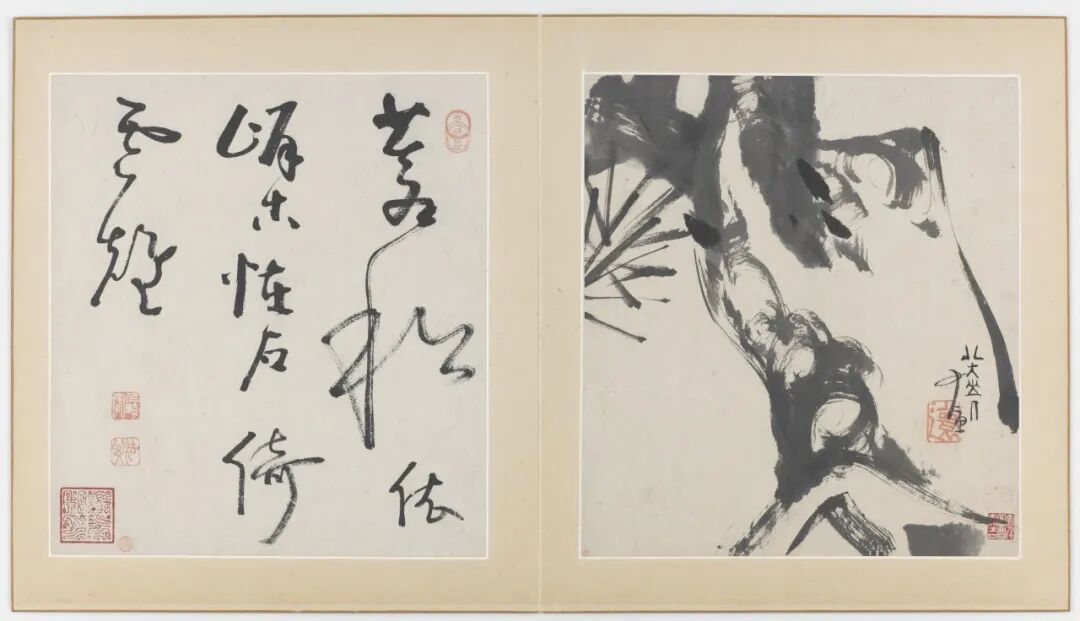
Flower, Bird, Insect and Fish, late work by Bada Shanren
Bada Shanren’s artistic achievement lies not only in painting; his calligraphy also reached a supreme level in his later years. His running script is spare, clear, and luminous, naturally heaven-sent; his wild cursive is serene yet unbridled, of great skill that seems artless. Wang Fangyu, the leading authority on Bada Shanren both at home and abroad, remarked:
“The handscroll Drunken Old Man Reciting the Ode (Xing Shu Zuiweng Yin Juan), done at the age of eighty, has characters as large as coins, combining running and regular script; the brushwork is rounded and smooth, intricate yet ordered, with a reined-in inner brilliance, plain and guileless, a veritable crowning work—what is called a return to evenness and balance, when both the man and his calligraphy are fully matured.”
Bada Shanren also treasured this work that Wang Fangyu mentioned, affixing no fewer than ten seals: “Zhen Shang” (seen twice), “Lü Wu Ren Wu,” “Lang De Ming Er,” “Shi De,” “Xia Xia Pian,” “Bada Shanren,” “He Yuan,” the clog-shaped “Bada Shanren,” “Shi De,” and others.
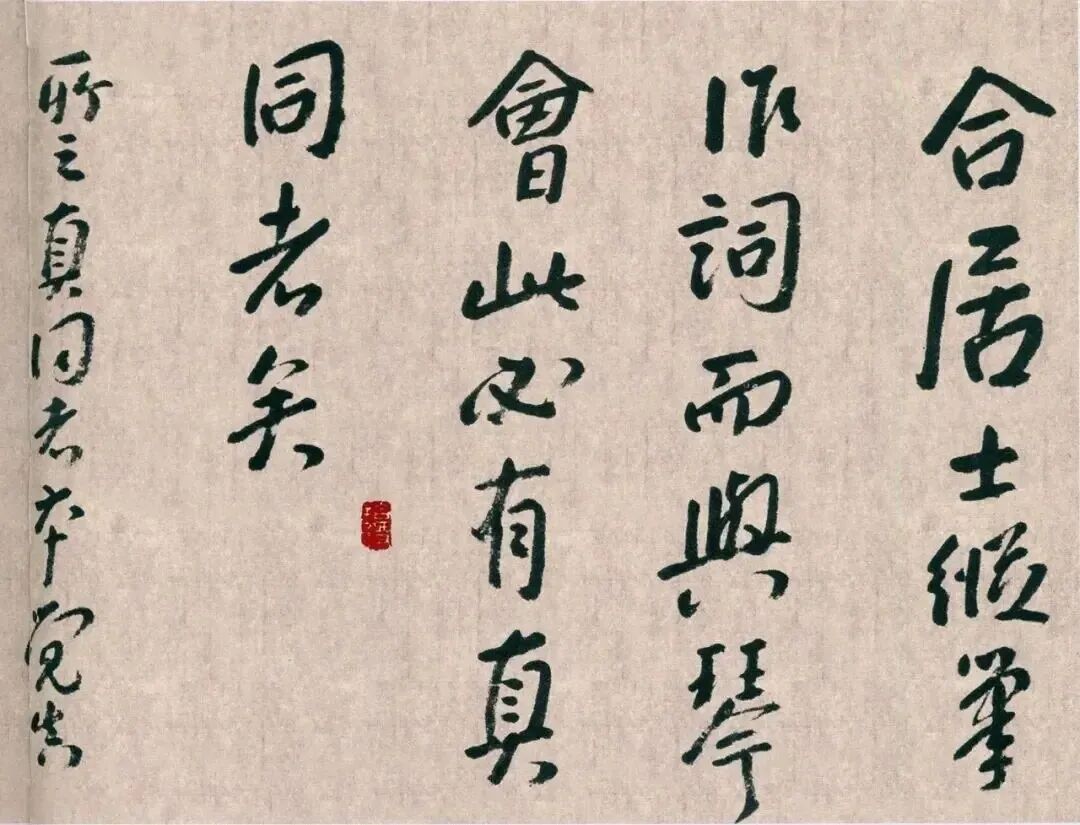
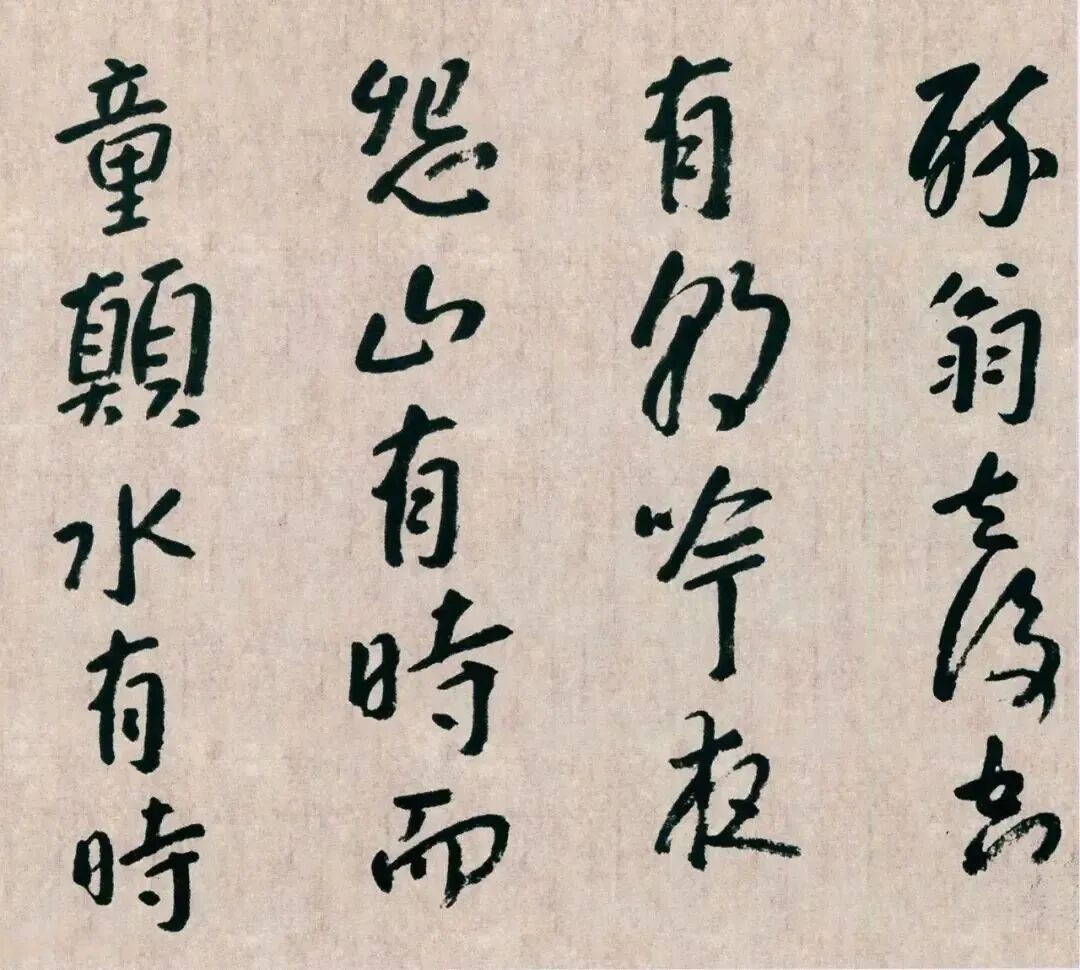
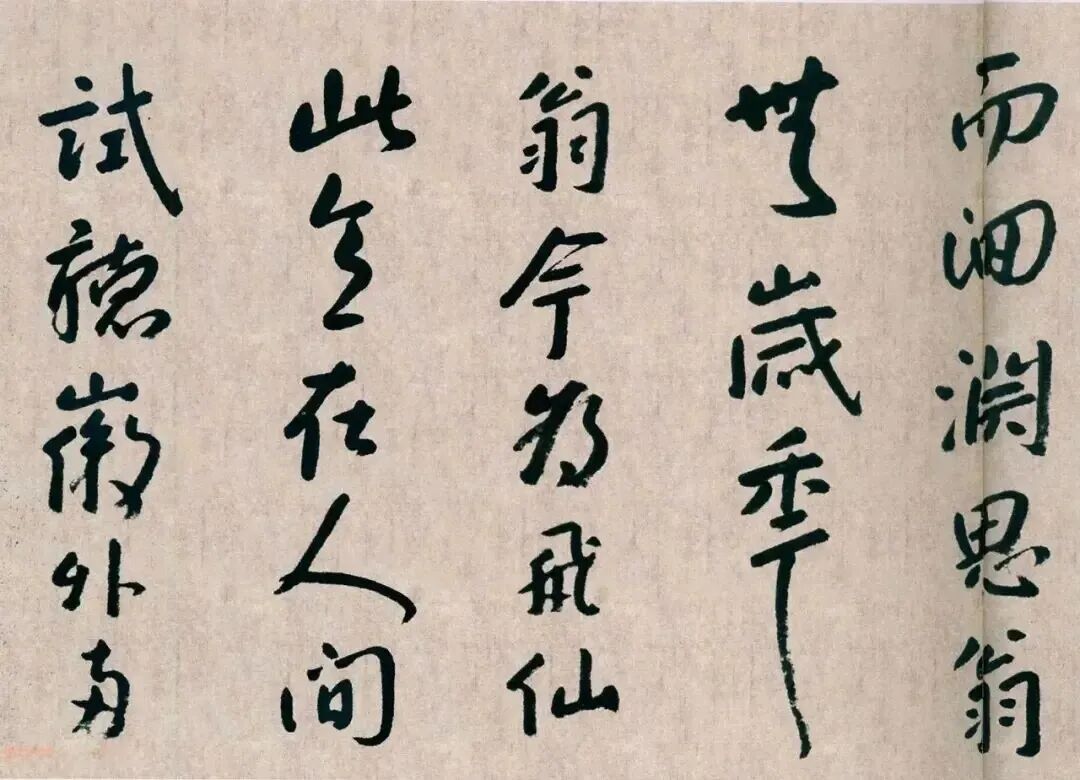
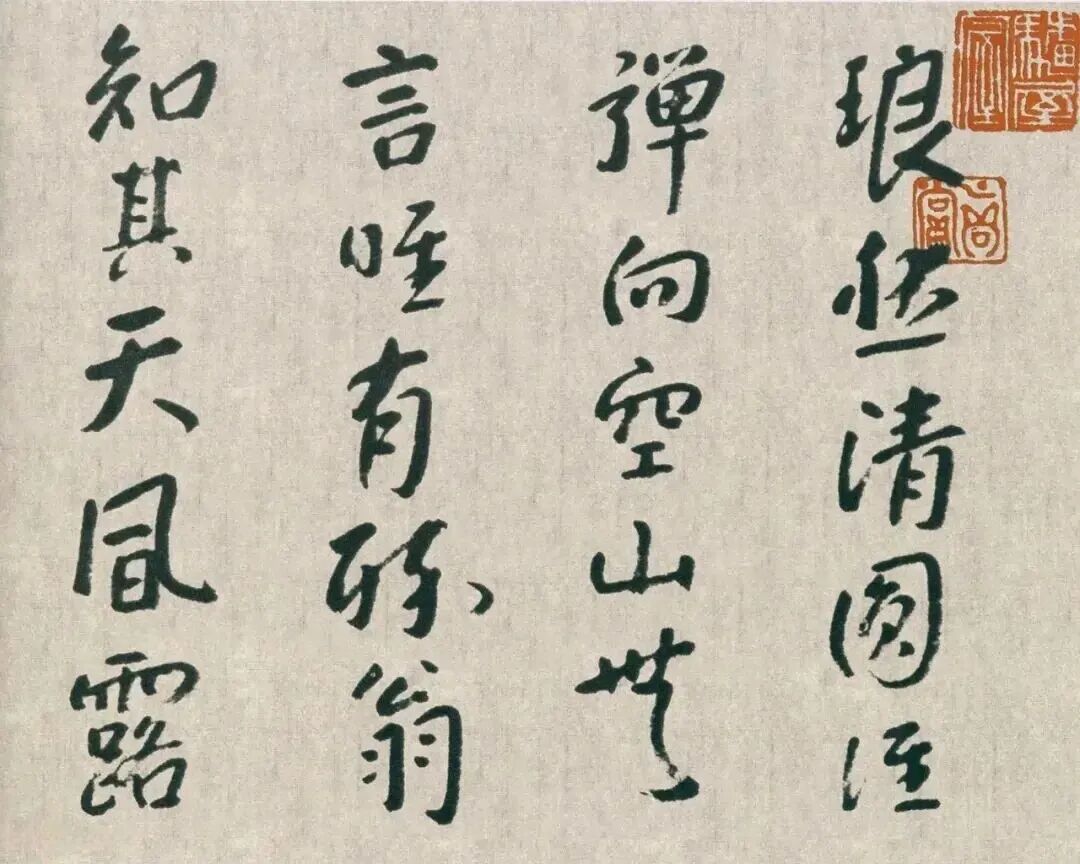
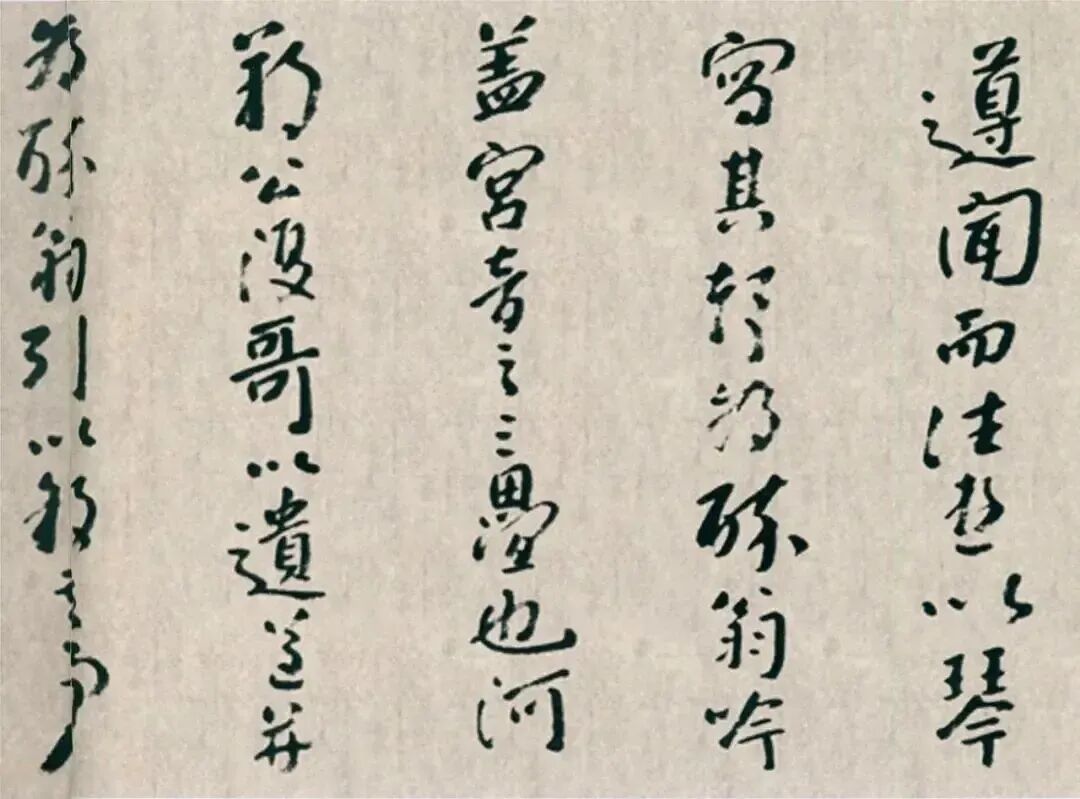
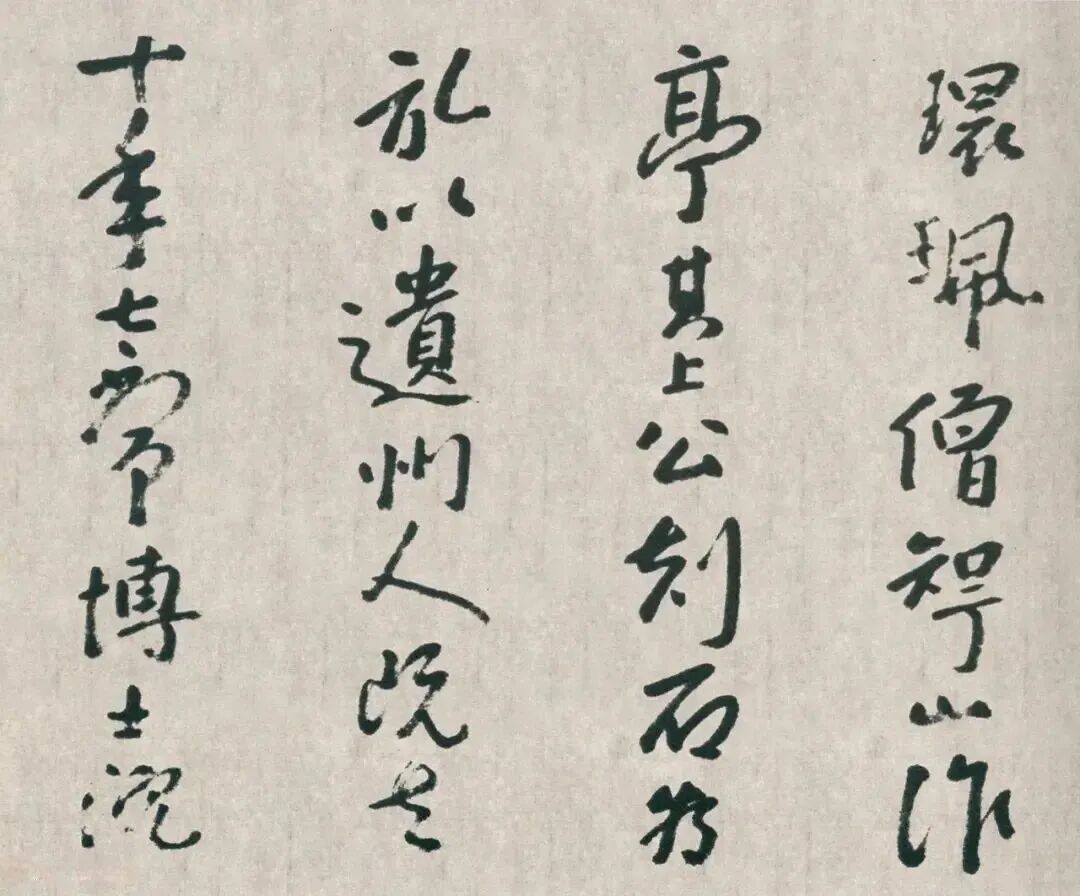
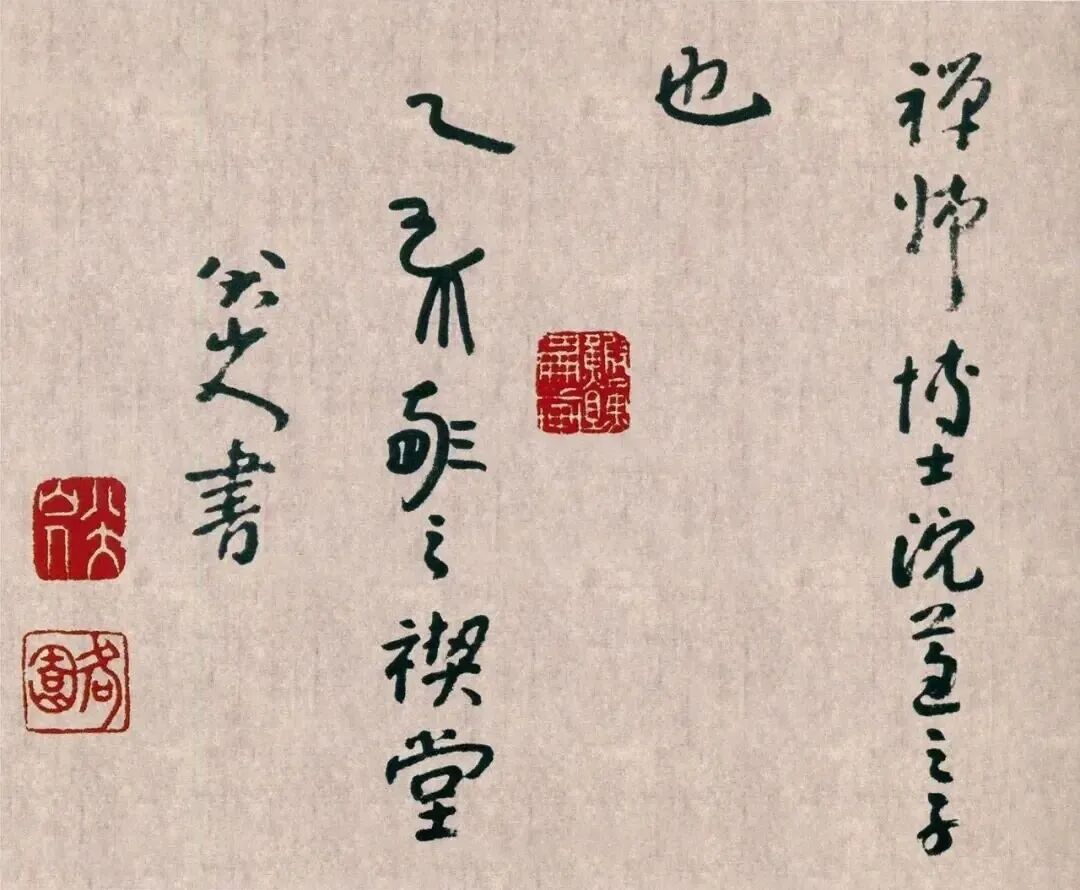
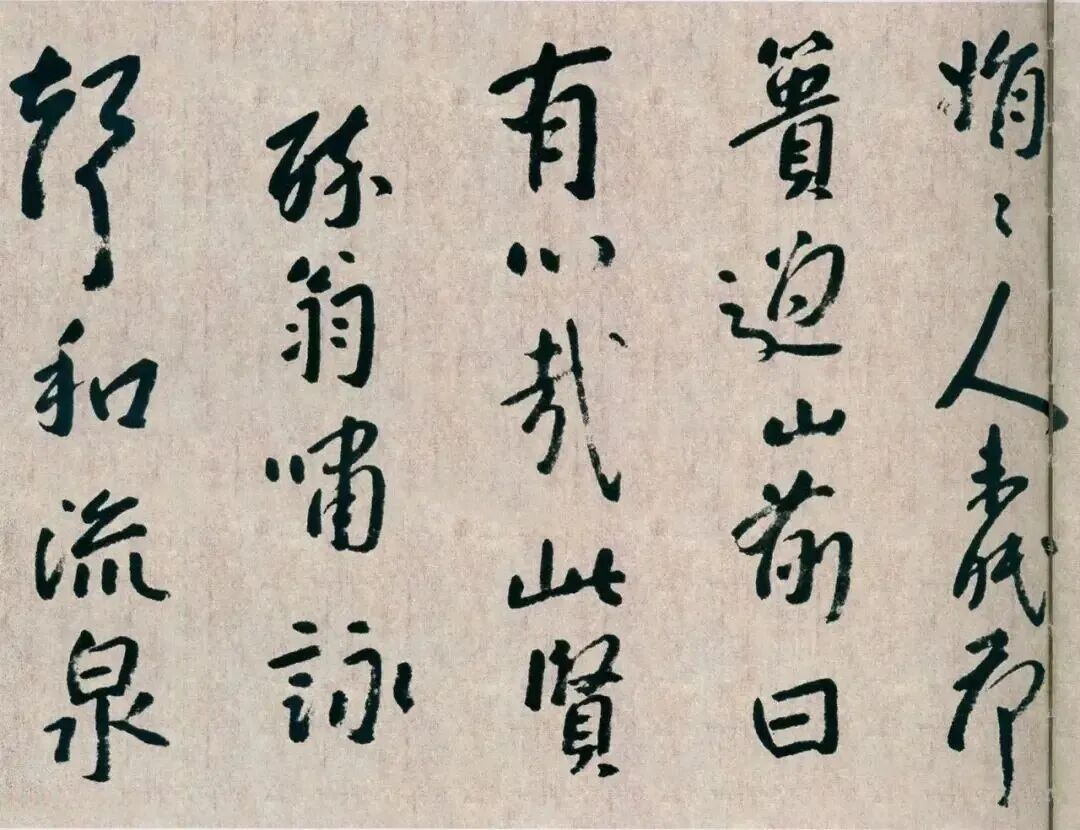
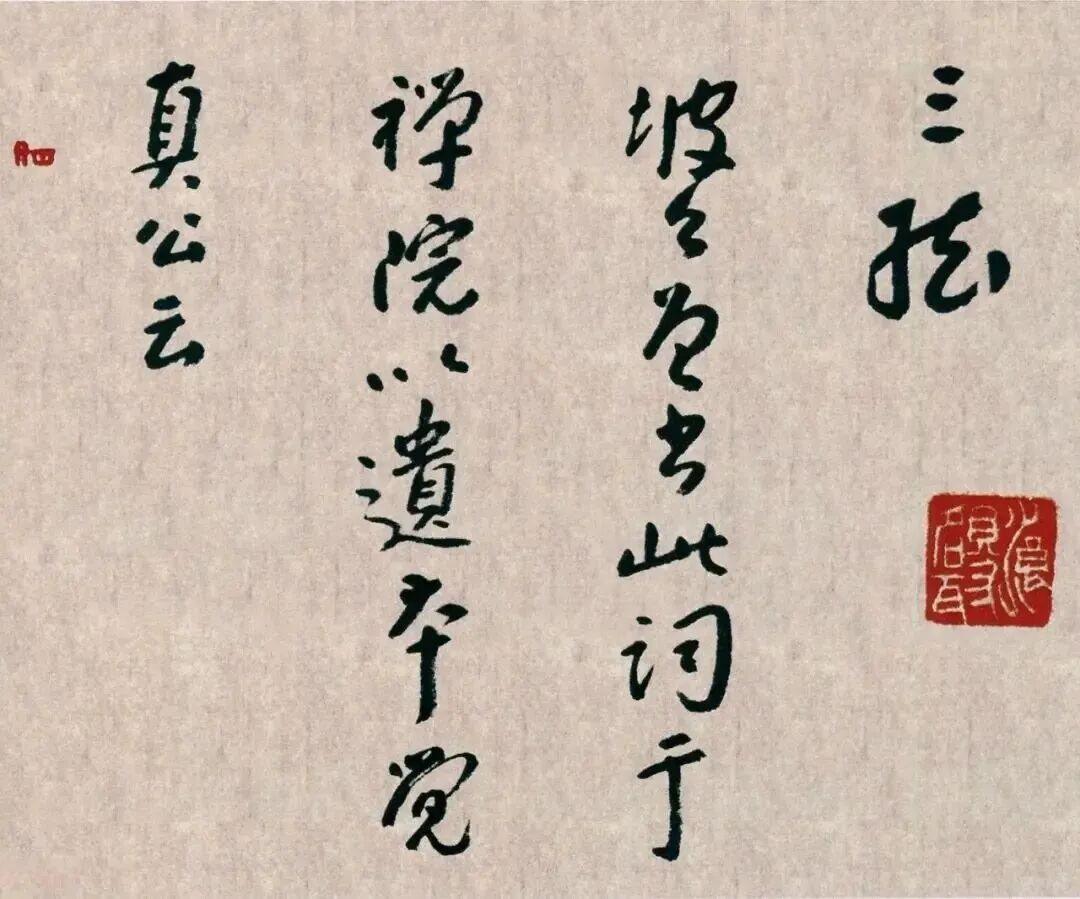
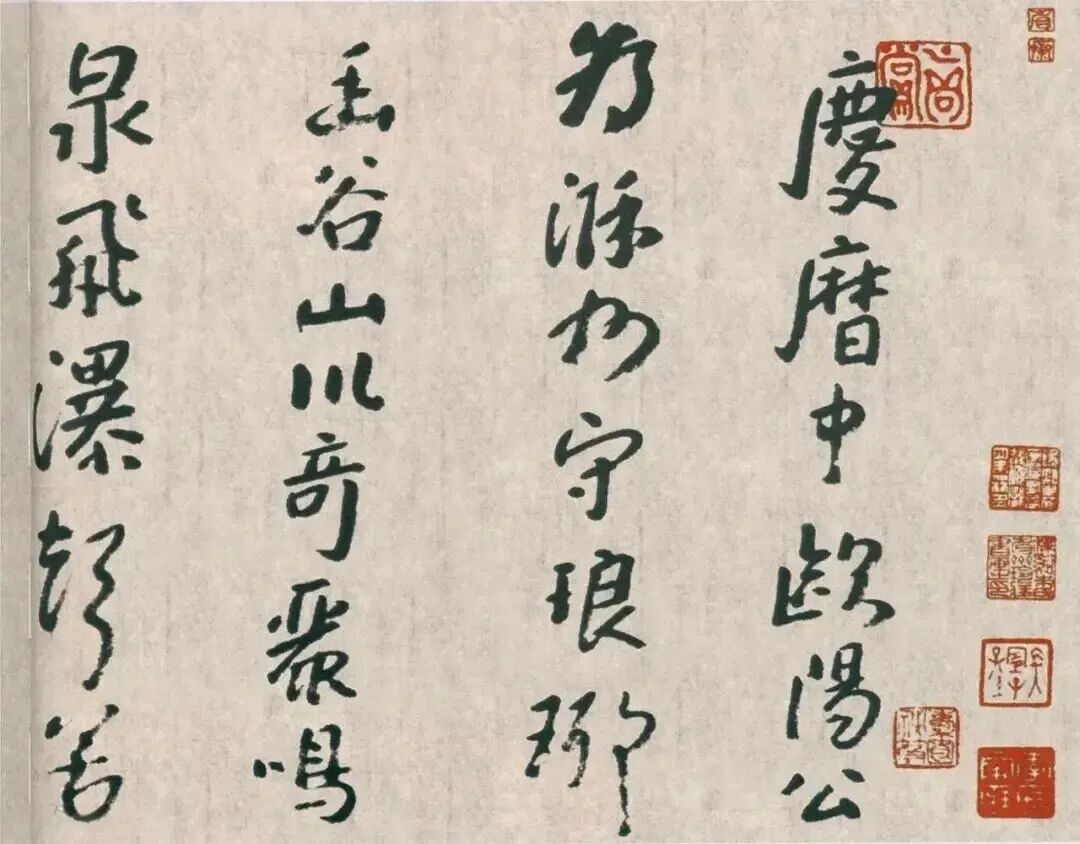
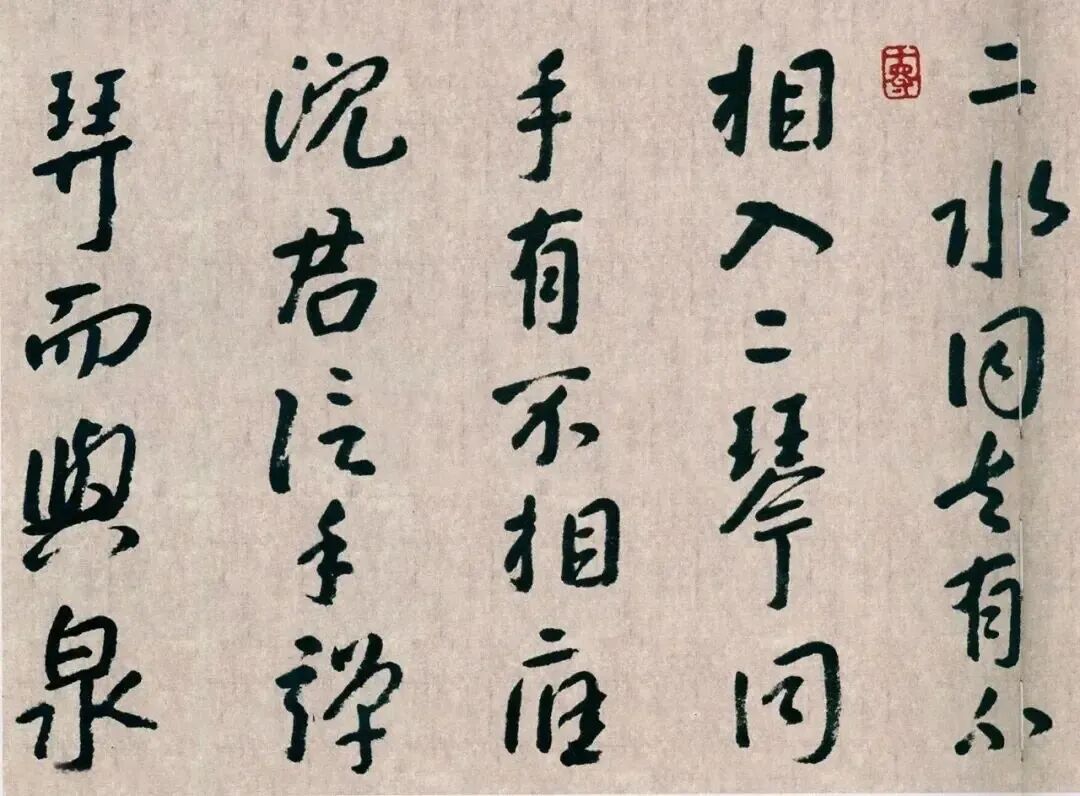
Handscroll of Drunken Old Man Reciting the Ode (Xing Shu Zuiweng Yin Juan)
In his later years Bada Shanren’s running script shed the startling vigour of his middle years and at last realised the ultimate transformation of the art of calligraphy—”from the height of splendour, returning to plainness.”
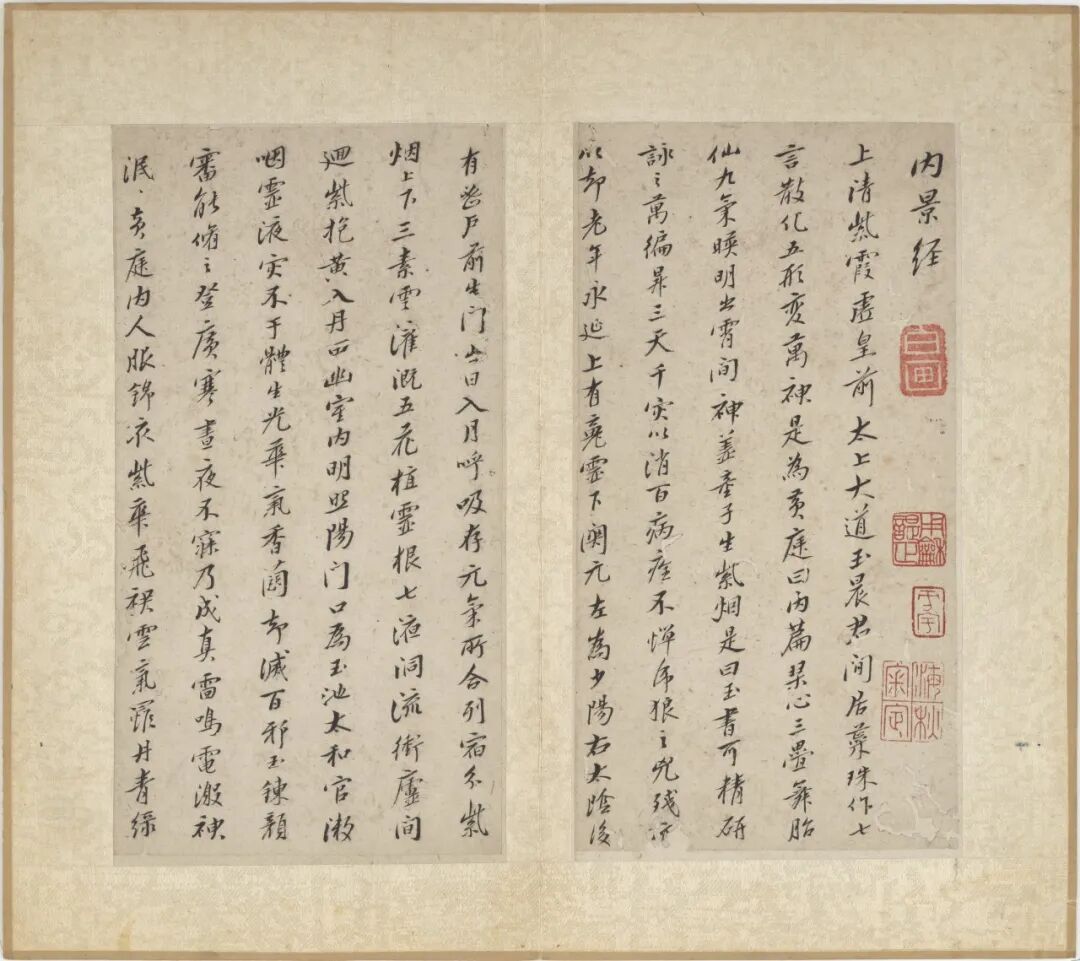
Running-regular script, Huangdi Neijing Jing (the Classic of the Inner Canon of the Yellow Emperor):
Huangdi Neijing Jing (Classic of the Inner Canon of the Yellow Emperor), running-regular script
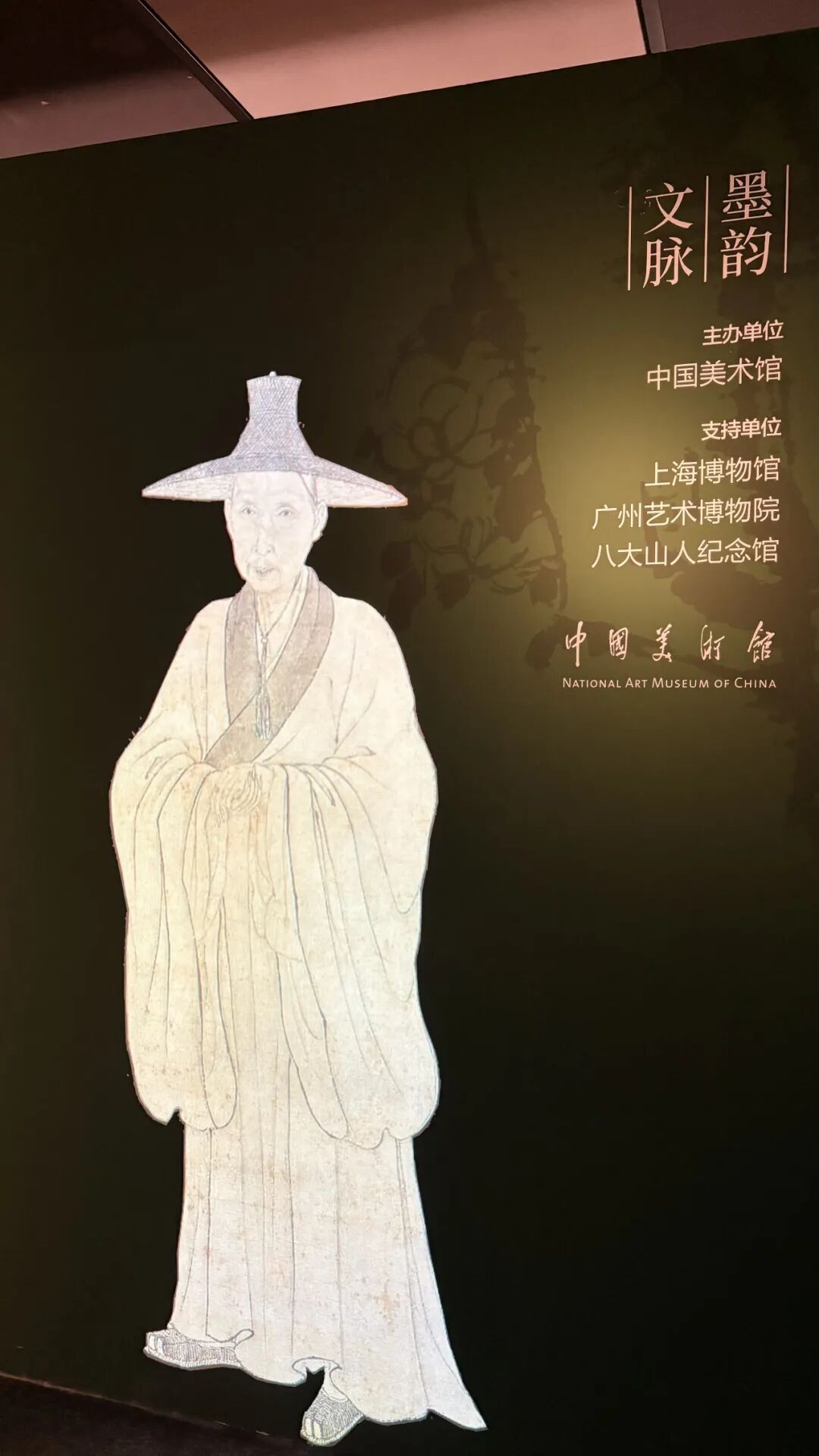
It happened that, as I was preparing this article, the public-spirited exhibition at the National Art Museum of China—Mo Yun Wen Mai: Bada Shanren and Chinese Freehand Art since the Seventeenth Century—was just opening. The exhibition runs from 20 May to 15 August 2026, and not only displays some of Bada Shanren’s classic original works, but also selects paintings and calligraphy by many masters whose art was nourished by Bada Shanren’s influence.
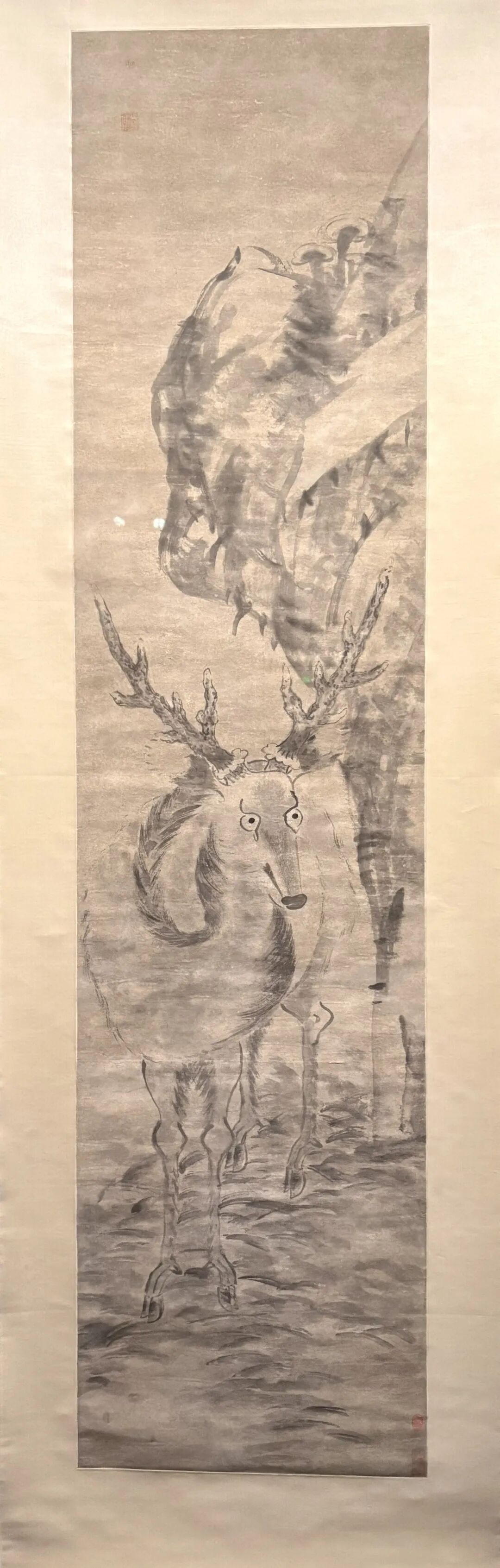
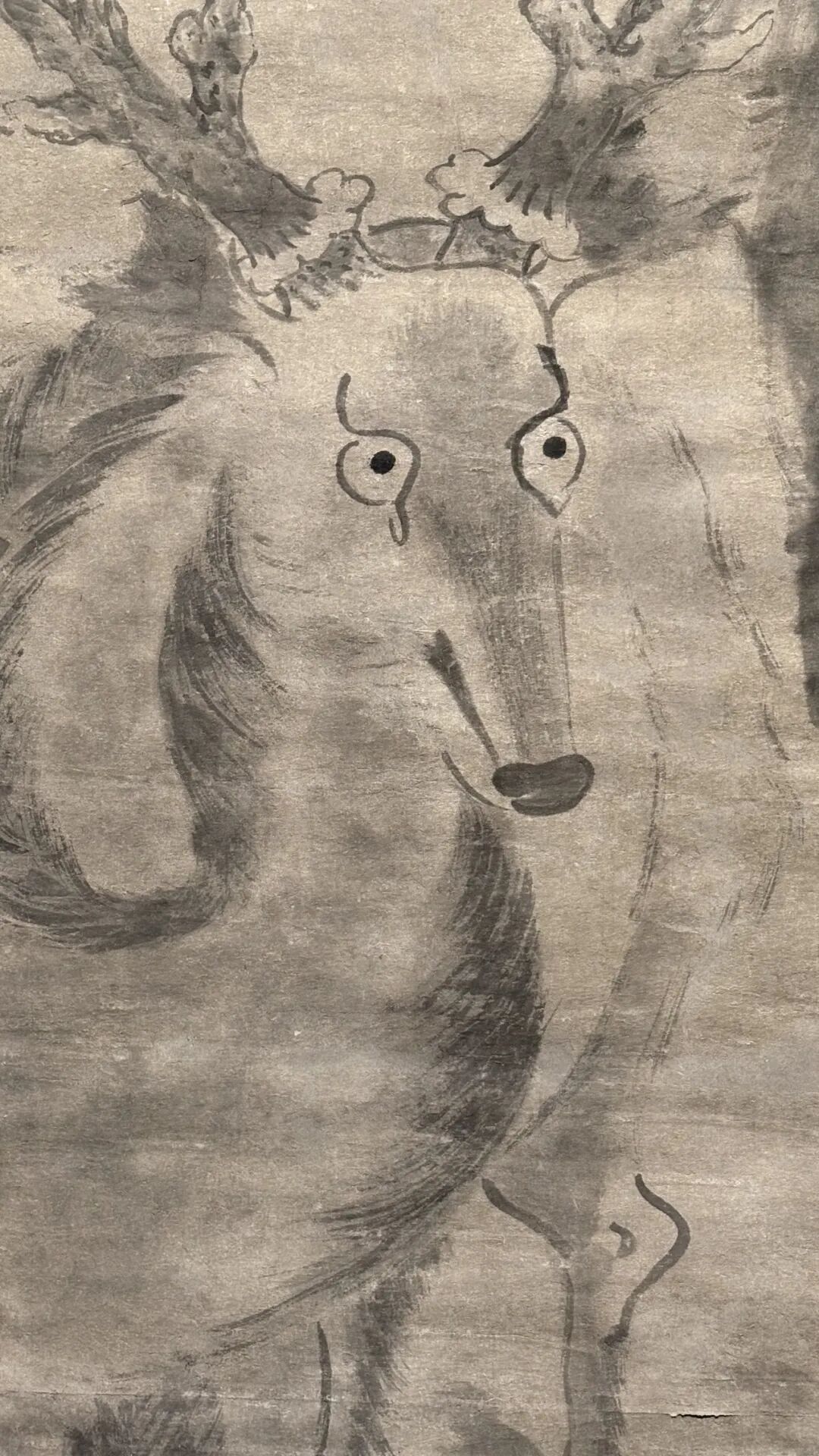
Cranes, Deer, Wild Geese and Ducks (He Lu Fu Yan Tu)
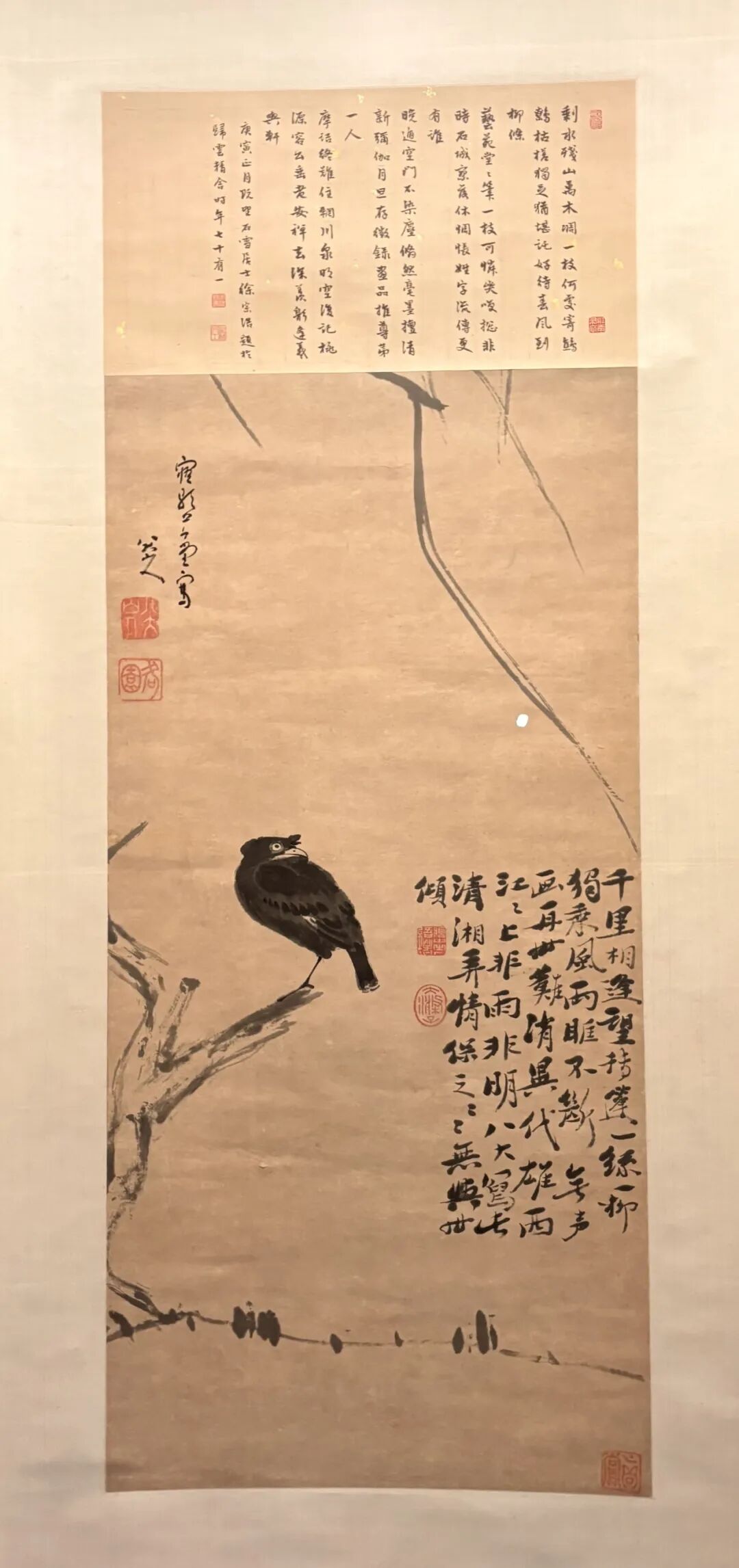
Mynah on a Willow Branch (Liu Zhi Qu Yu)
Inscription: “Written at the Wu-ge Thatched Cottage, Bada Shanren.”
Seals: Bada Shanren (white text), He Yuan (red text), Zhen Shang (red text)
Colophon: “A thousand li apart, we meet like a tumbleweed; one strand, one willow, riding the wind alone. Two eyes unblinking upon a painting without sound; the boat of the age cannot dissolve an other-era’s hero. On the Xijiang River, neither rain nor clear, Bada wrote this. Qingxiang plays with feeling—preserve it, preserve it, share it not with the world.”
Seals: Yan Zhong Zhi Ren Wu Lao Yi (white text), Da Di Zi (red text)
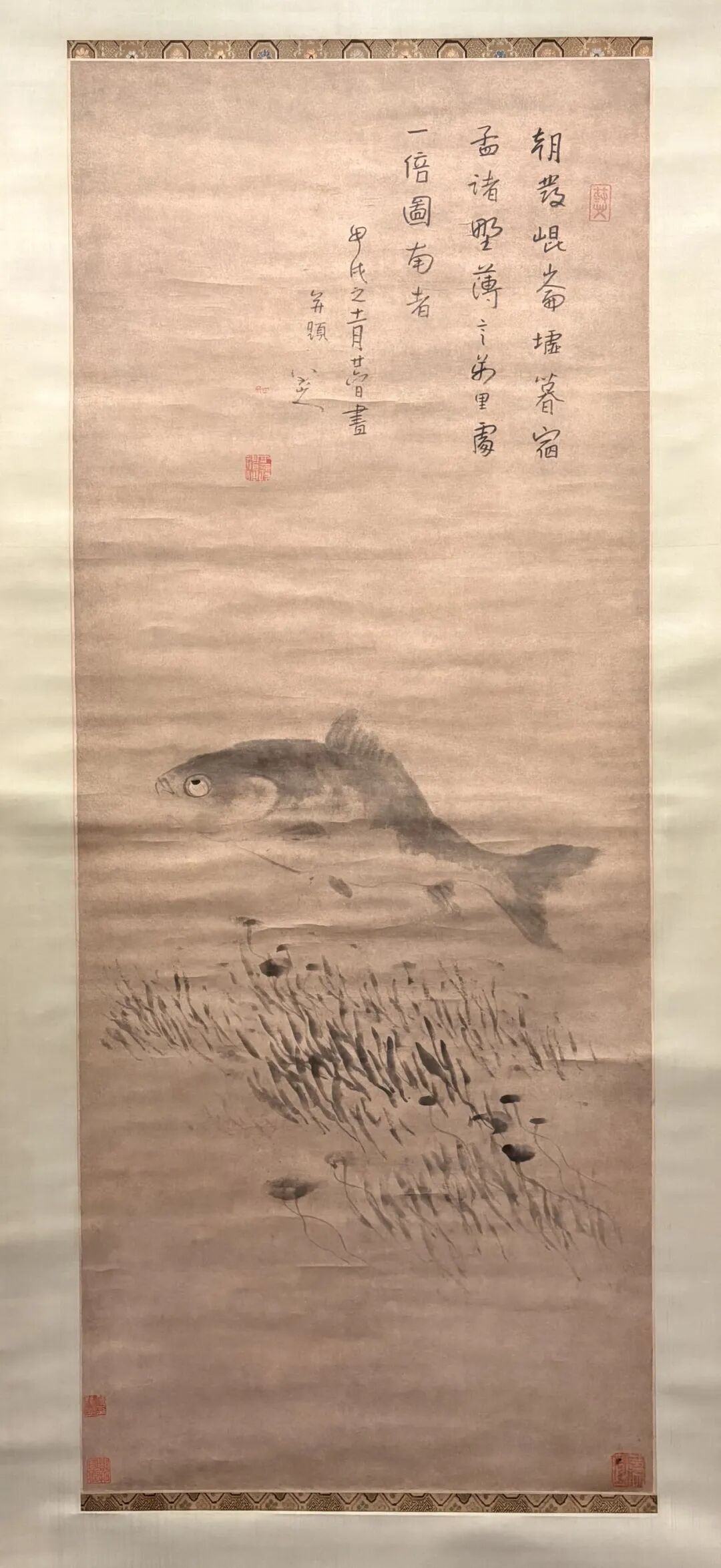
Fish and Water Plants (Yu Zao Tu)
Inscription: “Setting out at dawn from the Kunlun ruins, lodging at night in the Mengzhu wilds. Briefly to speak of the place ten thousand li away—twice the one who aims southward. Painted and inscribed on the twenty-sixth day of the eleventh month, in the year Jiashu.”
Seals: Ke De Shen Xian (white text), Bada Shanren (tailor’s-rule-shaped seal), Huang Zhu Yuan (white text), Wei Ai (red text)
Collector’s seals: Deng Tuo Zhen Cang (red text), Ge Long Guang Yin (white text)
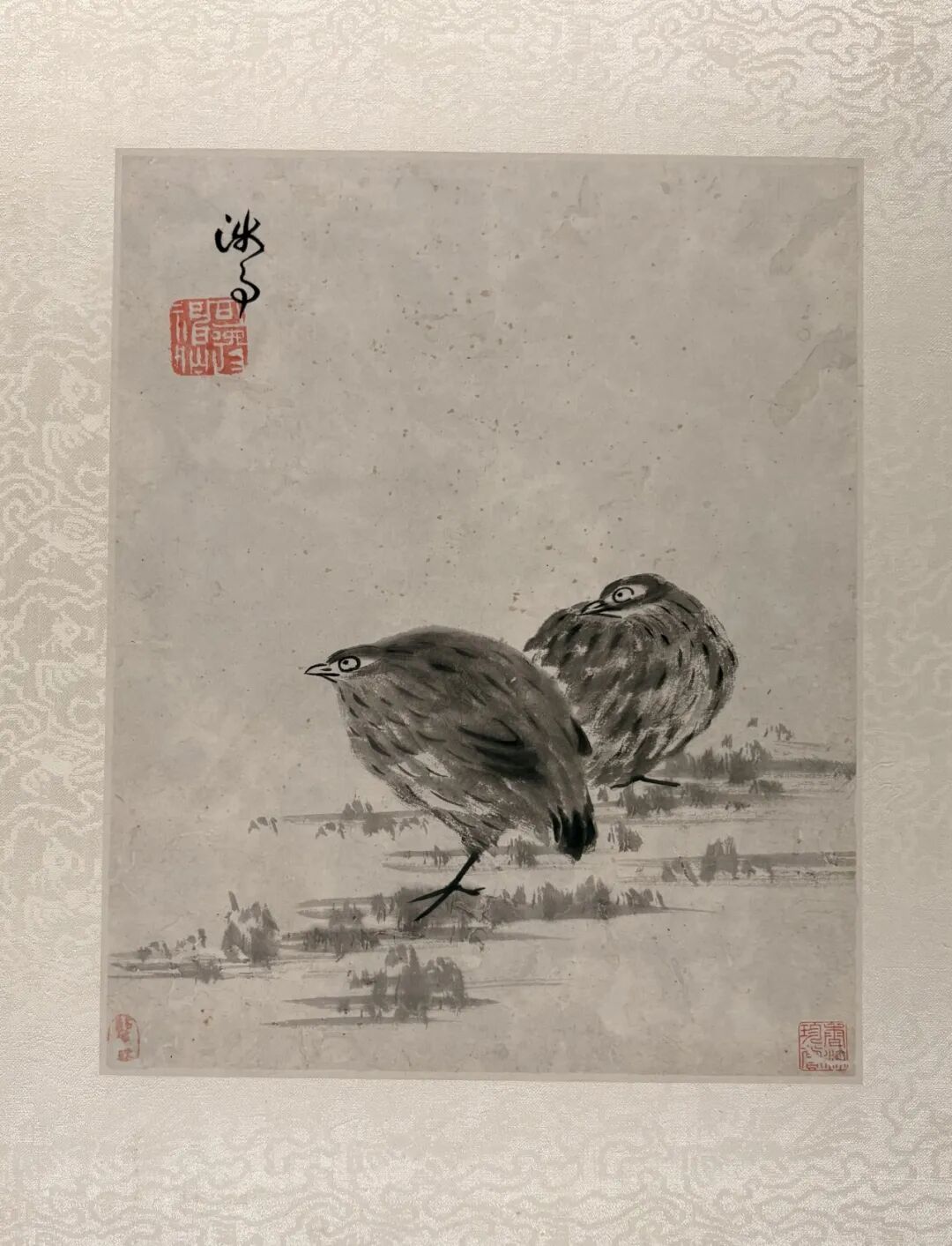
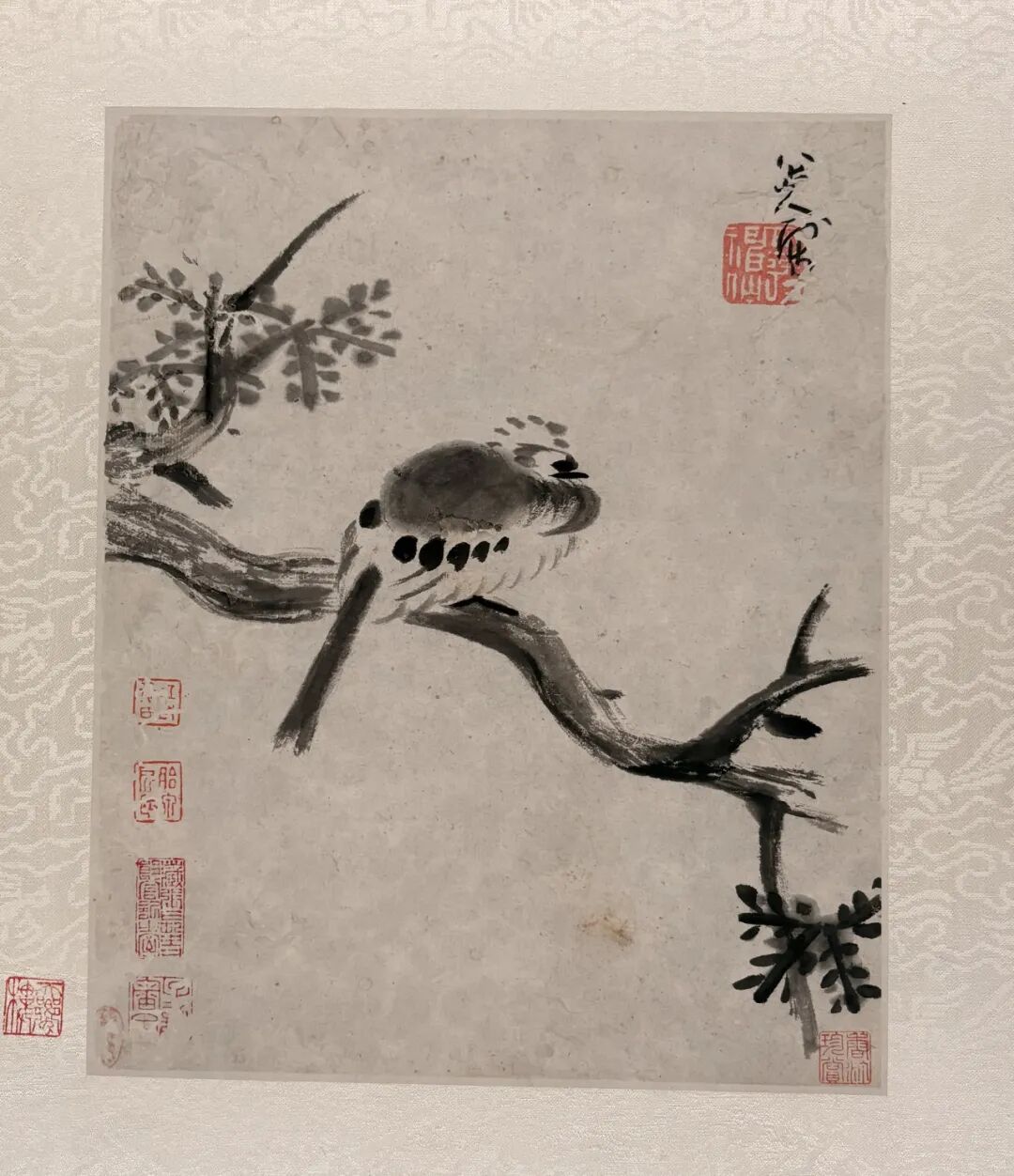
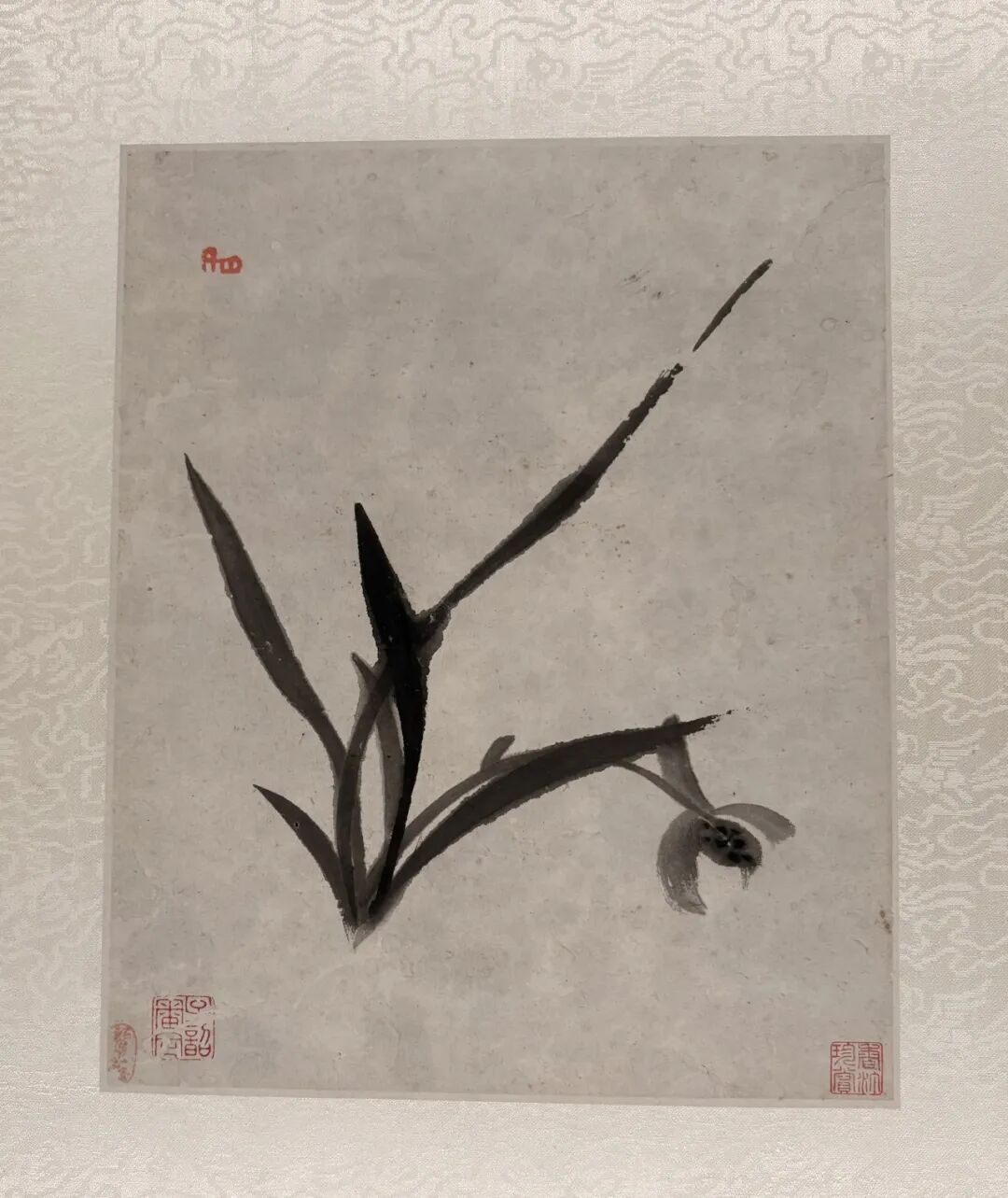
Album of Ink Plays by Bada Shanren (Ba Da Shan Ren Mo Xi Ce)
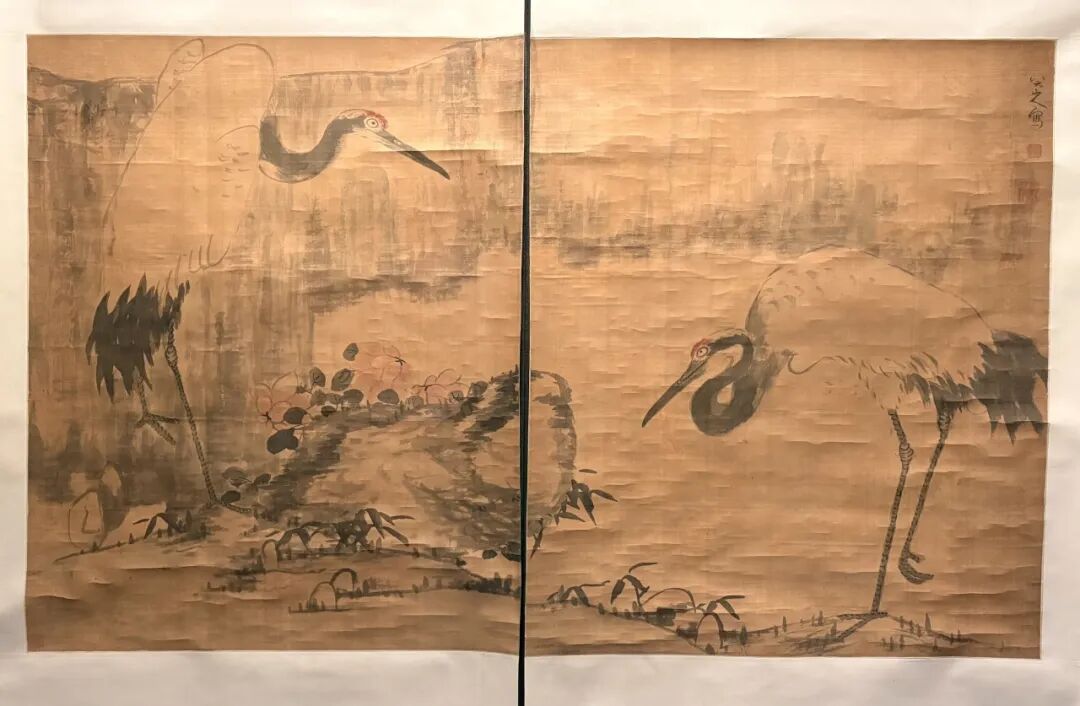
Twin Cranes (Shuang He)—a work by Shitao
Colophon: “A thousand li apart, we meet like a tumbleweed; one strand, one willow, riding the wind alone. Two eyes unblinking upon a painting without sound; the boat of the age cannot dissolve an other-era’s hero. On the Xijiang River, neither rain nor clear, Bada wrote this. Qingxiang plays with feeling—preserve it, preserve it, share it not with the world.”
Seals: Yan Zhong Zhi Ren Wu Lao Yi (white text), Da Di Zi (red text)
©Jinlan Art and Culture Research
May 31, 2026
15th day of the fourth lunar month, Year of the Horse (Bingwu)
#ZhuDa #BadaShanren #ZenBuddhism #ZhuDaCalligraphy #ChineseInkWash #FlowerAndBirdPainting
The background research on Bada Shanren in this article is drawn from Research on Bada Shanren, by Zhu Liangzhi.
Author

jingyu.yuan@bluebrocade.cn