
- 0
- 1,859 word
Traditional Flower-and-Bird Appreciation Column
❖ ❖ ❖
Most people’s understanding of “Bada Shanren” comes from his later works, which survive in the greatest number, brimming with an easy, humorous, serene, and ethereal aura. Yet Bada Shanren was a legendary Zen-Cum-artist: he healed himself with the Zen mind, and in his later years returned to the true character of the spirit of the Jin-dynasty literati.
This article is the first of a series on Bada Shanren; if more material and discussion become available in the future, I will continue to share them.
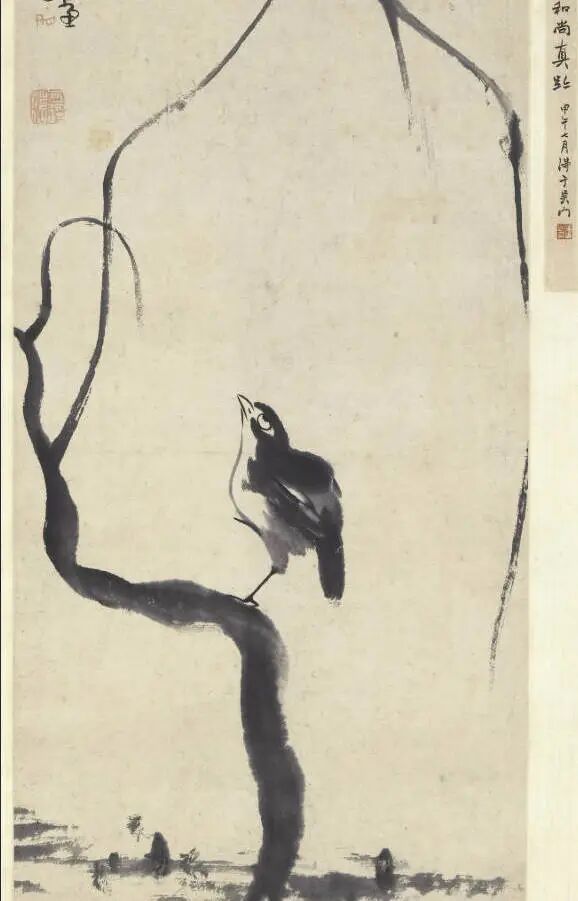
Bada Shanren was the ninth-generation descendant of Zhu Quan, Prince Xian of Ning—the seventeenth son of Zhu Yuanzhang, the Hongwu Emperor of the Ming dynasty—and his original name was Zhu Da. His family was a top-tier prestigious clan of Jiangxi, steeped in literary culture for generations, excelling in painting, poetry, prose, and music. Bada Shanren’s starting point in life was exceedingly high: as a youth he was already a celebrated child prodigy far and wide, able to compose poetry at the age of eight, and thoroughly versed in calligraphy, painting, and seal carving.
With the catastrophe that befell both family and state (the Jiashen catastrophe of 1644), the Ming dynasty collapsed, and Zhu Da’s family, as former imperial kin, was targeted for liquidation. To evade harm and survive, from 1648 to 1679 Zhu Da withdrew into the Buddhist path for more than thirty years.
As summarized by Professor Zhu Liangzhi of Peking University in his book Research on Bada Shanren, Bada Shanren’s emotional development as a Ming loyalist unfolded in four periods. The author believes that these different emotional shifts also directly shaped Bada Shanren’s artistic works.
The First Period: The Concealment Period (1645–1672)
After fleeing into the monasteries, Bada Shanren took the dharma name Chuanqi, the sobriquet Ren’an, and the alternate names “Geshan,” “Geshanren,” and “Xuege.” He became a legitimate lineage heir of the Caodong school of the Southern Chan tradition (the sudden-enlightenment dharma-gate), studying under the Chan master Hongmin, earnestly learning Zen Buddhist doctrine and using Buddhism to cultivate his mind and settle his trembling soul. Bada Shanren’s attainment in Chan was very high, as can already be seen in the colophons of the representative work of this period, the Album of Sketches by Chuanqi. Zen Buddhism emphasizes that the mind itself is Buddha, and that mind and dharma are non-dual: the moment one draws distinctions, one loses the original mind—and thereby loses the Buddha.
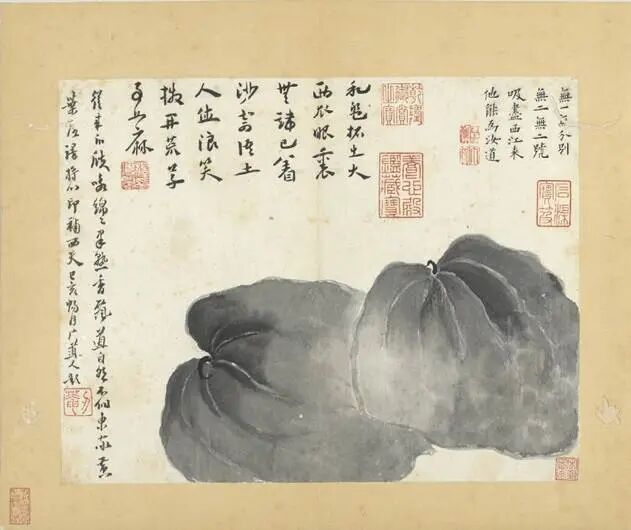
“Watermelon,” from the Album of Sketches by Chuanqi, 1659
In Bada Shanren’s line “not like the leaves the neighbor to the east sheds in autumn,” he refers to certain Buddhist disciples who do not understand the true face of the Buddha, but bog themselves down in scriptural words and nominal forms, running counter to the dharma. In “casually imprinting the mind-seal to mend the Western Paradise,” how is this mind to be sealed? Not through silent meditation, not through chanting: when a single thought is pure and clear, lotuses bloom everywhere—the uncontrived mind is the original mind.
Bada Shanren may be called a flower-and-bird painter, yet his flowers and birds are not flowers and birds as such. Deeply influenced by the Caodong school’s notion of “the insentient speaking the Dharma,” his flower-and-bird paintings possess a distinctive philosophical character rather than the conventional “moral analogy” tradition. The flowers, birds, fish, insects, mountains, rivers, and trees that Bada Shanren created in his art are all the “insentient” world within his mind: through the stubborn rocks, gnarled pines, lotus blossoms, fish, and birds at his brush, he gives voice to his own “intrinsic nature” and to the truth of the world. Hence Zhu Liangzhi says that Bada Shanren does not express love for nature, but rather a life-world complete and sufficient unto itself; flowers and birds are not symbols, for Zen stresses that the waters, birds, trees, and groves all chant the Buddha and the dharma. Bada Shanren used painting and calligraphy as his spiritual practice; his paintings were his dharma-gate.
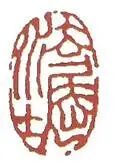
In his early years Bada Shanren had a seal reading “Faku” (“Dharma Cave”), meaning a place of practice—what Zen calls the monastery or forest. But the meaning of Bada Shanren’s “Dharma Cave” did not lie among the monasteries; rather, it reflected the Zen ideal of seeing one’s nature to become a Buddha—not in reading sutras or seated meditation, but in immediate, direct experience in the present moment.
The Second Period: The Transition Period (1672–1680)
In 1672, Bada Shanren’s master Hongmin passed away. Losing his anchor, he drifted from place to place; his manic illness flared up twice, and he felt a profound sense of homelessness. In early 1679, Bada Shanren was staying at Linchuan, where he made friends with many Ming loyalists, all of whom harbored intense longing for their fallen homeland, so that his poetry of this time is full of lament over his own circumstances. In the Portrait of Geshan he revealed his lineage for the first time, affixing the seal “Descendant of the Prince of Yiyang, West of the River.”
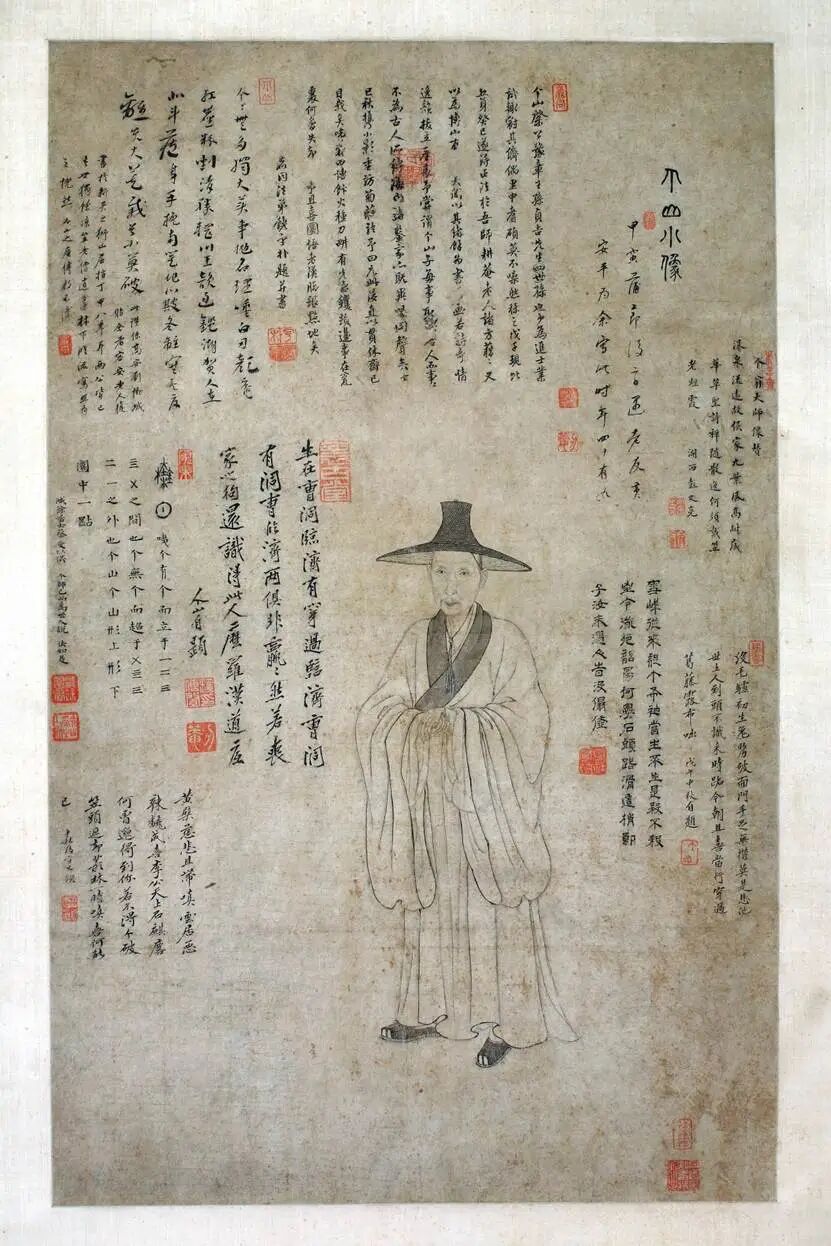
Portrait of Geshan, 1674
Seals: Geshan, Xuege, Seal of the Monk Chuanqi, Ren’an, Huaigu Tang, Gengxiang, Chidian
Concerning the four colophons by Bada Shanren in the Portrait of Geshan, Zhu Liangzhi offers an exhaustive interpretation, holding that Bada Shanren—far from betraying the desire, as some have misunderstood, to “return to lay life out of weariness with the sectarian strife among Buddhist monks”—displayed on the contrary an extremely high level of Chan attainment. What Bada Shanren discusses in these colophons is the dharma of liberation: the entire great earth is a zafu; one must pass through the bondage of knowledge and reason—the so-called Chan practitioner must purify his own mind, whereupon the tiny square inch of the heart becomes a lotus realm.
During his time in Linchuan, Bada Shanren also formed a friendship with Hu Yitang, the magistrate of Xinchang County. Apart from lodging in Hu’s official residence, he wandered freely among the various Buddhist temples, living in great comfort. When at the end of 1680 Hu Yitang left for the capital to take up his post, Bada Shanren’s manic illness flared up. A record reads: “Hu Yitang, magistrate of Linchuan, having heard of his fame, invited him to his official residence. After more than a year, his mood grew increasingly restless and uneasy, until a madness broke out—now bursting into laughter, now weeping for a whole day. One night, he tore off his monk’s robe and burned it, then walked back to the provincial capital.” Bada Shanren returned to Nanchang in a state of frenzy; his nephew found him on the road and brought him home.
The Third Period: The Outburst Period (1681–1684)
After returning to Nanchang, Bada Shanren gradually recovered from his illness and resumed his creative work. In 1681, in the hanging scroll “Distant View from the Shengjin Pagoda,” he expressed his nostalgia for monastic life after leaving the Buddhist order, missing his four years of fellow monks and temple life. Later, upon witnessing the dilapidation of “my family’s Tengwang Pavilion,” his longing for his fallen homeland grew more intense and turned toward anger. During this period he adopted the sobriquet “Lü” (Donkey), which he used until discarding it in 1685. Bada Shanren’s anger is expressed in such works as the Ancient Plum Tree and the hanging scroll “Crabapple in Spring and Autumn.” Later Bada Shanren returned to lay life; many scholars and experts have speculated on the reasons for this return, but no definitive conclusion has been reached.
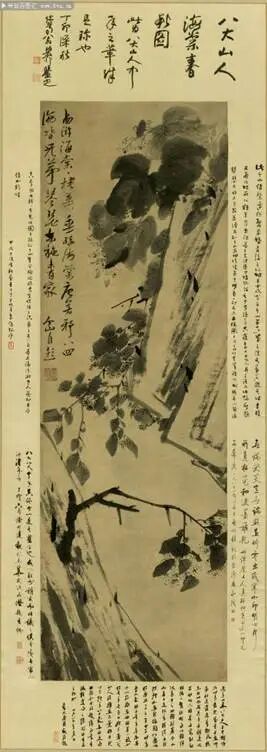
“Crabapple in Spring and Autumn” (hanging scroll), between 1682 and 1683
His own inscribed poem reads: “The crabapple by the western shore, the blossom of the tangdi; the weeping-crabapple, as lovely as Ruoye. If Ruoye makes brothers of all within the four seas, then the lute and zither—like Dongshi in the east—have no home.” The crabapple is a “guest from Shu,” and Bada Shanren uses the Shu exile living away from home to represent the wanderer who has lost his homeland. In the poem he compares himself to Dongshi, expressing the pain of “having no home to return to.”
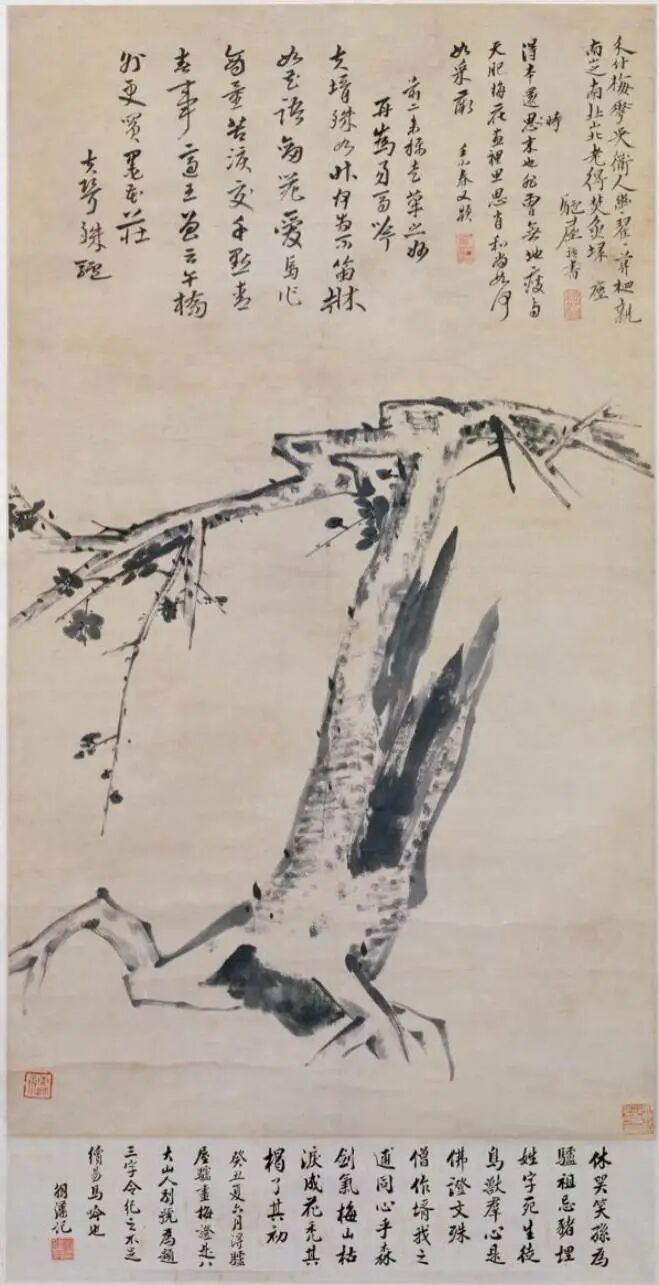
Ancient Plum Tree, 1682
This is an ancient plum tree, its thick roots bared above the ground, gripping the earth tightly, radiating a sense of steady, unshakable vitality. This old plum has none of the tender, lingering postures of sentiment; it wholly displays a fury in the face of the pressure of dogged survival.
The Fourth Period: The Period of Late-Life Sustenance (1685–1705)
After 1684, “Bada Shanren” became Zhu Da’s primary sobriquet. The largest number of surviving works date from this period—a great many flower-and-bird paintings, as well as the late-life masterpiece Anwan Album (Album for the Late Years), which compiles twenty-two works and displays the plain, innocent, and loose artistic style of his late years. What the Anwan Album chants and sighs over is the Jin-literati manner that Bada Shanren inwardly yearned for, of the kind embodied by his grandfather.
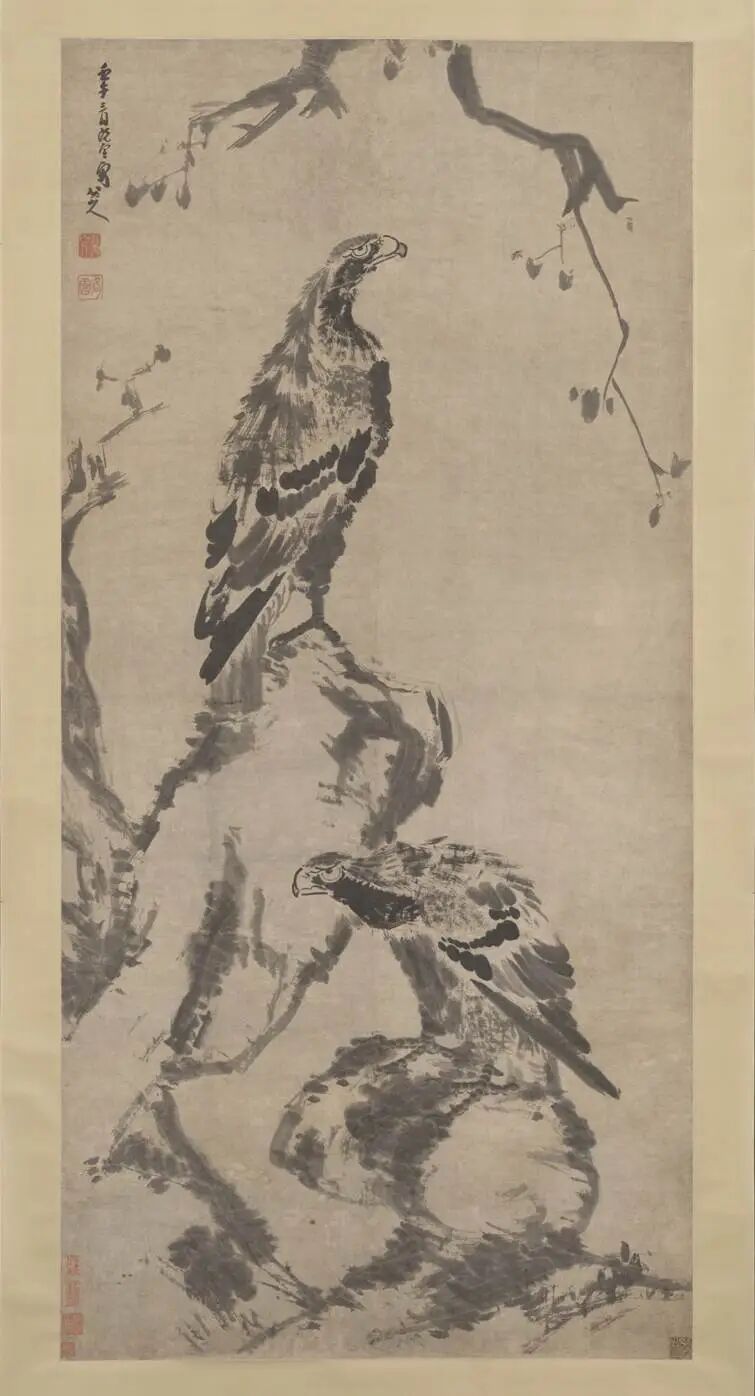
Garuda Painting, 1702
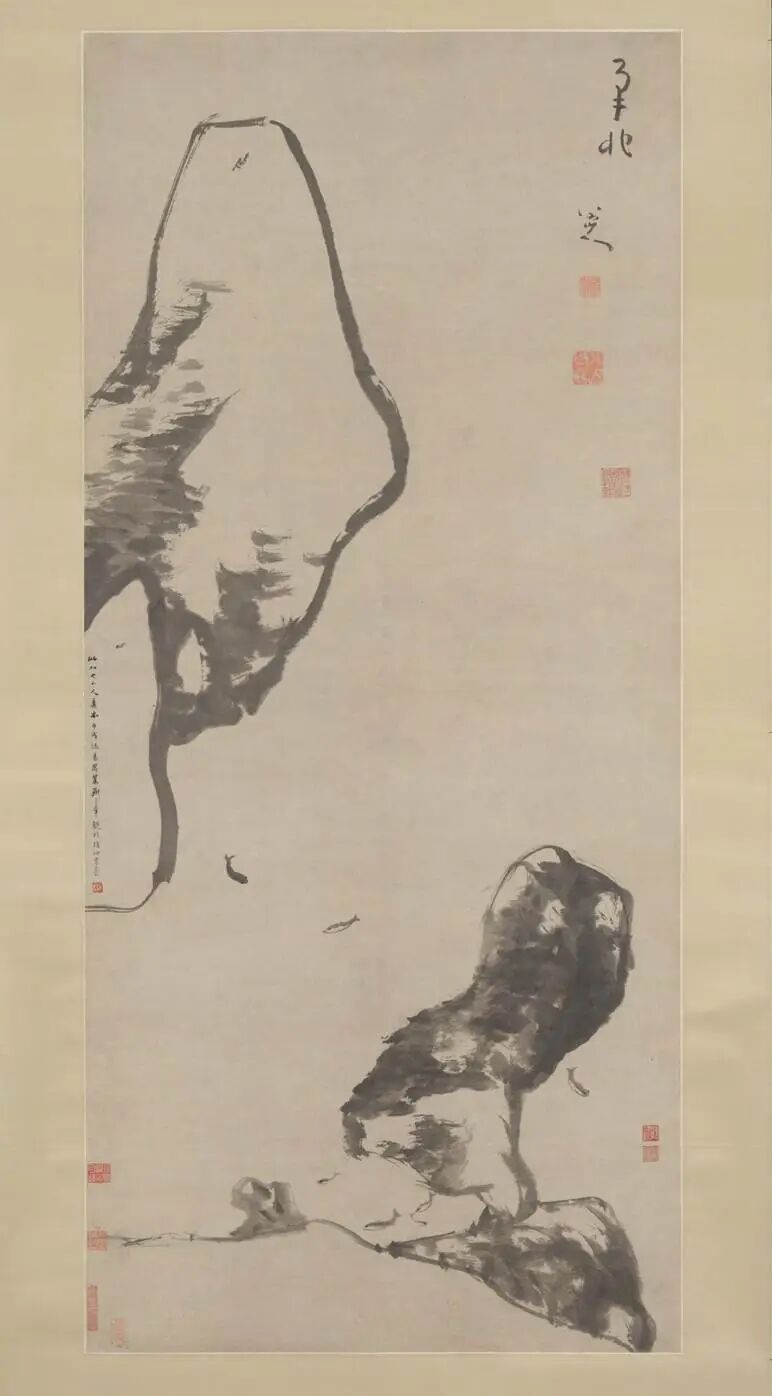
Fish and Rocks, 1699
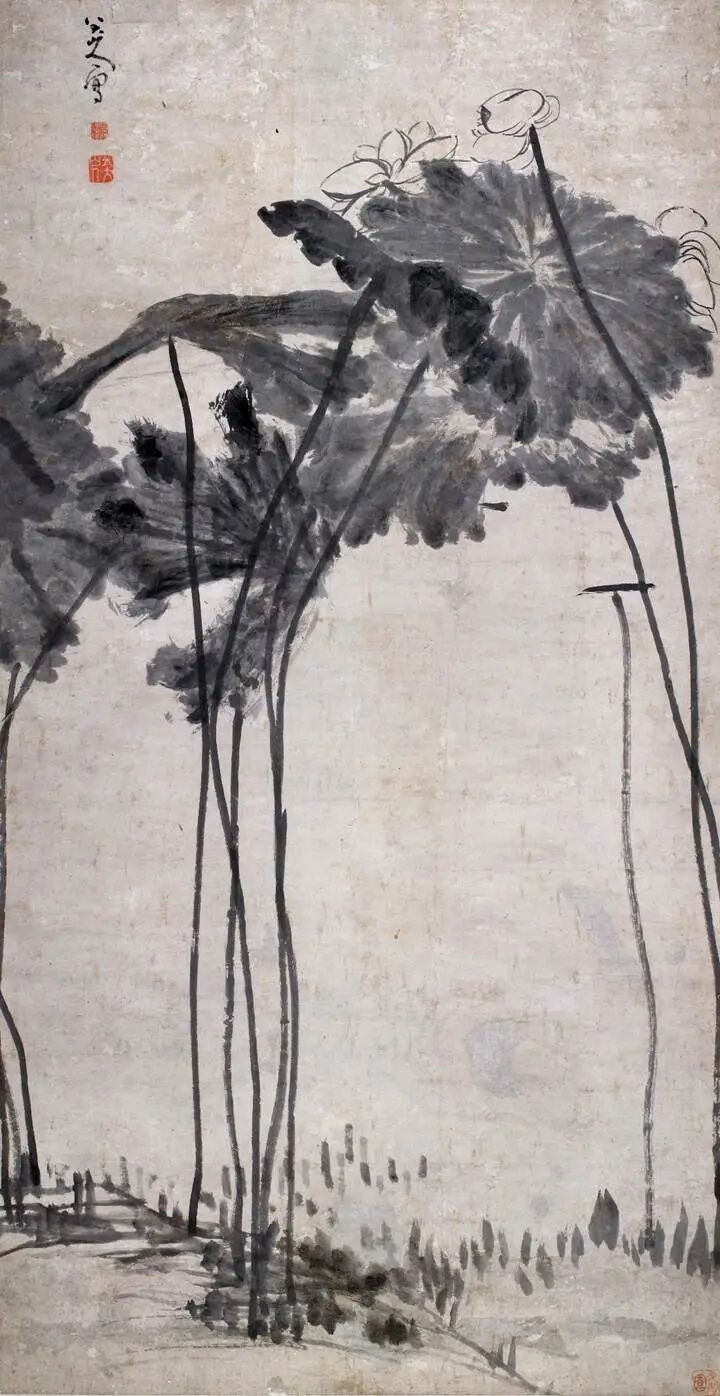
Ink Lotus, presumed a late-life work
Bada Shanren excelled at painting lotus, especially ink lotus, using dry-brush strokes and splashed, heavy ink to create a feeling of simplicity, emptiness, and spiritual lightness. When Bada Shanren painted lotus, he praised it in poetry, as in the earlier poet’s line: “Gaze upon the lotus, pure and clean, and you shall know the mind unstained.” This thought is clearly visible in Bada Shanren’s ink-lotus paintings.
Seals: Kede Shenxian, Bada Shanren, Heyuan
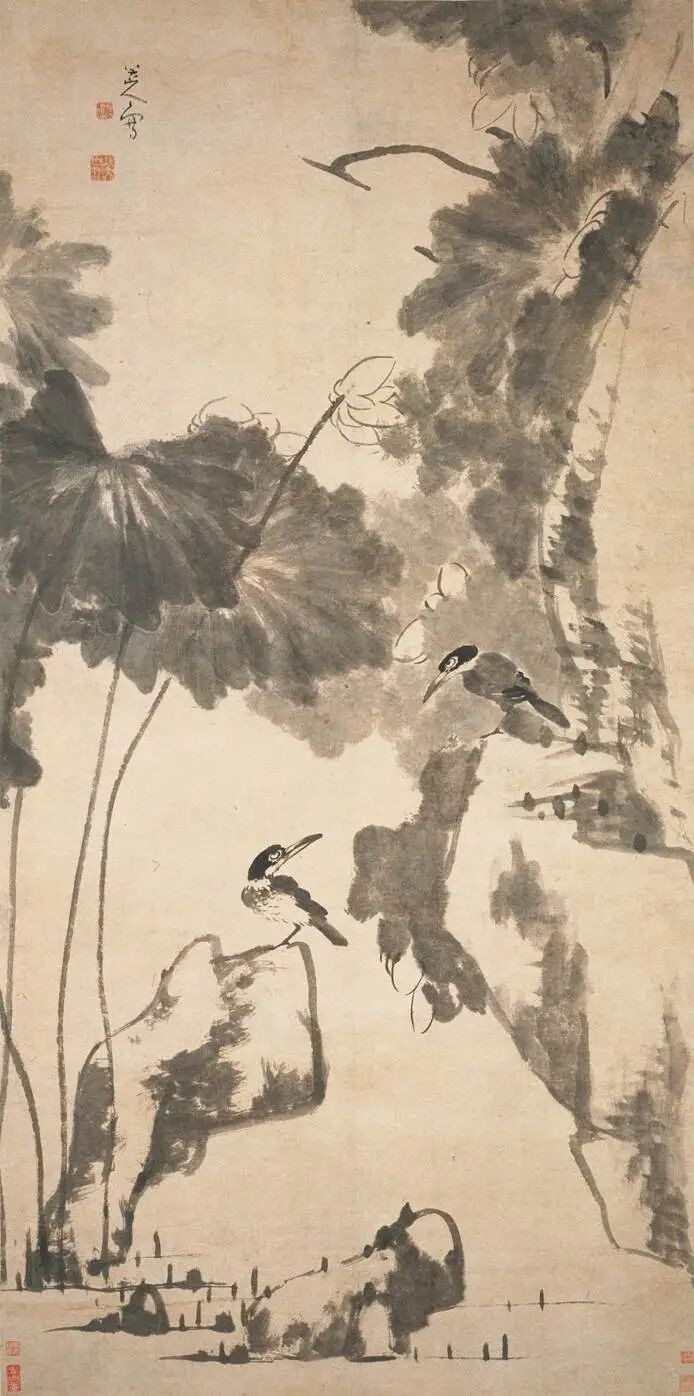
Lotus and Kingfisher
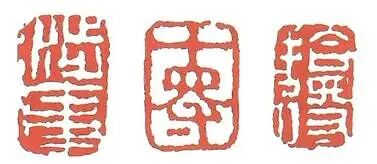
In his late years Bada Shanren used a seal reading “Shide” (“Picked Up”) quite frequently, and later carved another seal reading “Shide” (Ten Gains). According to Zen legend, Shide and Hanshan were bosom friends, both famous Chan monks of the Tang dynasty. Shide was homeless and was picked up by others, growing up in a monastery—hence the name “Shide” (“Picked Up”). Bada Shanren felt that this Tang-dynasty Chan monk’s life circumstances resembled his own, and so he carved this seal.
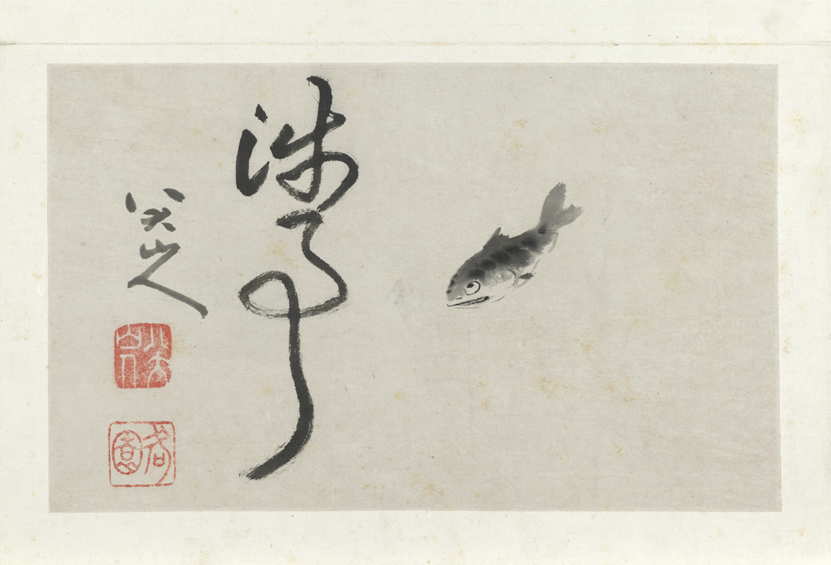
“Fish,” from the Sketch Album
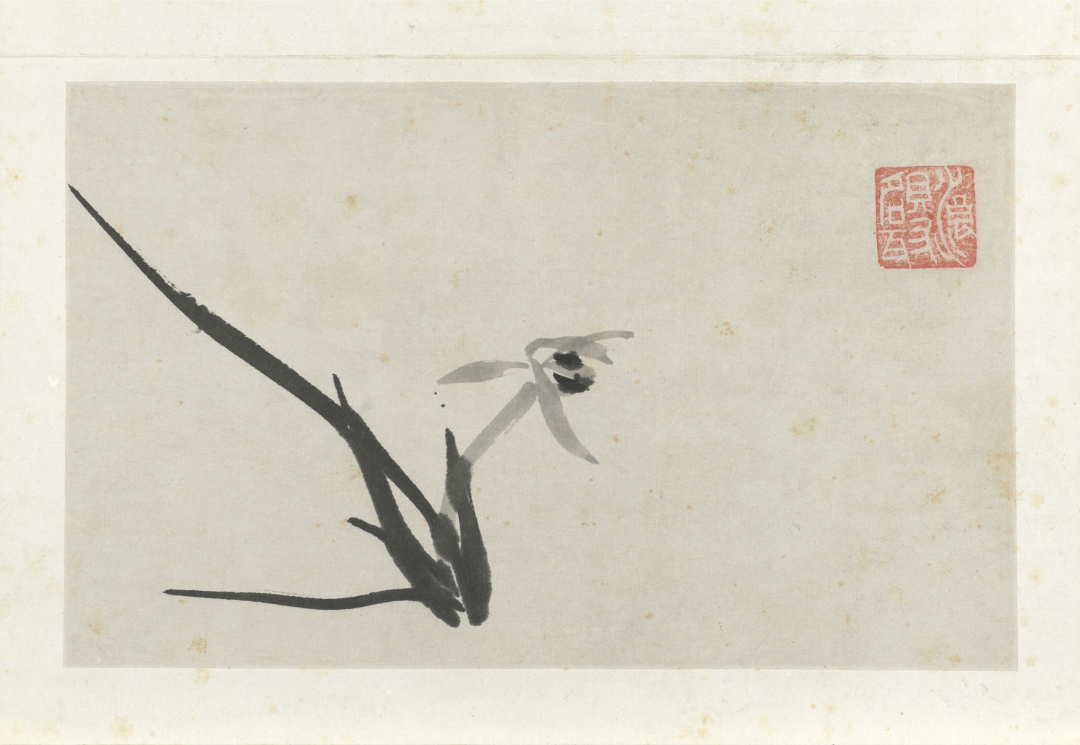
“Orchid,” from the Sketch Album
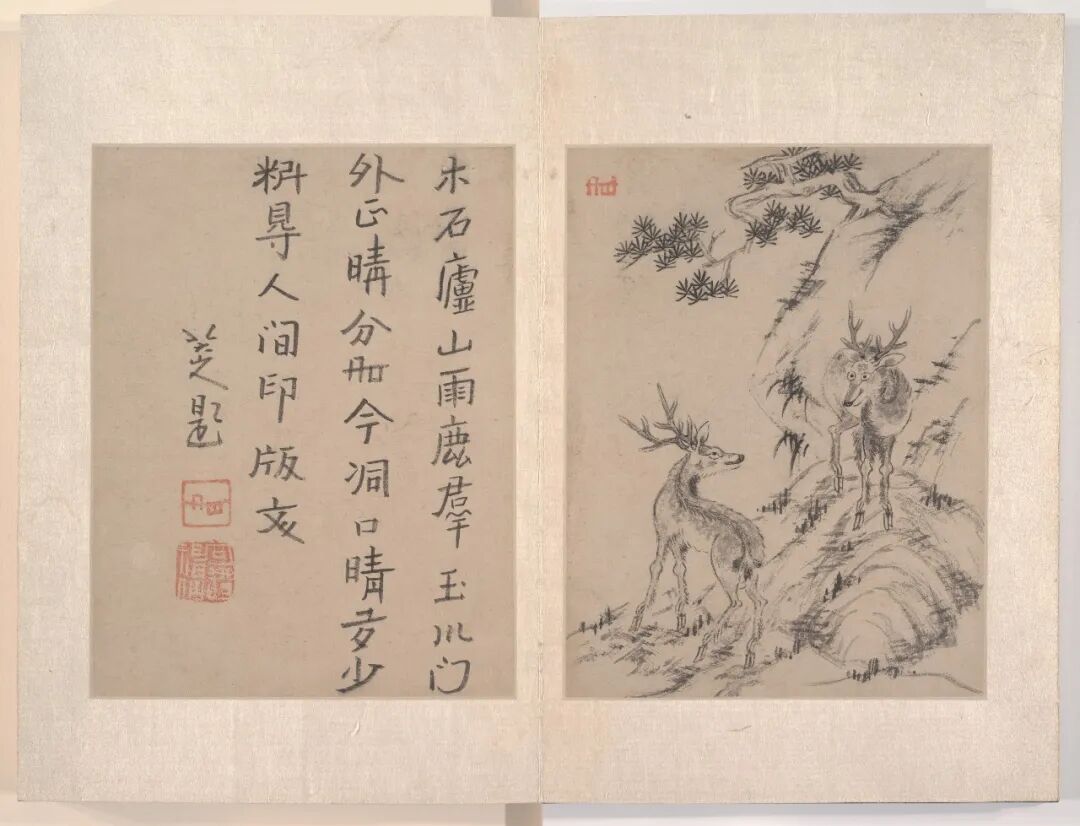
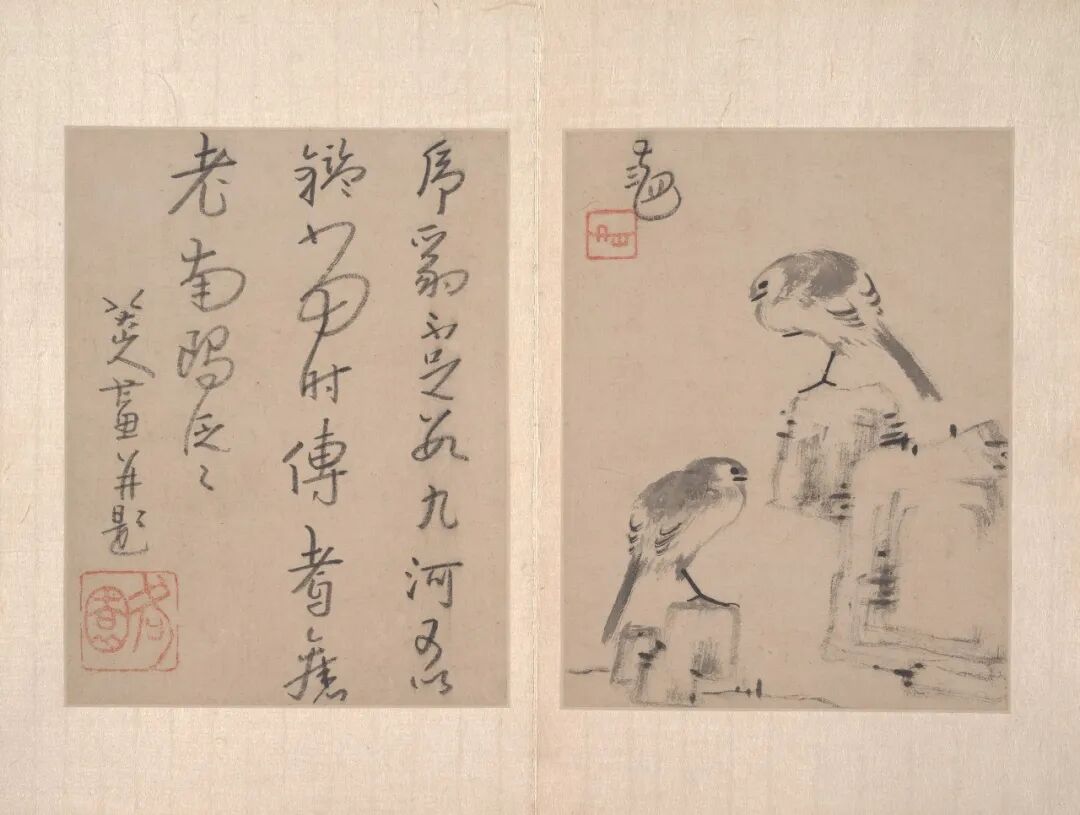
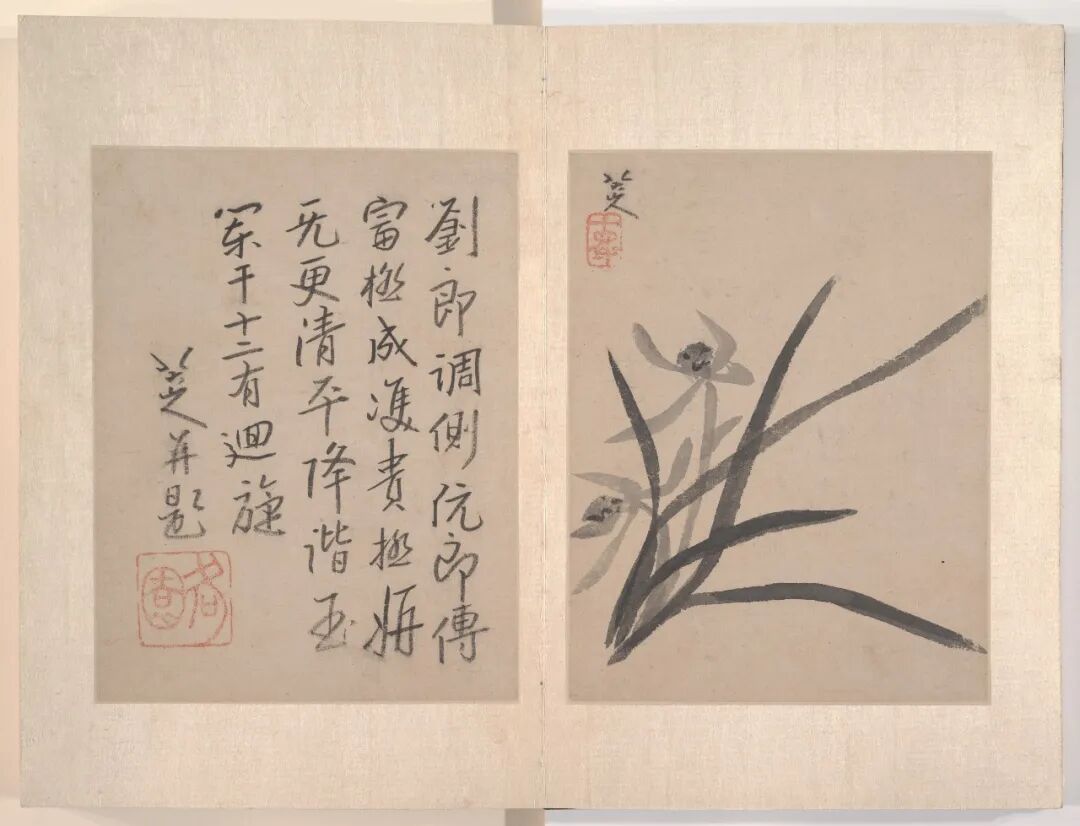
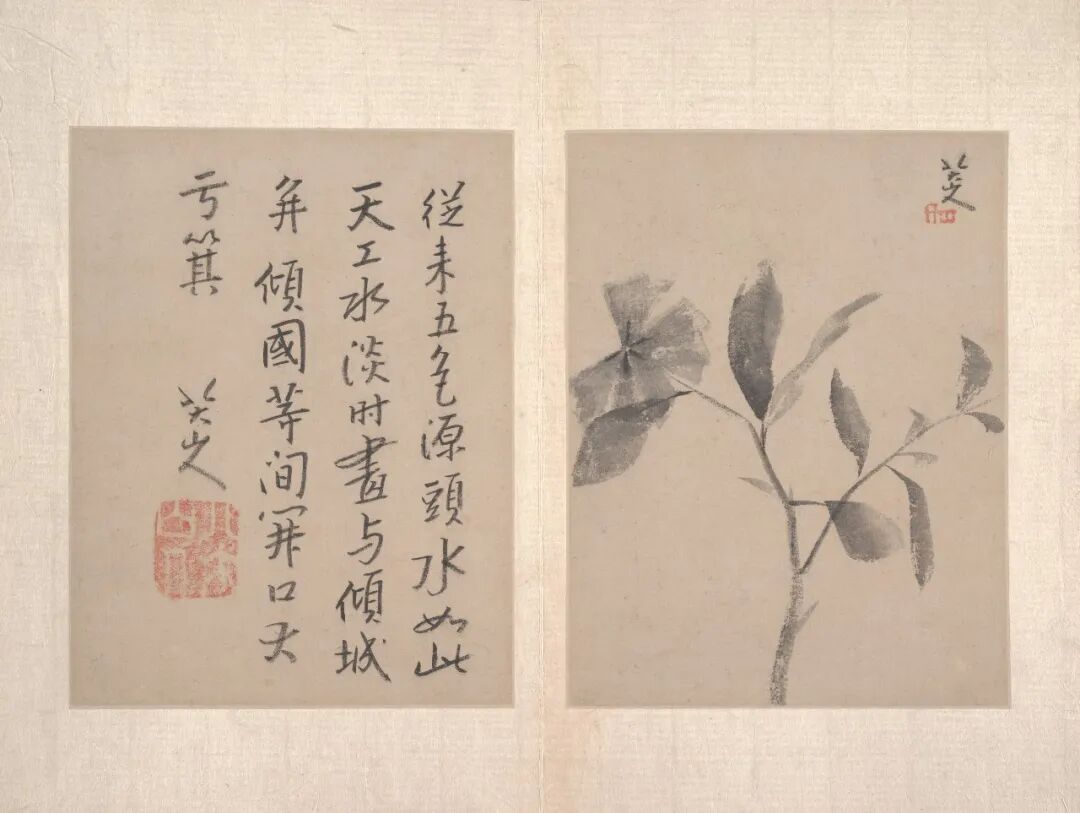
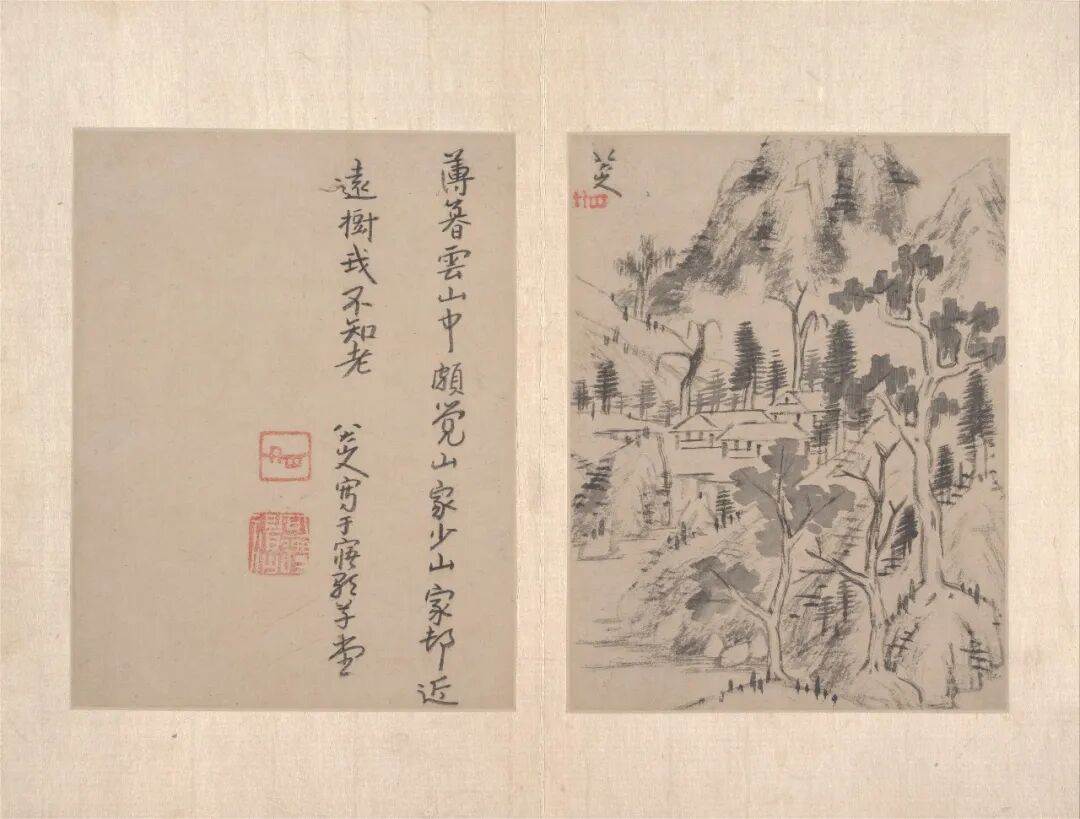
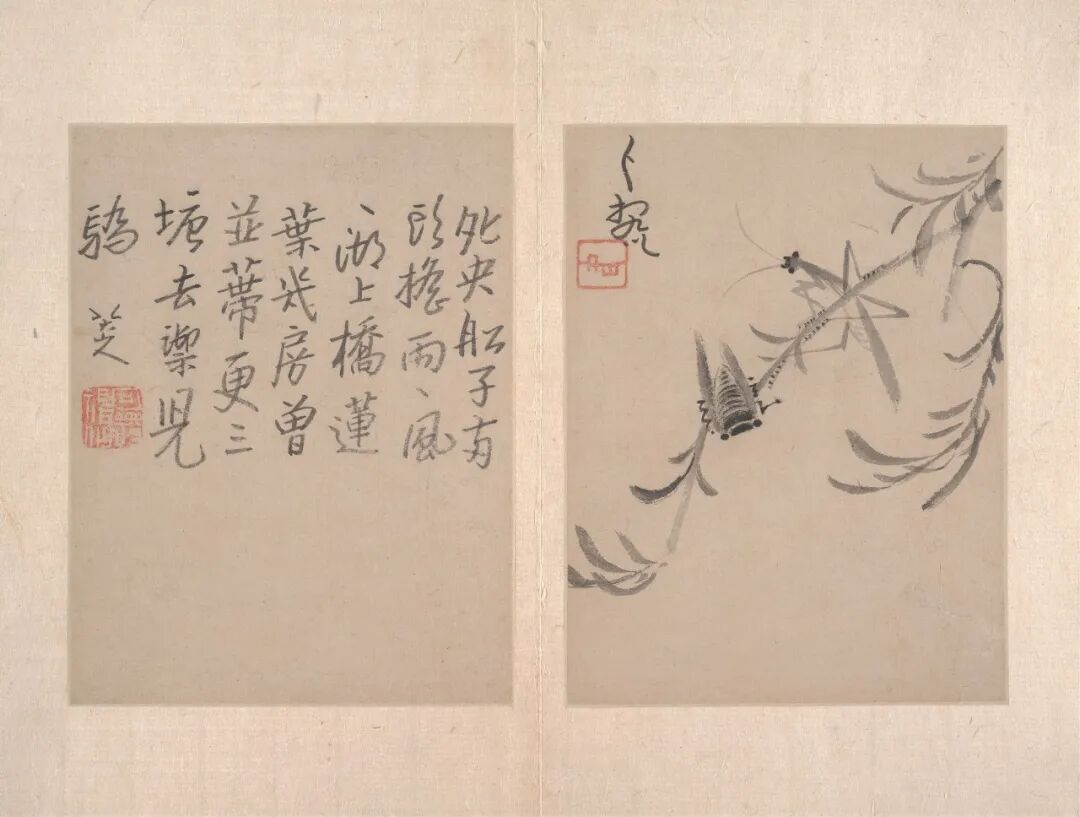
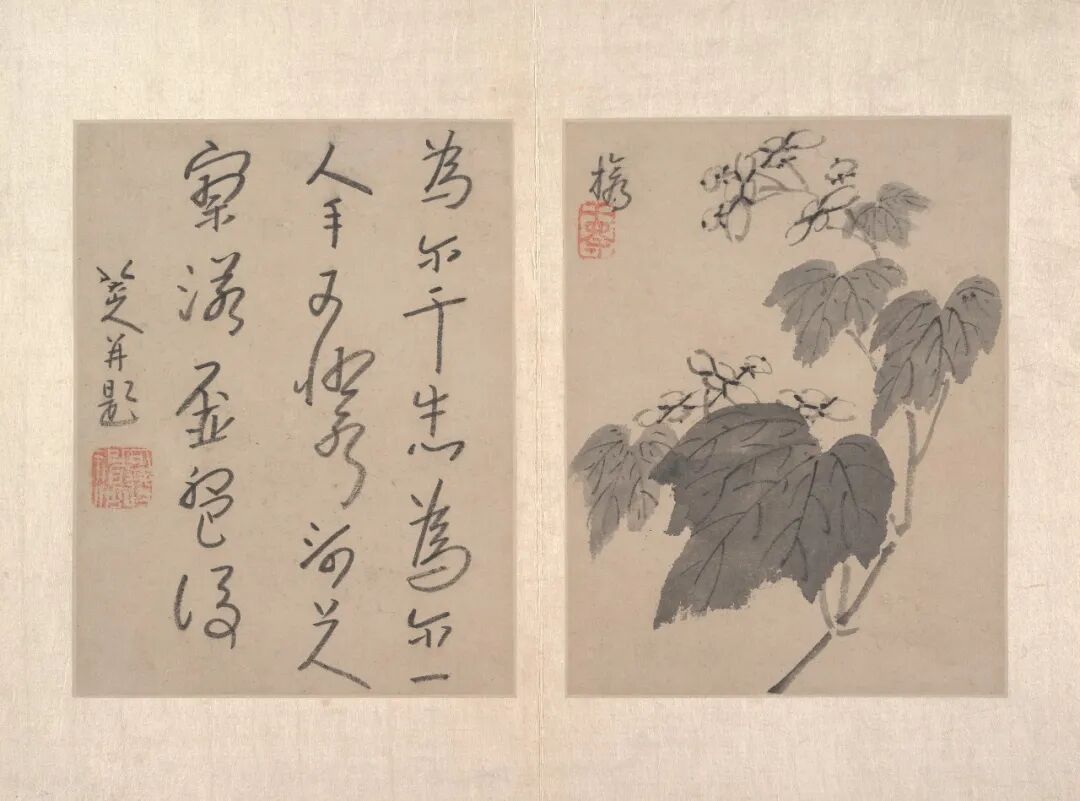
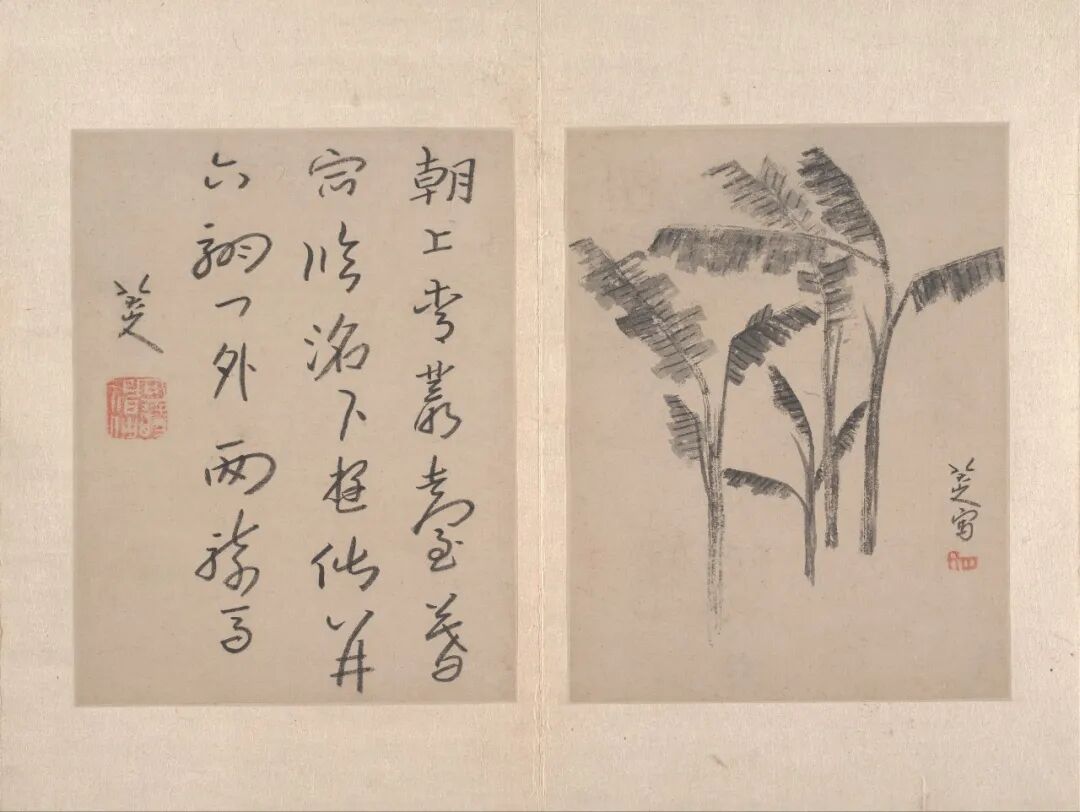
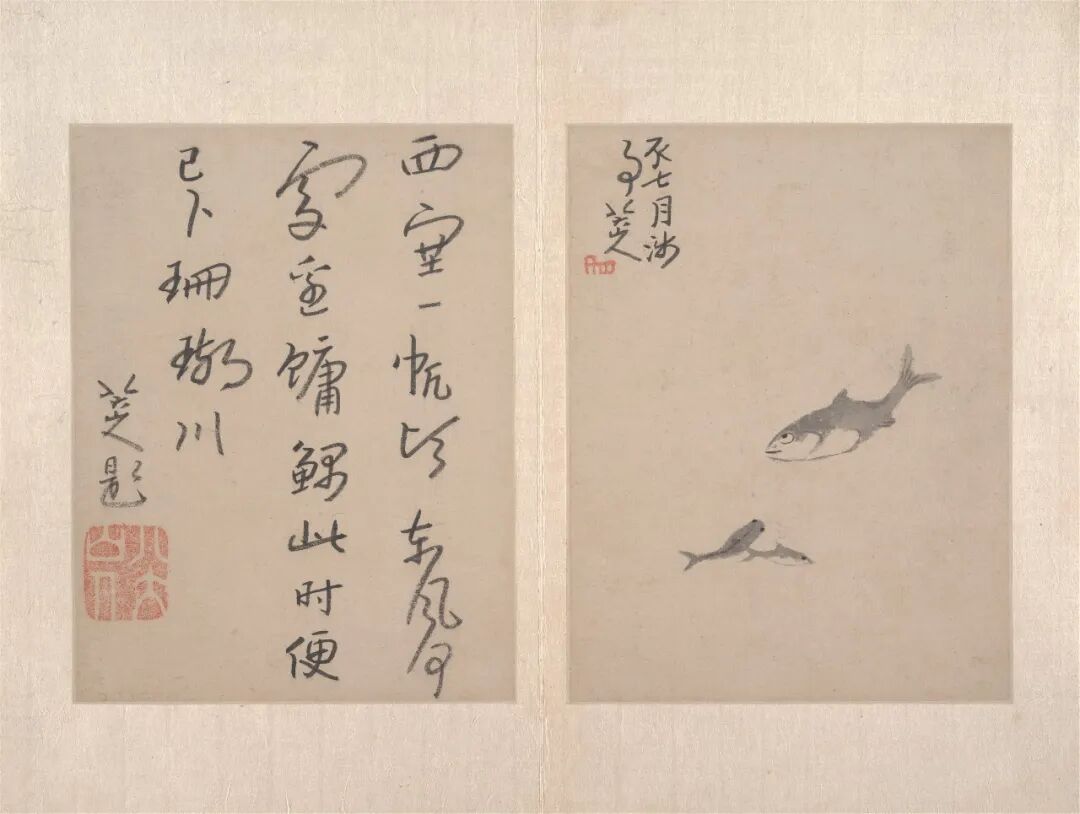
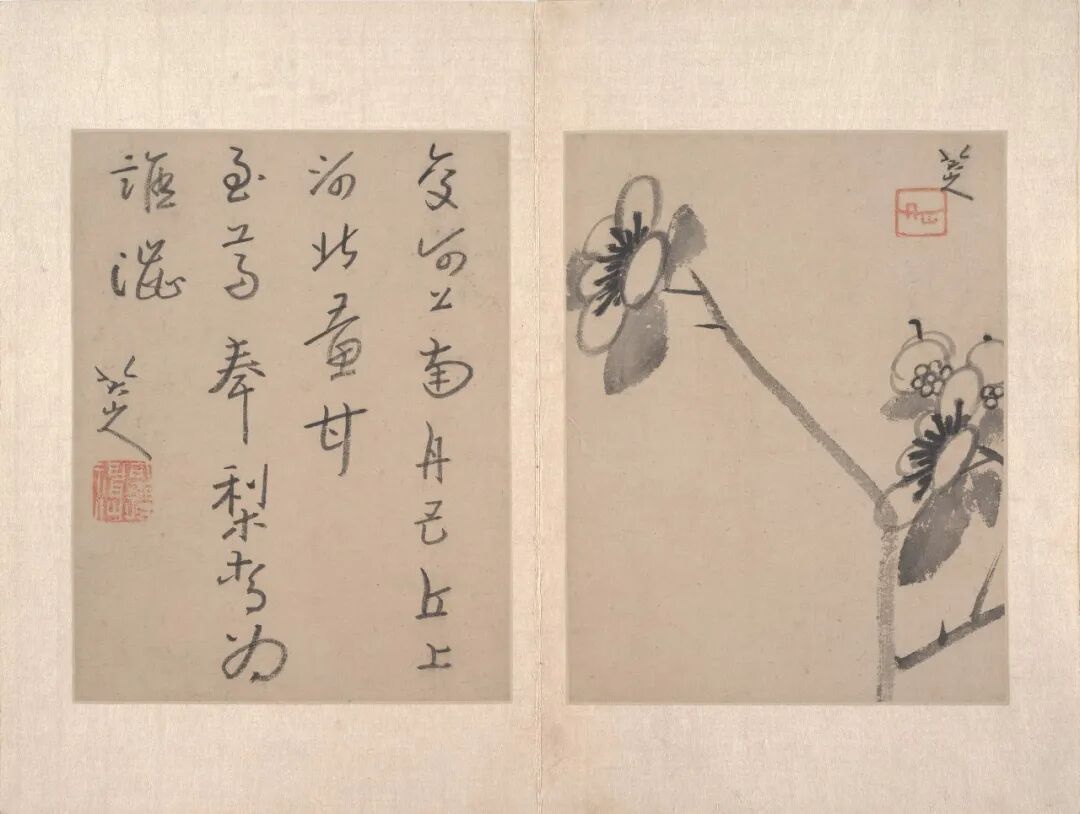
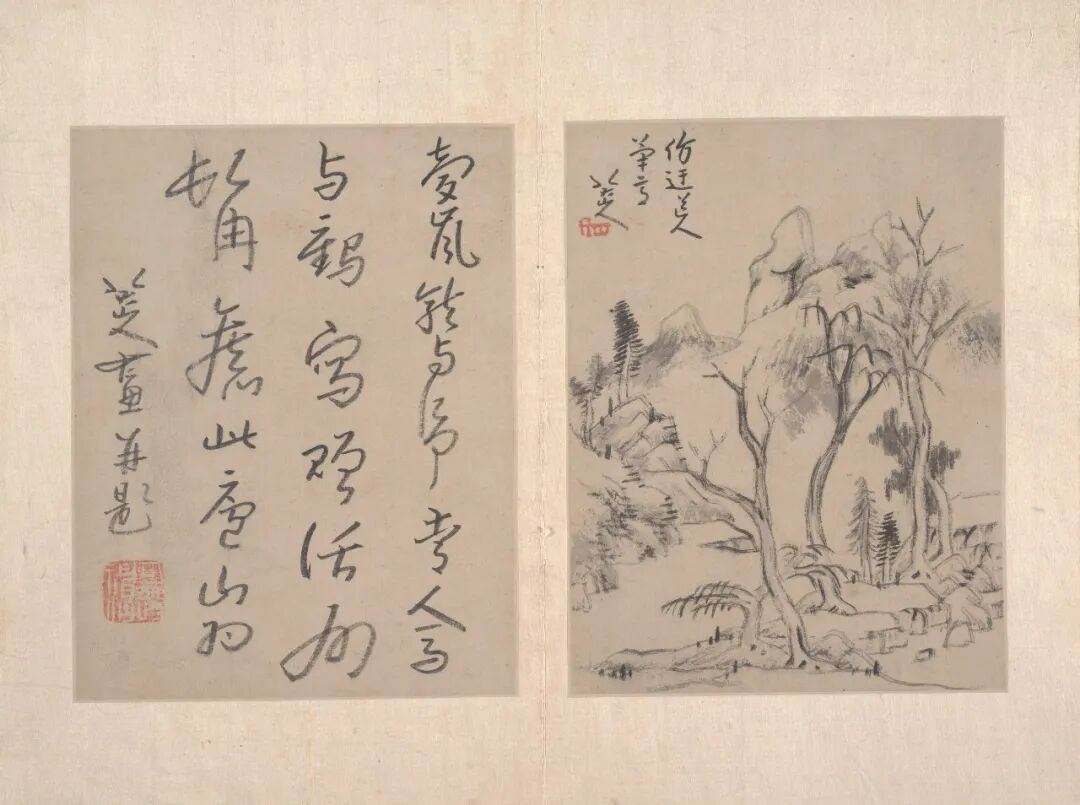
The above comprise the Album of Miscellaneous Sketches
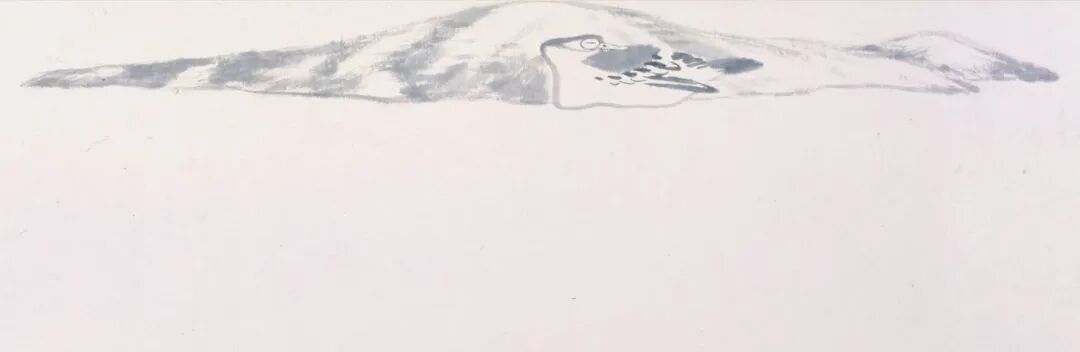
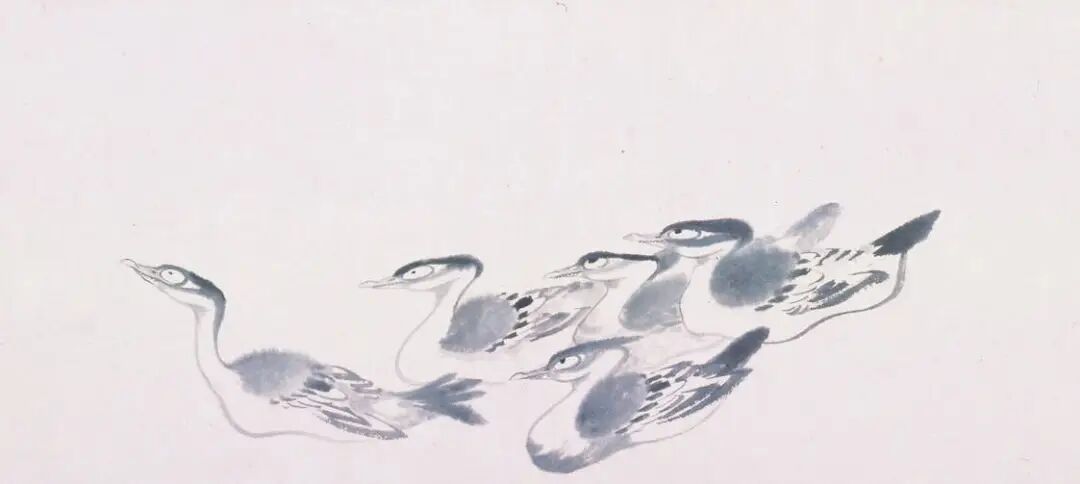
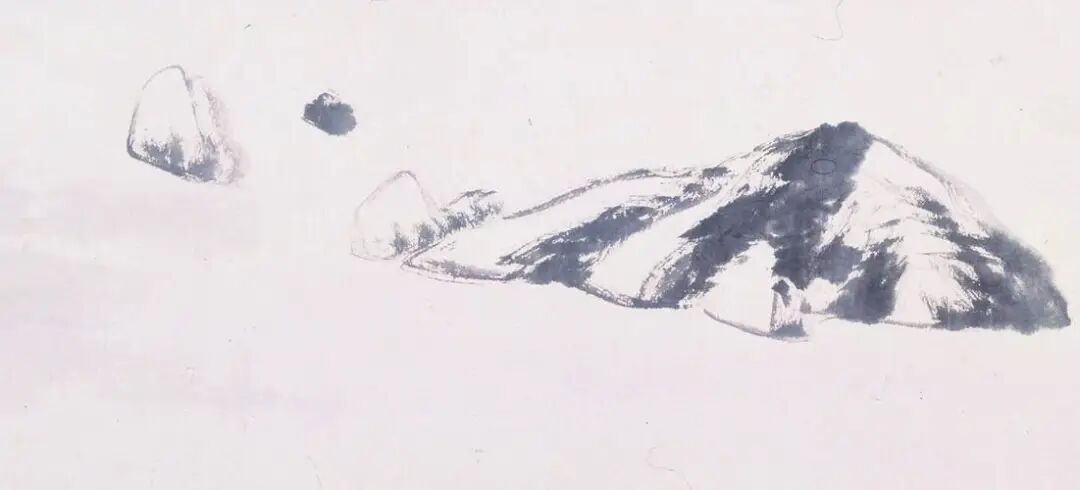
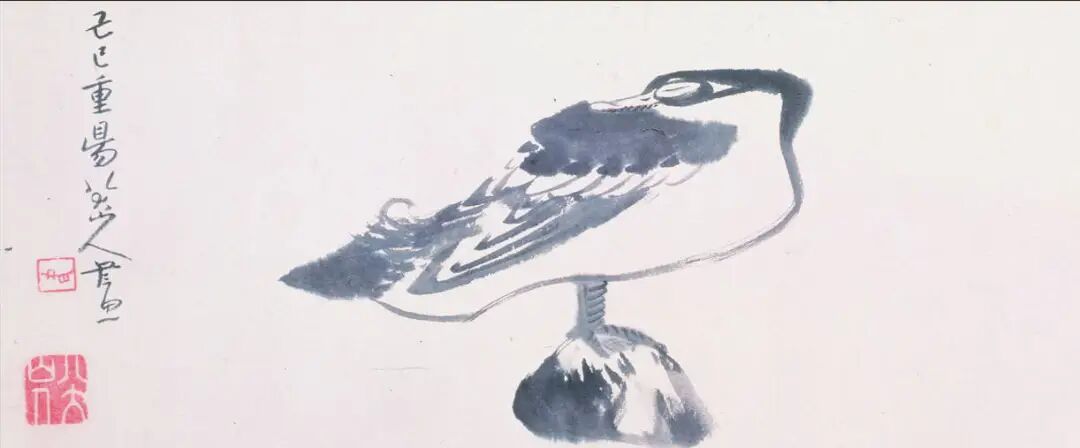
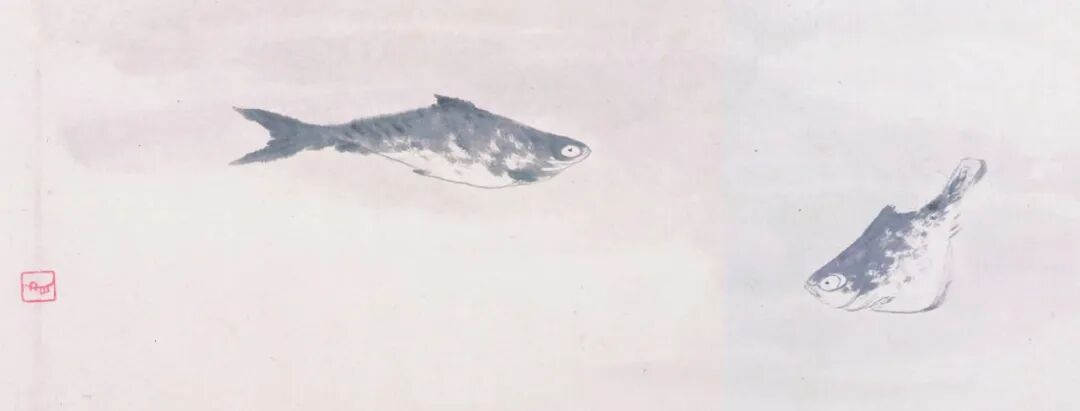
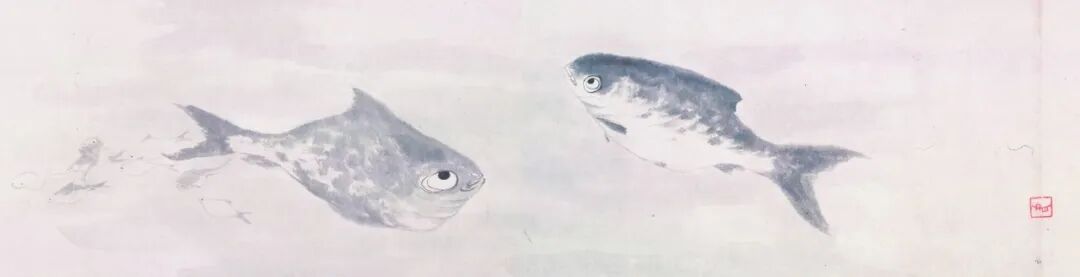
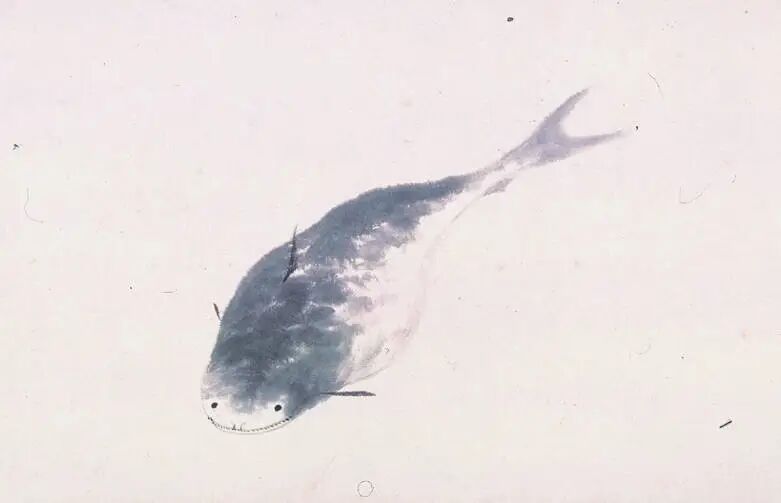
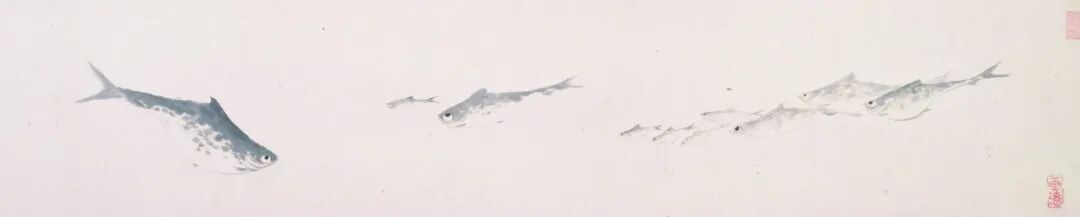
Handscroll of Fish and Ducks
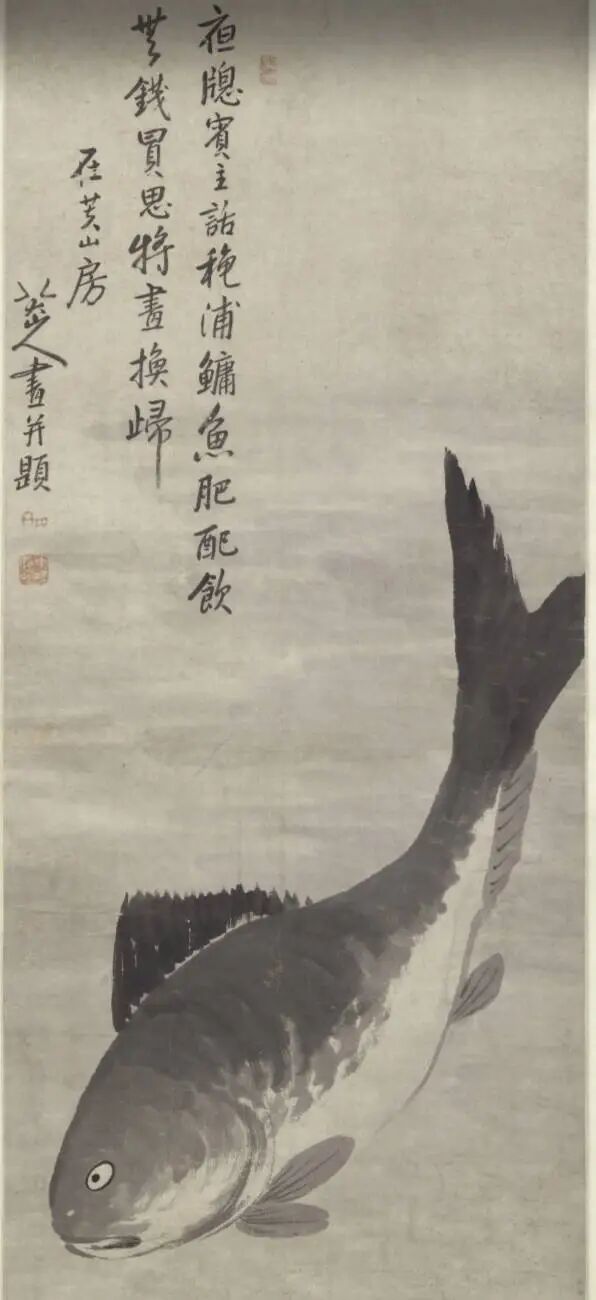
Bighead Carp
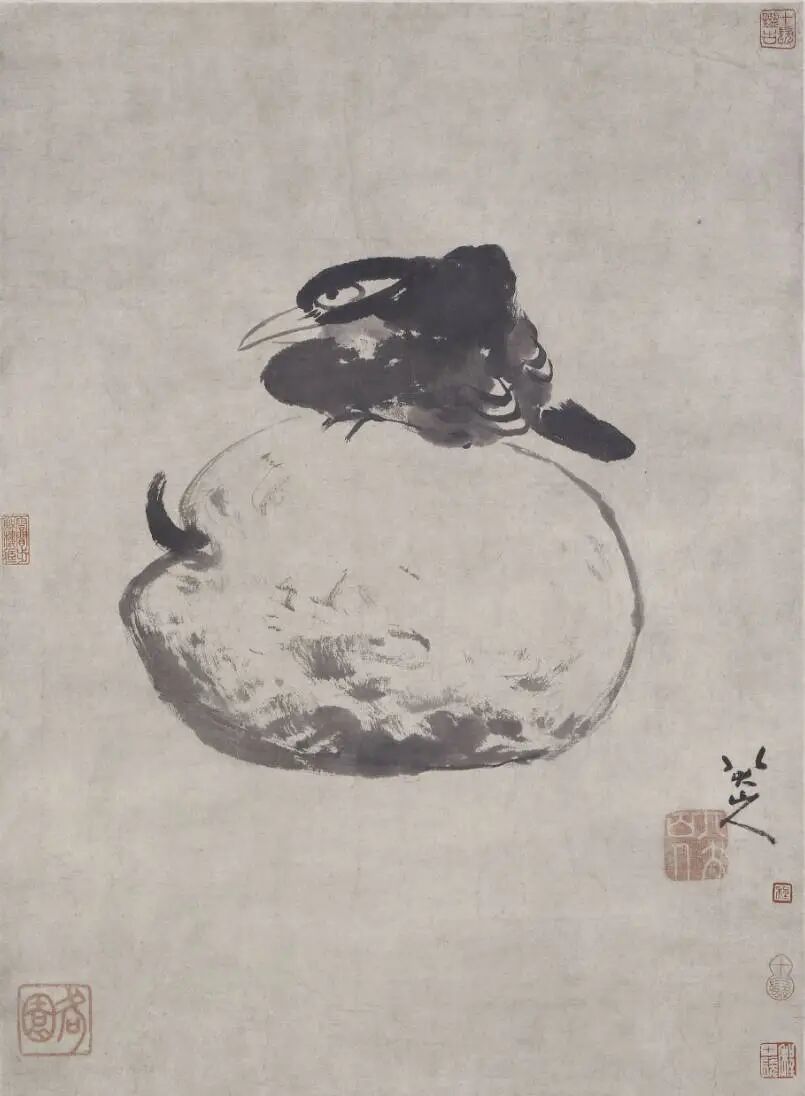
Melon and Bird
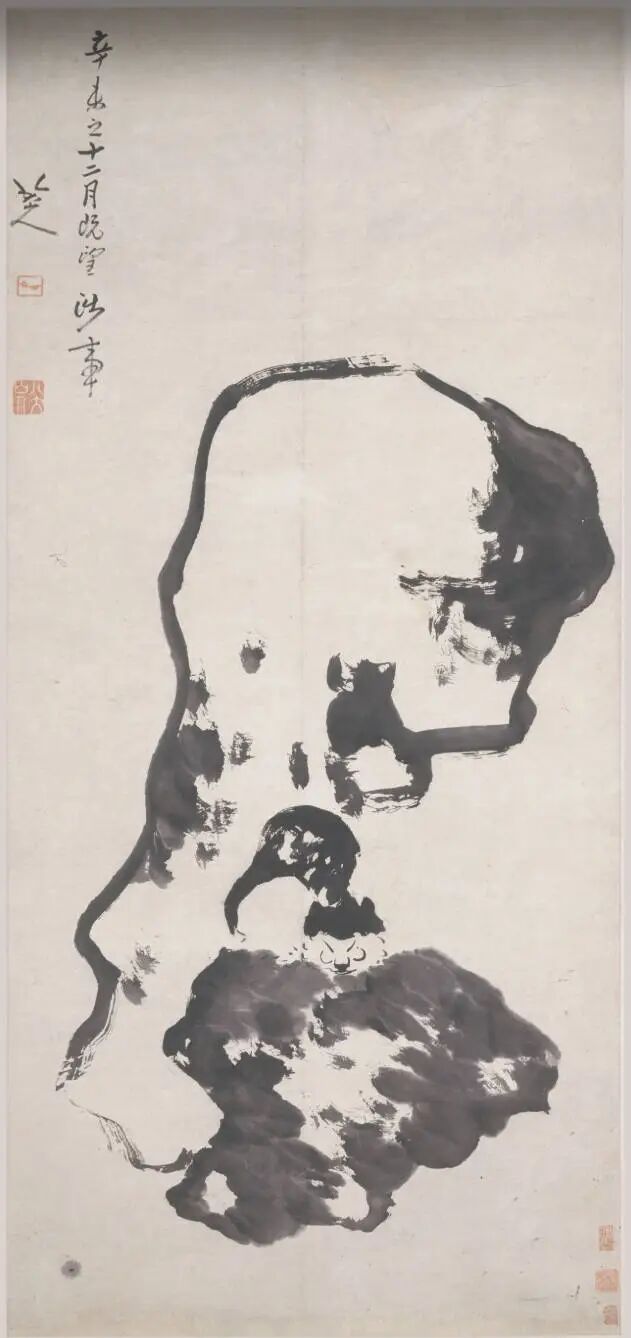
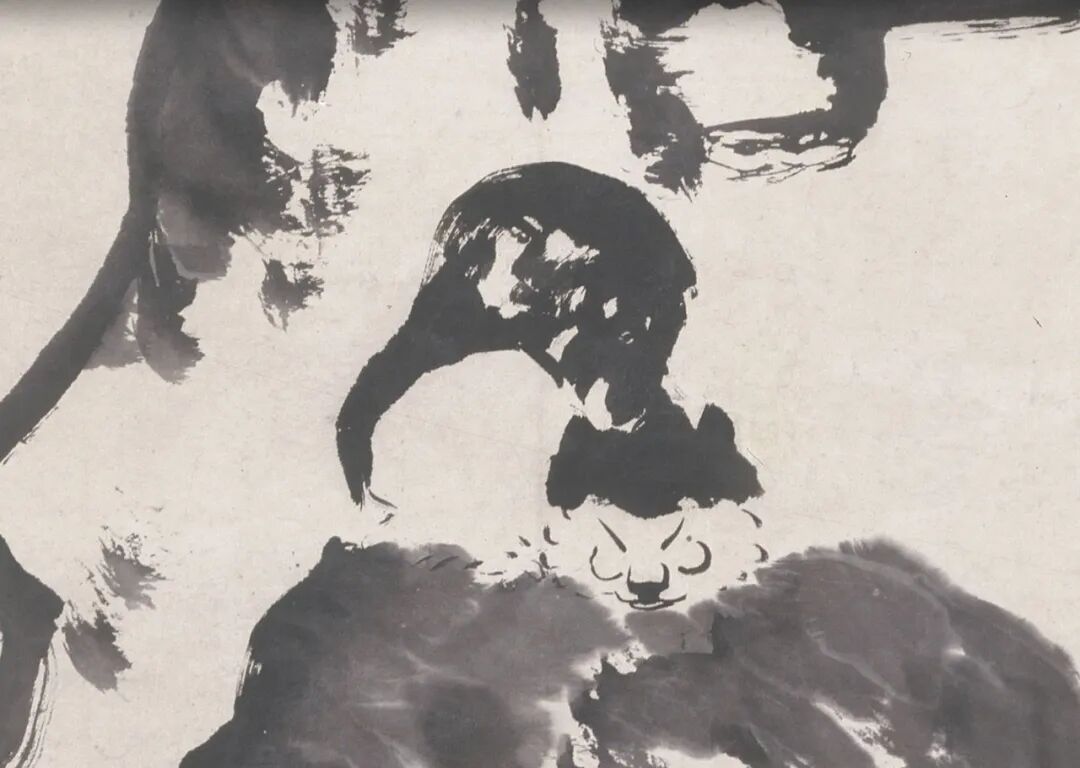
Cat and Rocks
After 1685, Bada Shanren began to copy Wang Xizhi’s model-calligraphy “Linhe Xu” (the “Preface to the Poems Collected at the Orchid Pavilion,” i.e. the Lanting Xu), and to study A New Account of the Tales of the World (Shishuo Xinyu)—a work devoted to recording the words, deeds, anecdotes, bearing, talent, and refined conversation of the literati and celebrated gentlemen from the late Han to the Eastern Jin, with concise, pithy prose that esteemed the Wei-Jin elegance. It is clear that in his late years Bada Shanren no longer deliberately vented his feelings with vehemence, but lived out the true heart of a literatus—which may be precisely a return to the self.
©Jinlan Art and Culture Research
May 7, 2026
21st day of the third lunar month, Year of the Horse (Bingwu)
#ZhuDa #BadaShanren #ZenBuddhism #Artwork #ChineseInkWash #FlowerAndBirdPainting
The background research on Bada Shanren in this article is drawn from Research on Bada Shanren, by Zhu Liangzhi.
Author
