
- 0
- 2,341 words
Landscape (Shanshui) Feature
❖ ❖ ❖
My acquaintance with Shitao began with his Huayulu (Treatise on the Philosophy of Painting), which he distilled, synthesized, and founded from years of habit in painting, thinking, and writing. This work also crystallized the wisdom he gained from studying the I Ching (Book of Changes) around the age of fifty, as well as the solid foundation of his painting practice and scholarly cultivation mutually corroborating one another. It may be said that this is a systematic, theoretically profound work of theory created by a painter himself — a book that moves from the metaphysical to the physical, then verifies upwards from the concrete, and is well worth serious study by any serious practitioner of the arts.
To put it simply, Shitao set an abstract concept at the heart of his painting theory: the “One Stroke” (Yi Hua). He held that the way of studying painting is a complex yet unified system, possessing a holographic view of the cosmos — that all parts of nature are holographically interconnected, sharing a certain identity and equivalence, just as countless identical drops of water converge into rivers, so the whole may be inferred from the part. Within the way of painting exist not only a spiritual system, an informational system, and an energetic system, but also a real and visible material system of bearing and form. We may regard it as a miniature cosmos, and comprehend the process of painting through the study of the I Ching.
Shitao wisely set out from the wisdom of China’s most ancient text, the I Ching, to explain his system of painting theory. He explained in exhaustive detail how to create the works the Chinese call “the unity of Heaven and Man” (Tian Ren He Yi). This requires going through a process; it cannot be accomplished merely by knowing its realm, just as all things in Heaven and Earth are gradually generated from primal chaos — it is a long process. A creator, starting from the most primordial state of chaos, forms through self-consciousness the mode of thought in which subject and object stand opposed, and then, through the evolution of inner consciousness and objective practice, attains the unity of subject and object, thereby completing the creation of artistic life.
We may therefore say that the Huayulu is neither the guide of a metaphysical aesthetic ideal nor the instruction of a technical school. It is a system of painting theory that sets out from the study of the cosmos, proceeding from the void to the concrete, and from the concrete verifying the theory of the void. It is also a pioneering theory that can truly allow one to grasp artistic creation.
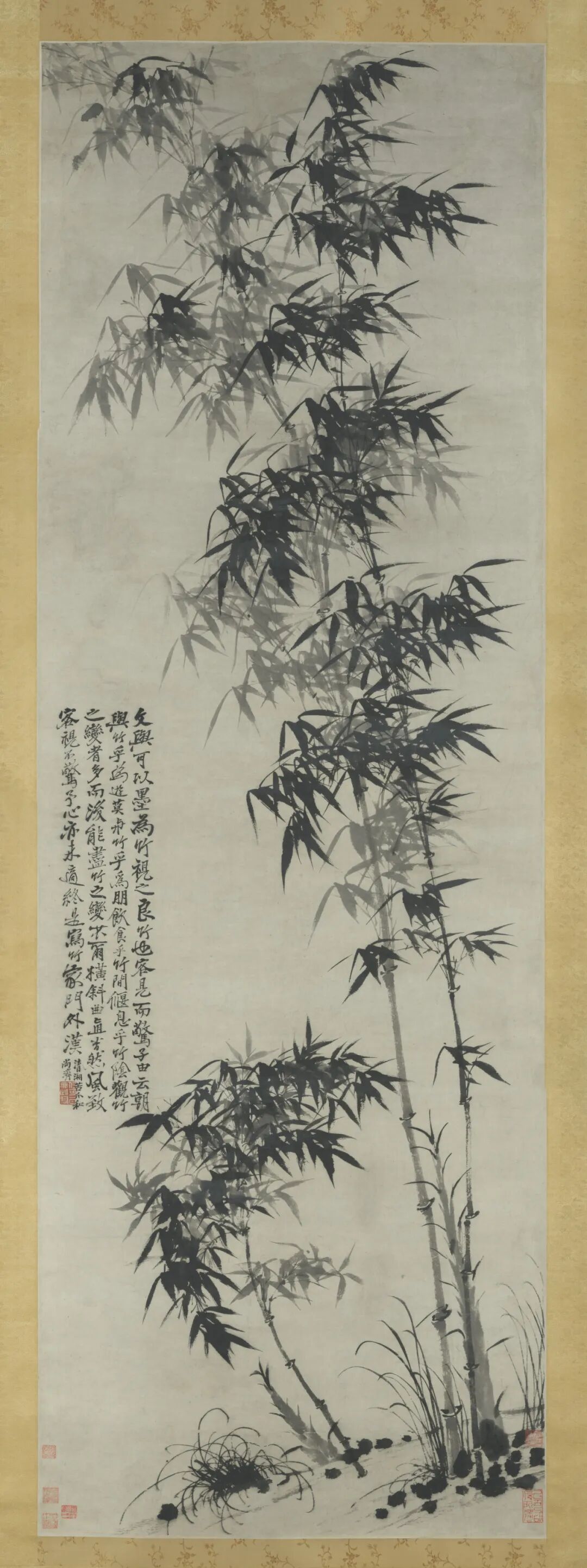
Bamboo in Wind and Rain (Fengyu Zhu), by the Qingxiang Laoren (Old Man of Qingxiang); formerly in the collection of Zhang Daqian
Now in the collection of the Metropolitan Museum of Art, USA
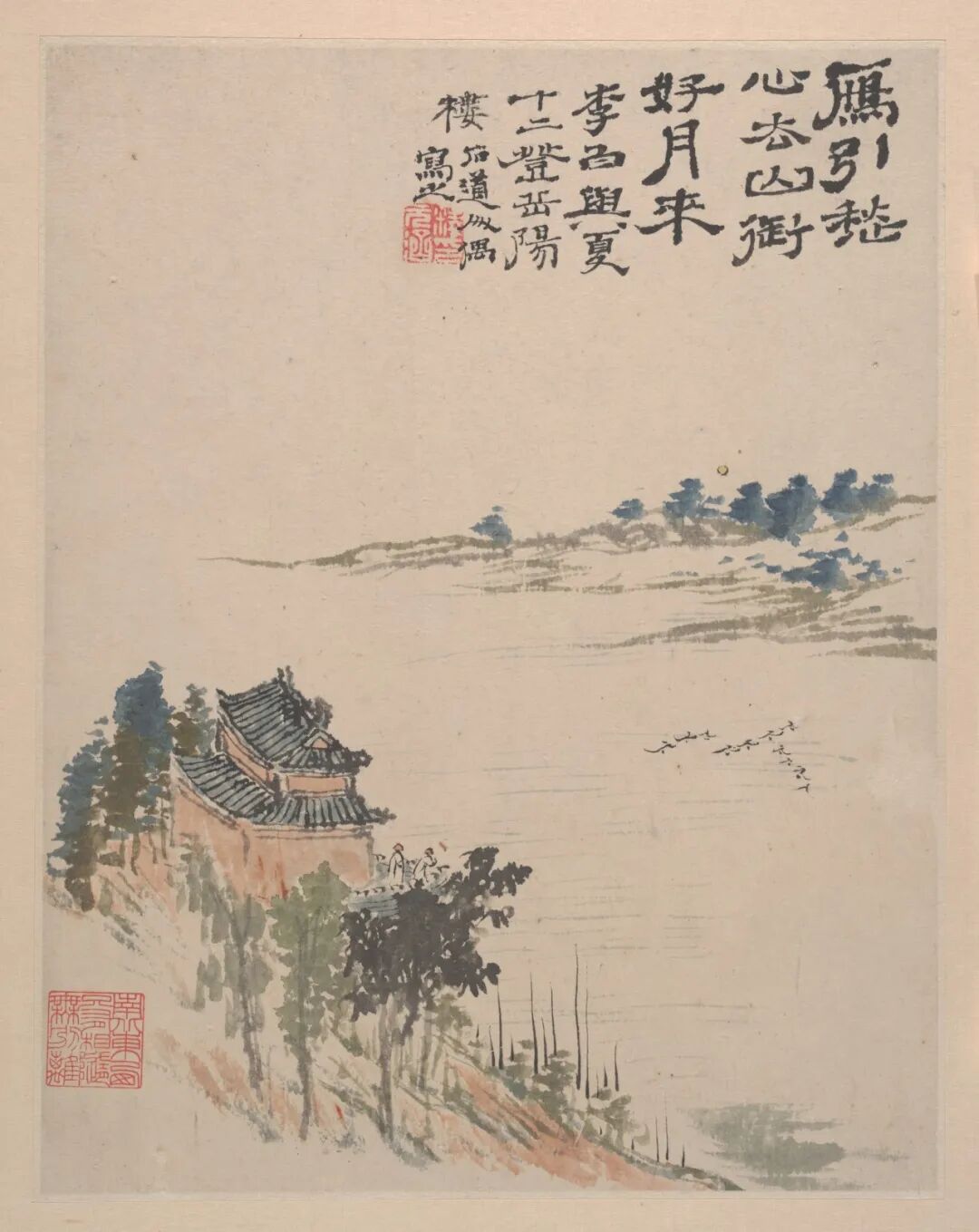
Returning Geese Beneath the Moon, seal: “Shi Yuanji yin”
Now in the collection of the Metropolitan Museum of Art, USA
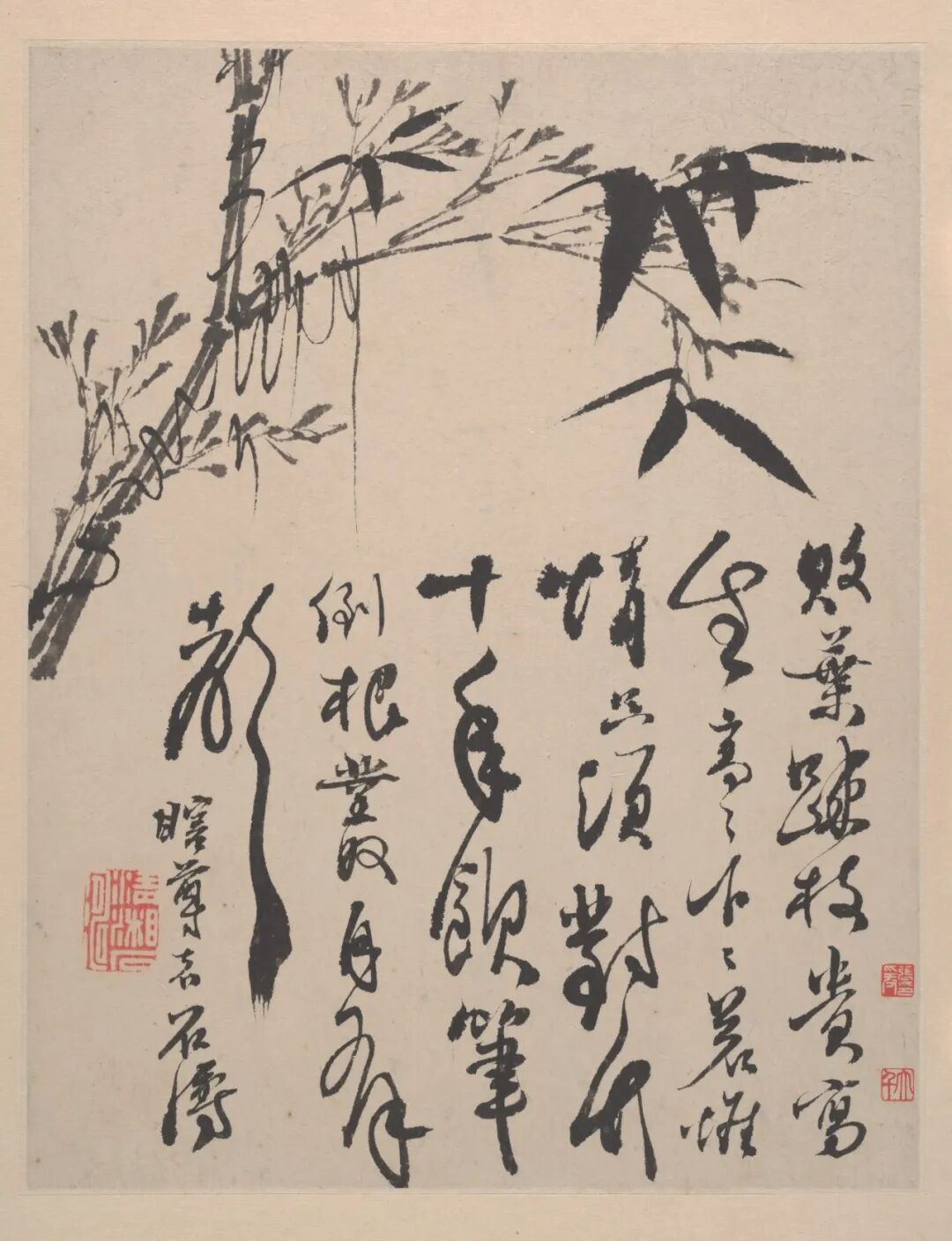
Painting Bamboo, seal: “Qingxiang Shitao”
Now in the collection of the Metropolitan Museum of Art, USA
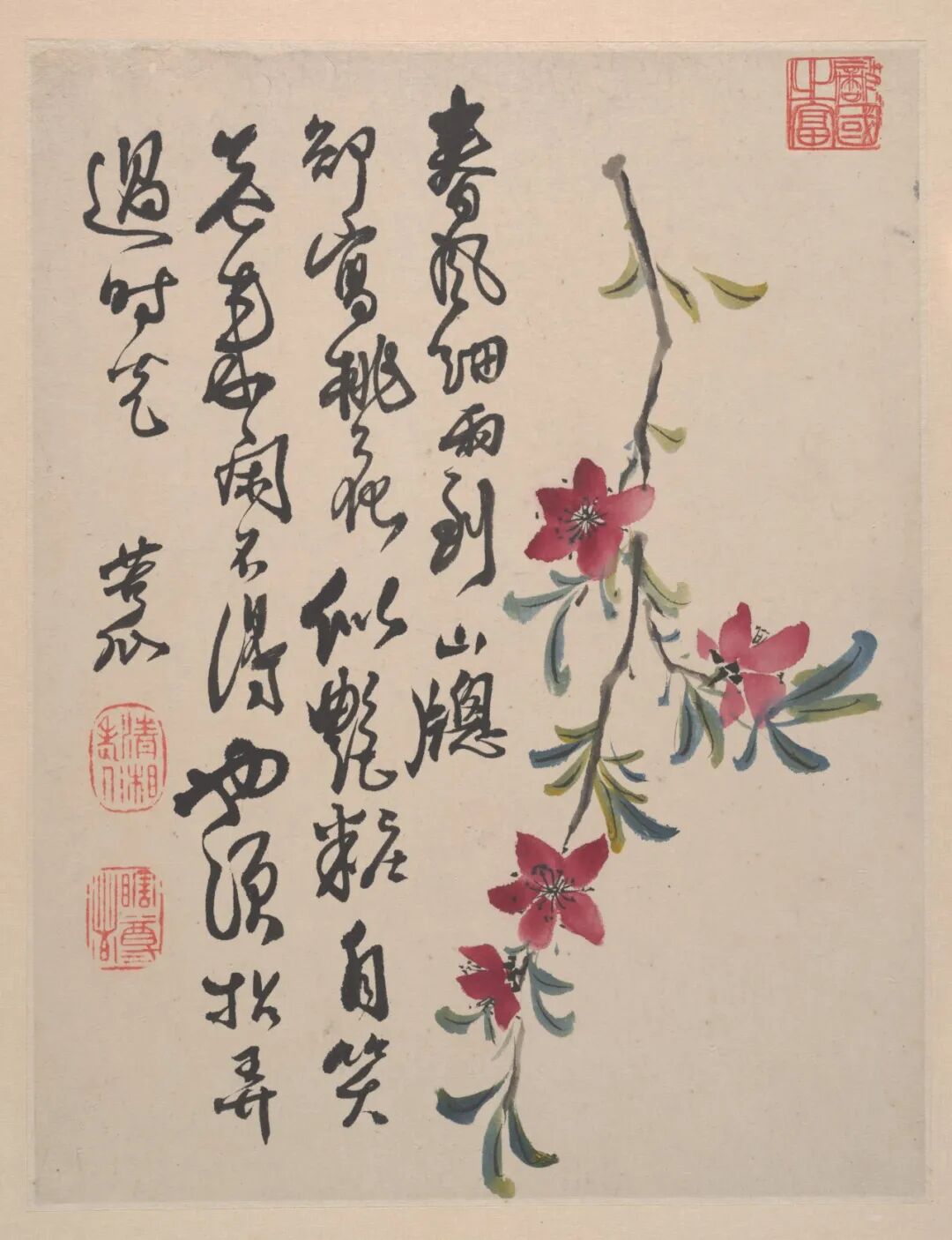
Spring Breeze and Fine Rain by the Mountain Window, seals: “Qingxiang Laoren,” “Xia Zunzhe”
Now in the collection of the Metropolitan Museum of Art, USA
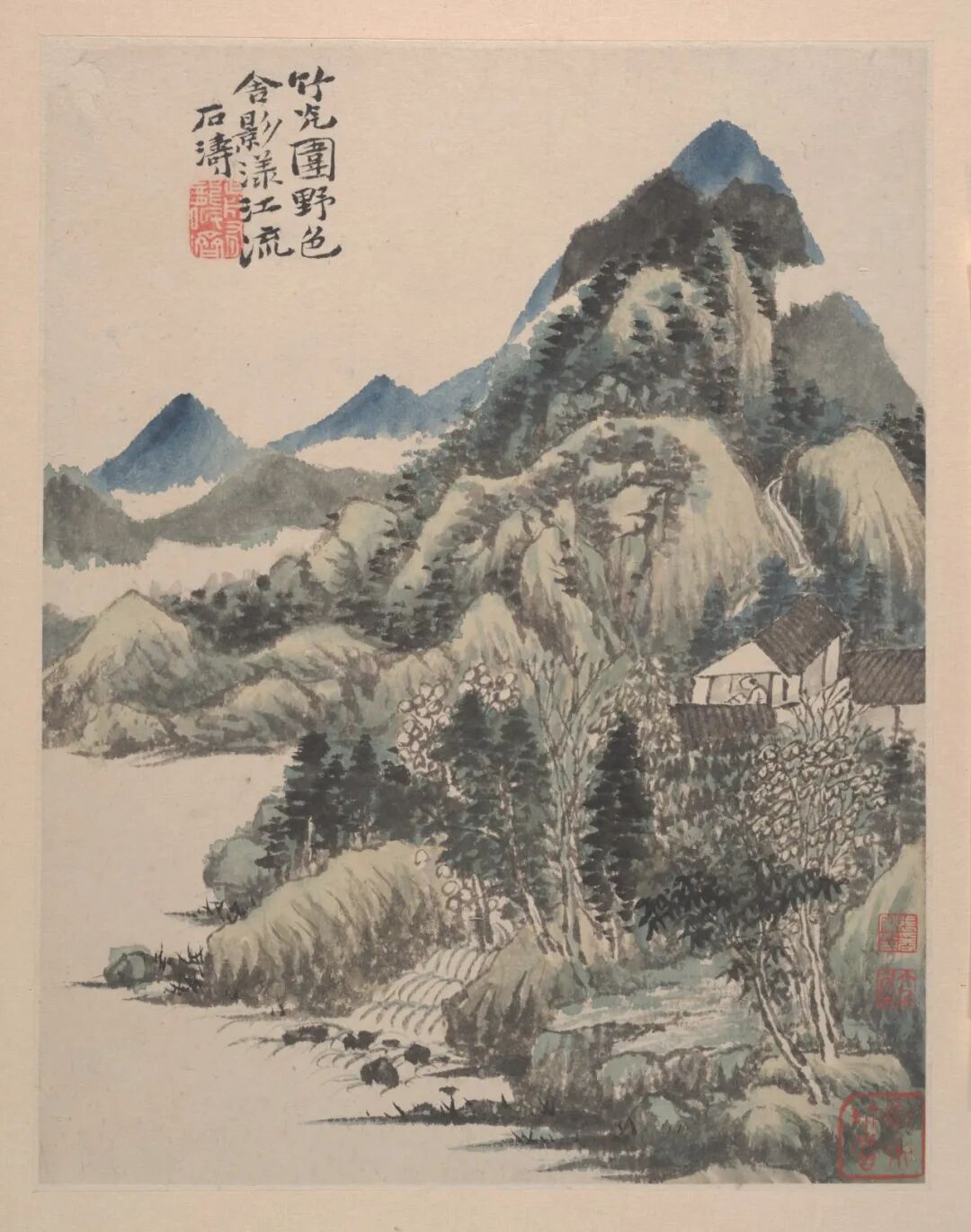
Thatched Cottage in the Wild, seal: “Qingxiang Longmian Ji”
Now in the collection of the Metropolitan Museum of Art, USA
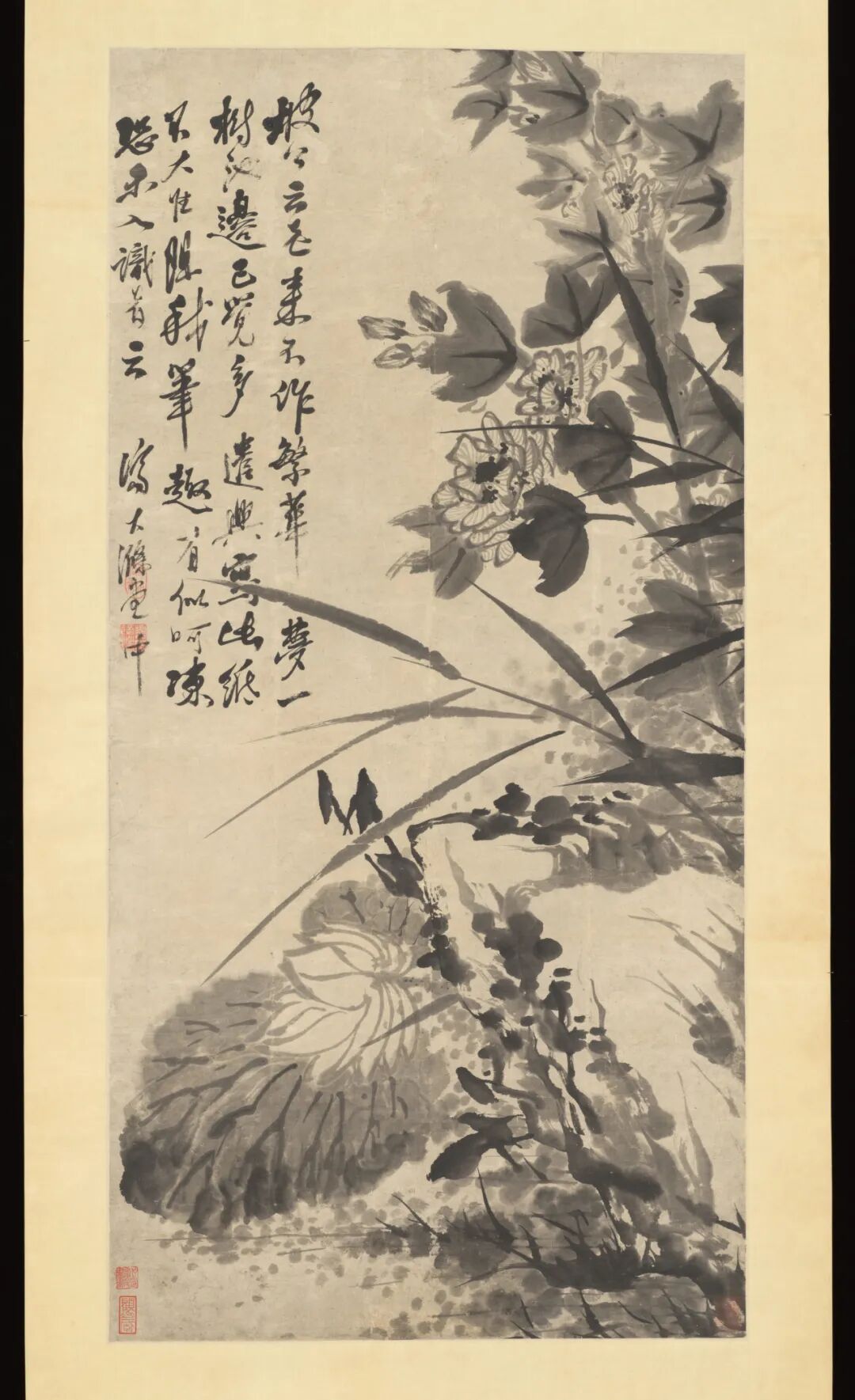
Flowers and Rocks
Now in the collection of the Metropolitan Museum of Art, USA
Shitao’s original name was Zhu Ruoji. He was a descendant of the Jingjiang Prince of Guilin, of the line of Zhu Yuanzhang, the founding Ming emperor — a genuine bearer of Ming imperial blood and a member of the imperial clan. Yet at the tender age of three he lived through the Jia-shen dynastic catastrophe, when the Ming regime collapsed. Shitao’s father, Zhu Hengjia, the eleventh Prince of Jingjiang, attempted to set himself up as the legitimate Southern Ming successor of the Zhu line; owing to strife among the rival Zhu princes, he was captured by the forces of Zhu Yujian of Fujian and cruelly executed, his family implicated and purged. Shitao survived the calamity, rescued by a eunuch of the princely household, and took refuge in Xiangshan Monastery, where he and the household servant shaved their heads together and withdrew into the monastic life. Thus this famous artist, one of the “Four Great Painting Monks” of the early Qing, was in fact forced into the priesthood. By way of one remark: unlike Bada Shanren — who was nineteen when he suffered the fall of his state and family, formally entering the monastic life only after his father’s death — Shitao was still an unformed child, his mind not yet awakened, with no capacity for independent judgment, and so had no choice but to become a monk. One may also infer that, for Shitao in contrast to Bada, the shock of a lost dynasty and family was not nearly so great.
What follows is a brief account of Shitao’s artistic life, proceeding by way of the chronological biography.
In 1666, at the age of 25 — the fifth year of the Kangxi reign, a bingwu year — Shitao had already traveled south to Xuancheng in the Anhui region. As a young man he devoted himself to the study of the traditional painting of the ancient masters, taking the landscape painting of the Song and Yuan dynasties as his model — “the brush without fixed posture, now thickened, now thinned, all springing from his own intent” — and produced many works of Mount Huang. In this period, officials and notables such as the prefect of Xin’an were the patrons who financed his journeys to Mount Huang.
The Sixteen Arhats (Shiliu Yingzhen Tu), by Qingxiang Shitao
In the collection of the Metropolitan Museum of Art, USA
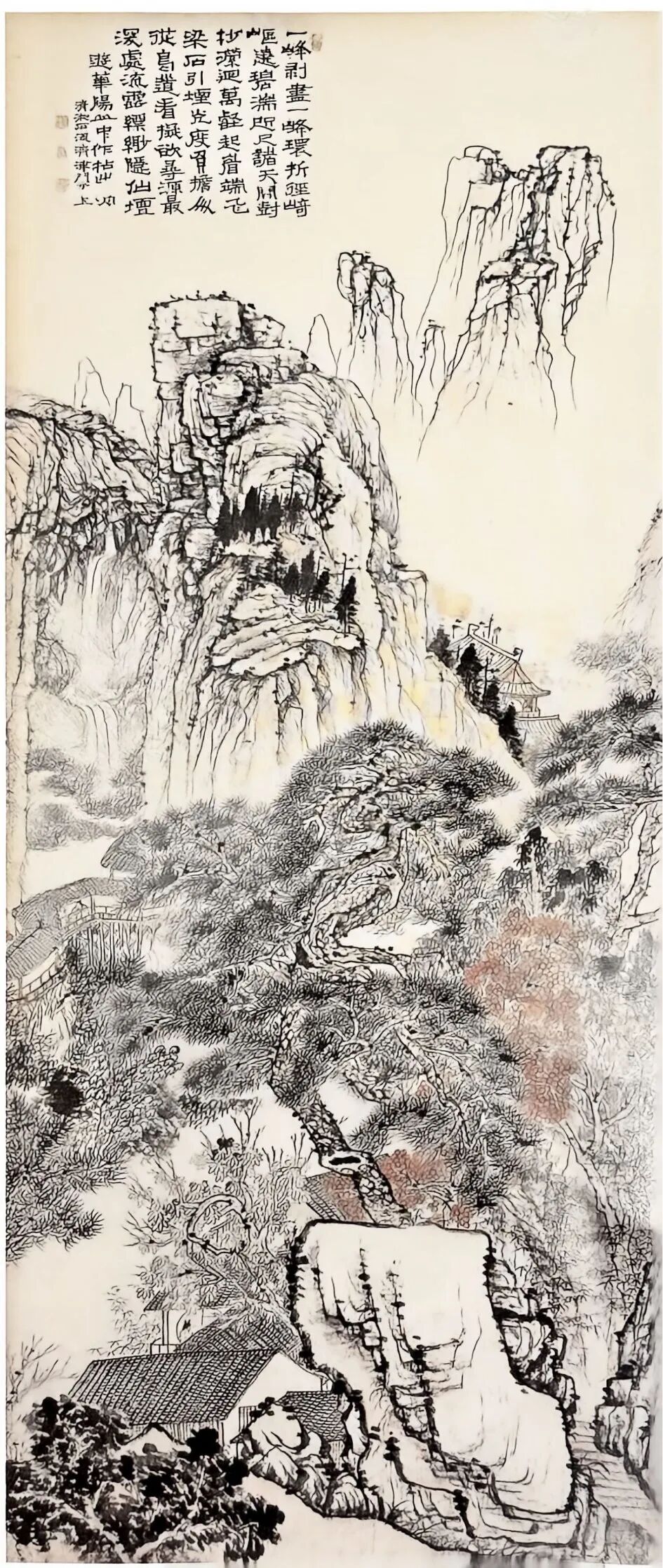
Touring Mount Huayang, in the collection of the Shanghai Museum
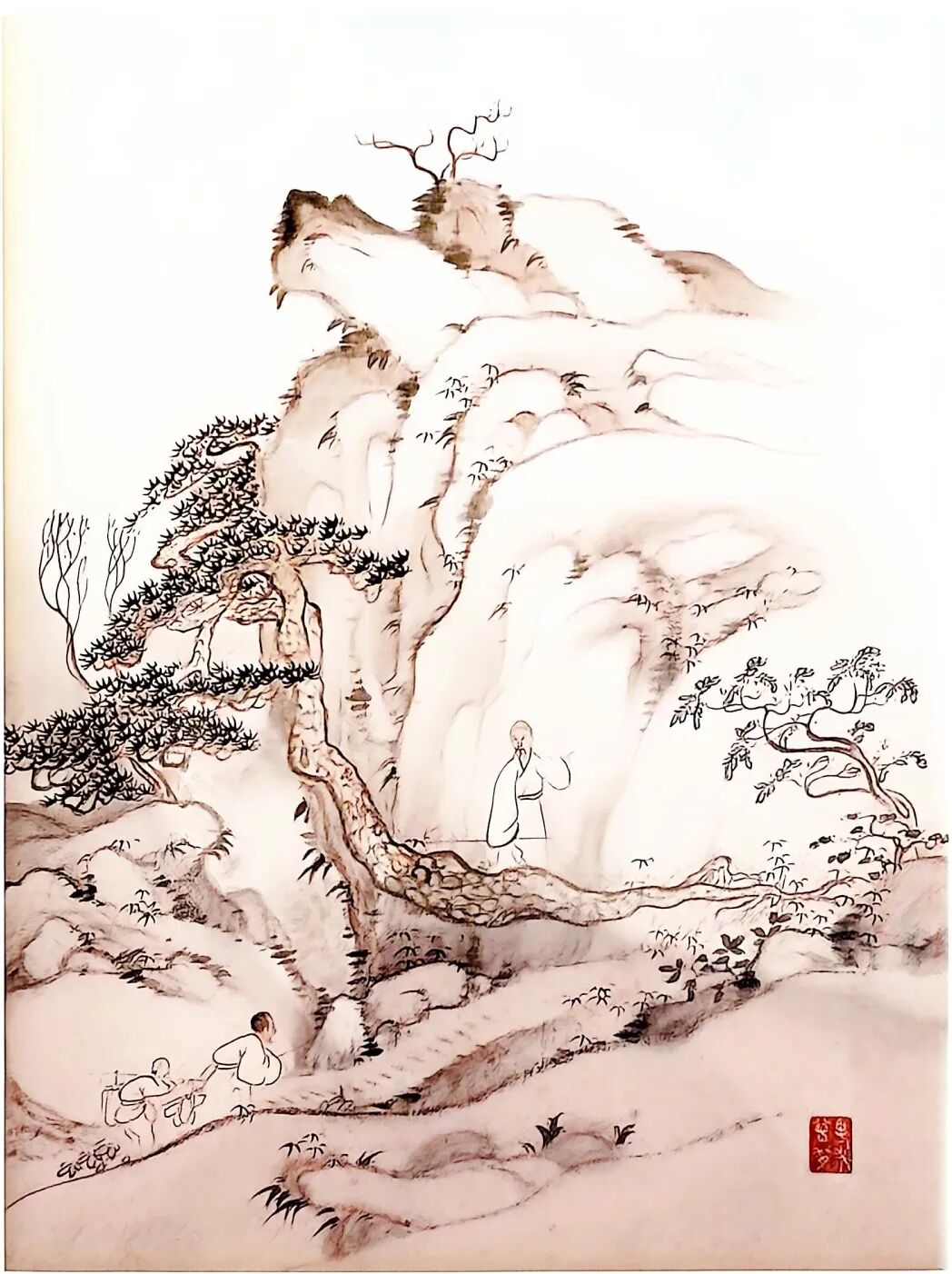
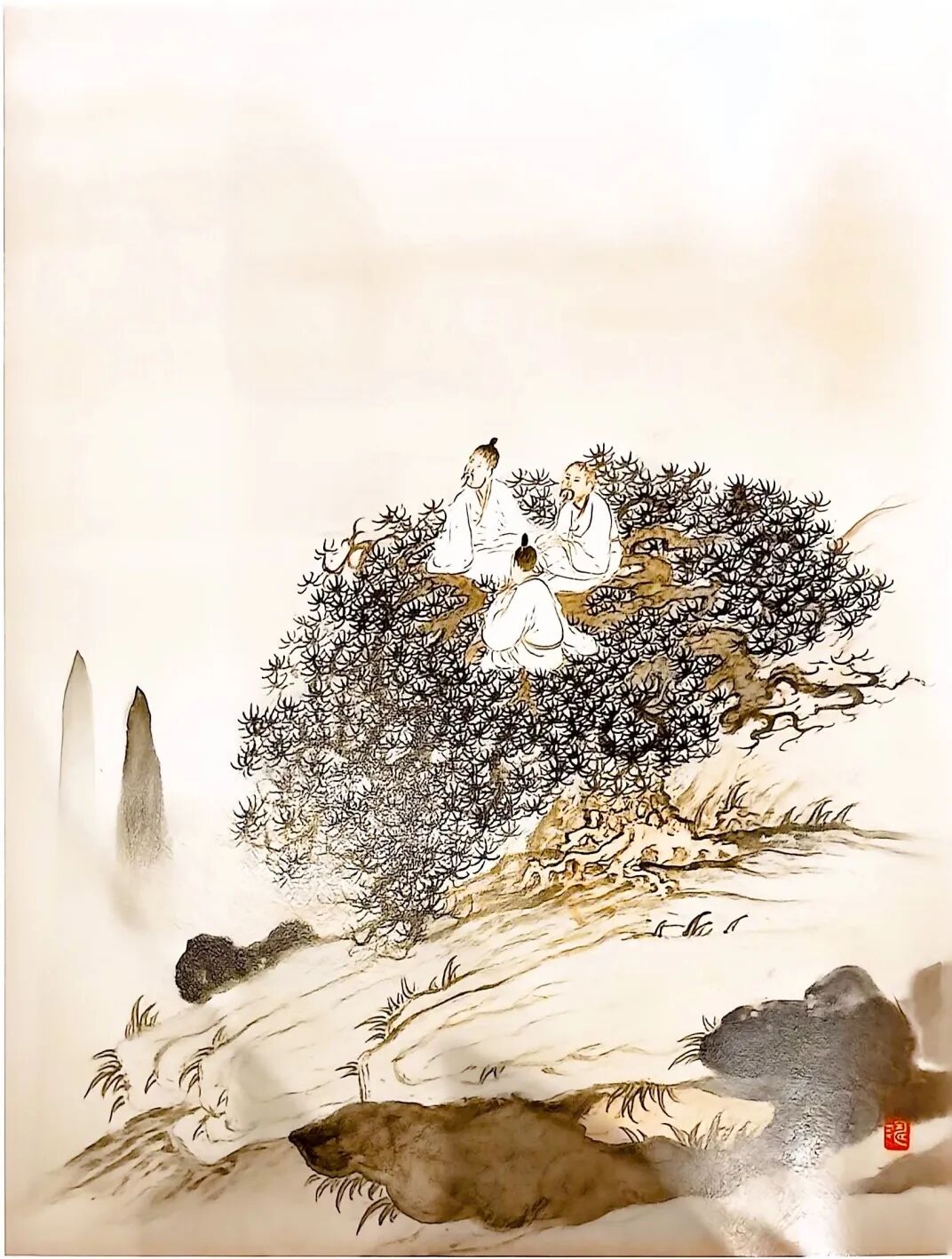
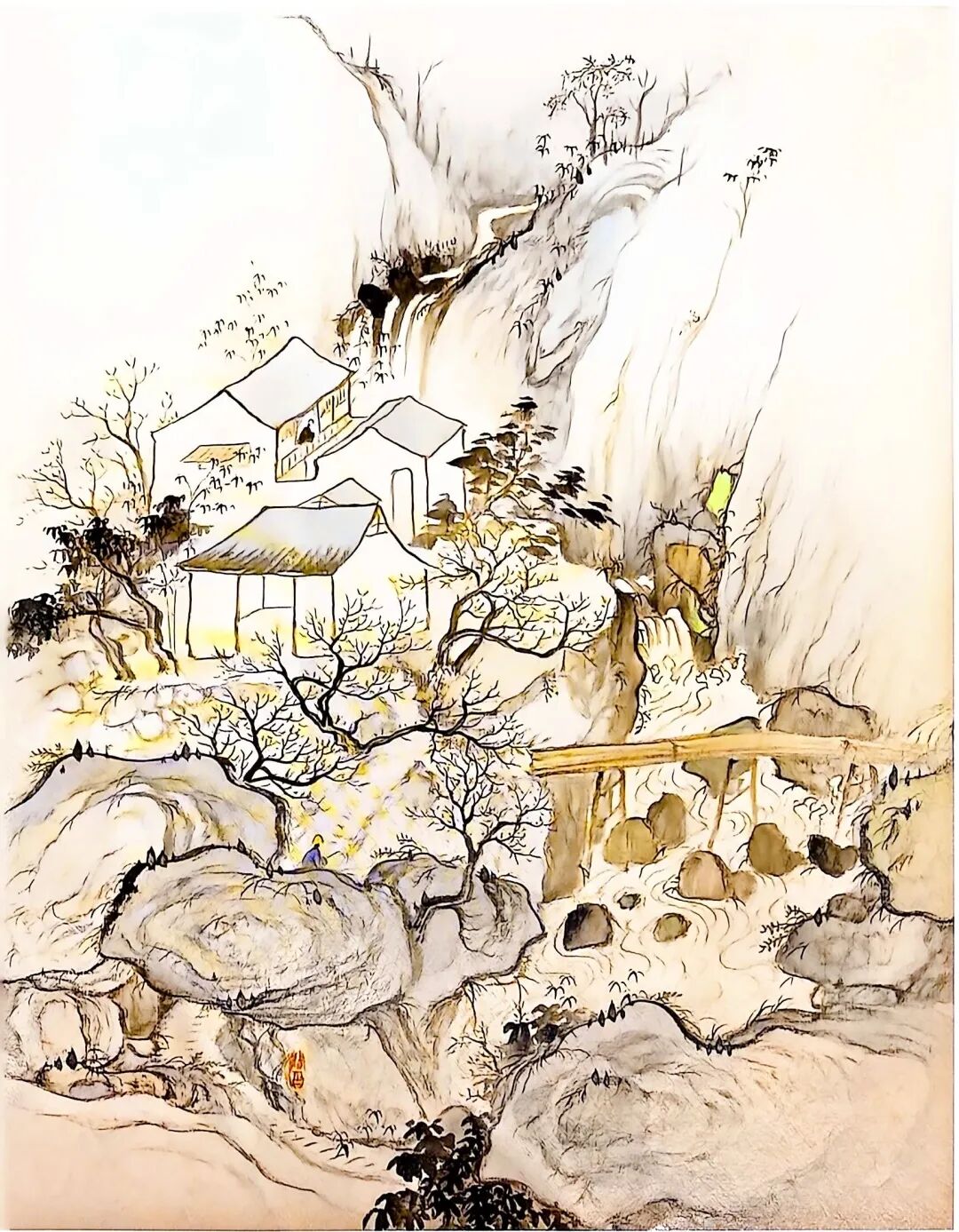
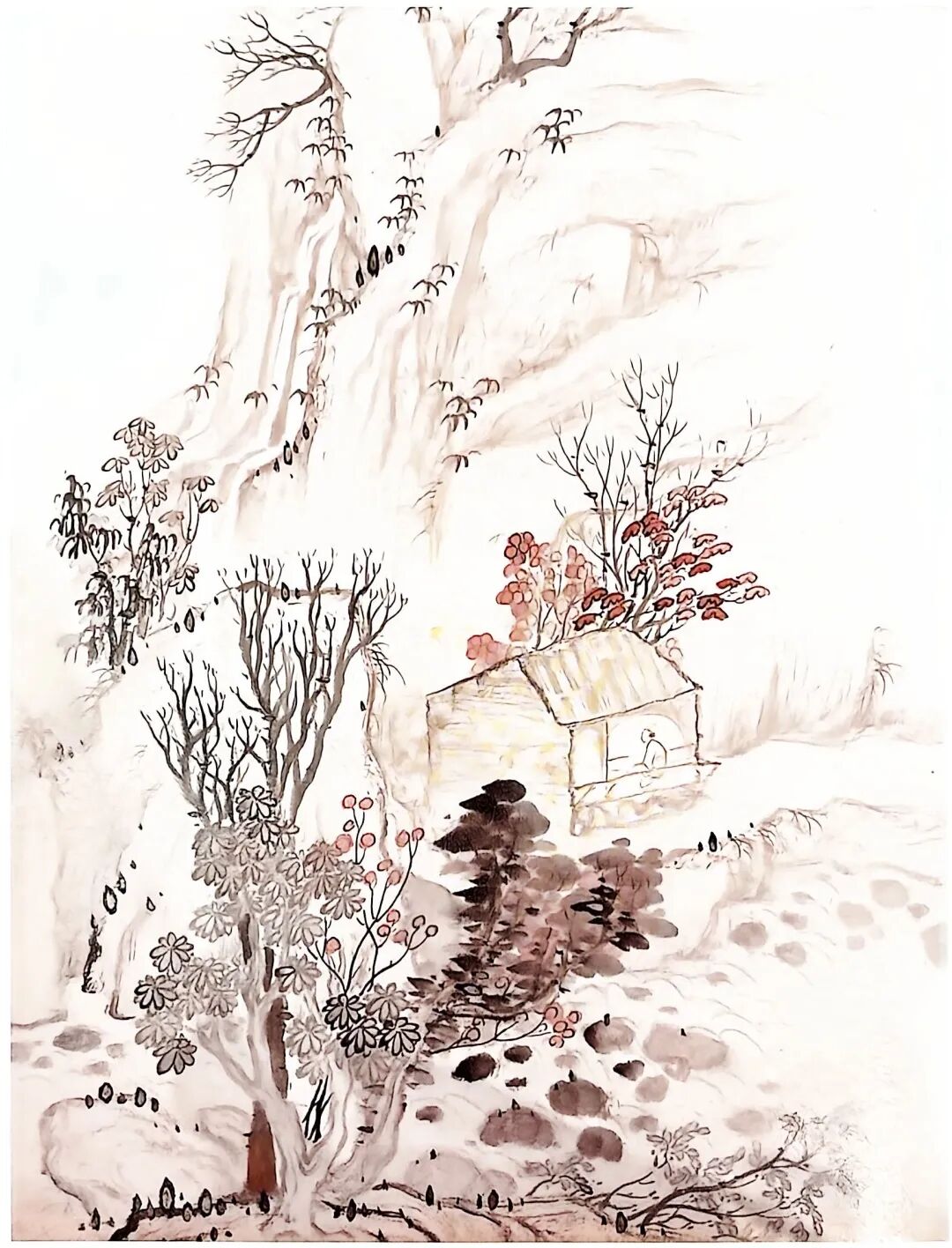
The Album of Mount Huang, in the collection of the Palace Museum, Beijing
In 1680, at the age of 39 — the nineteenth year of the Kangxi reign, a gengshen year — Shitao took up residence as a Chan monk at Changgan Monastery in Nanjing, whose official Ming-era name was Dabao’en Temple, a famous Buddhist temple of Jinling. There he opened the hall and expounded the Dharma, dwelling in a thatched pavilion named “Yi Zhi Ge” (“Pavilion of a Single Branch”). Shitao loved to plant all manner of flowers in the temple courtyard — hibiscus, yellow chrysanthemums, cockscomb, crab-apple, early plum, and cassia. Fond of flowers and trees, attentive to the vitality of growing things, he styled himself “Man Beneath the Branches.” Qu Dajun (one of the “Three Great Masters of Lingnan” of the late Ming and early Qing), a fellow surviving subject of the fallen Ming who cherished thoughts of his lost homeland, once begged flowers from Shitao for a vase, and composed odes to them. From the ten quatrains in five-character verse, “Begging Flowers of Chan Master Shitao to Fill a Vase,” one may glimpse a facet of Shitao’s life at the Jinling temple — his intercourse with men of letters and old loyalists of the former dynasty.
I
The abbot’s garden bursts with blooms; deep autumn is just like spring.
I beg some cuttings from the master, to keep me company as I sit grieving.
II
None so fine as the hibiscus, each branch swaying, leaning toward the mirror at a slant.
Thankfully no snow upon my temples, I fear no flower’s mockery.
III
Of chrysanthemums I love the yellow first, then the red and white.
The yellow is the sweetest in savor; even fallen petals are a pity.
IV
The cockscomb stands a full foot tall, cluster upon cluster of lush crimson.
Though its flower-head is heavy, the frost lies upon it yet it has never drooped.
V
Among the flowers, which can compare with the ever-blooming scarlet of old age?
I pluck one to hold before the bright mirror, wishing my fading face were its equal.
VI
Before the Start of Winter has turned cold, already it is time for the plum to open.
A single blossom half-opened, one knows it only from within stillness.
VII
The cassia blooms braving the cold, its fragrance so strong as to seem almost harsh.
Not so pure as the early plum, which dwells its whole life amid ice and snow.
VIII
The one that opens first, to shun the ice and snow — is that the heart of the southern branch?
It would stand together with the yellow chrysanthemum, their fragrance making one grove.
IX
A single branch thrusts through the crab-apple; unopened, none notice it.
I send word to the birds among the branches: do not peck about and scatter the nectar.
X
The flowers love the immortal’s favor, and would retire with him into the jade flask.
I know not if the master of the flowers would be willing to part with a few branches.
Unlike the extraordinary scenery of Jingting Mountain and Mount Huang in southern Anhui, Nanjing abounds in low hills, and its plum blossoms are renowned as the finest under Heaven. In this period Shitao’s brush often produced works of flowers and plants, with plum blossoms foremost among them. Moreover, it was during his time in Jinling that he had his first audience with the Kangxi Emperor on the latter’s southern tour, which laid the groundwork for his later journey north to the capital. In his “Poetry Scroll of Searching for Plum Blossoms” he obliquely expressed his gratitude.
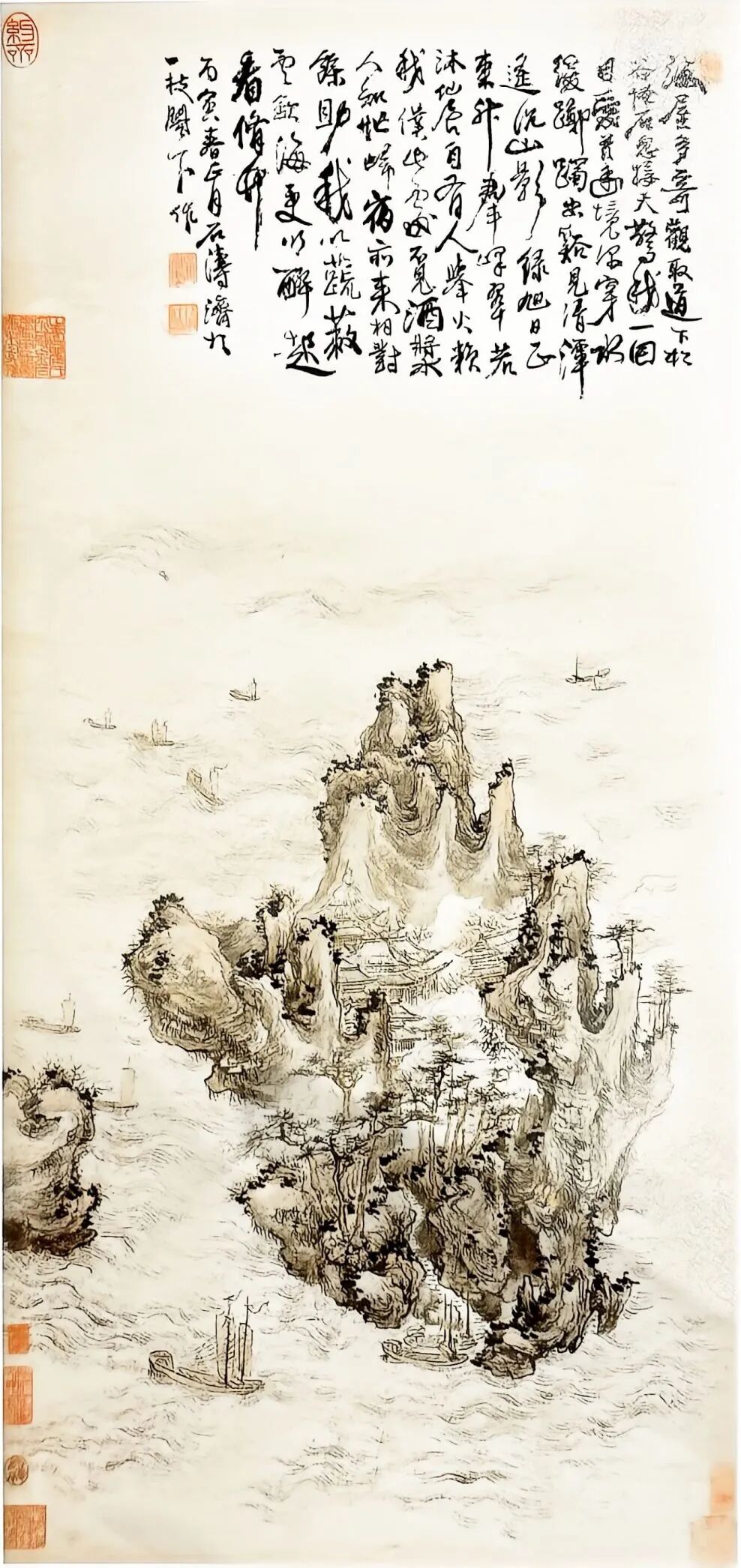
Marvelous Spectacle of the Ocean Pavilion (Haiwu Qiguan Tu), 1686
In the collection of the Wuxi Museum
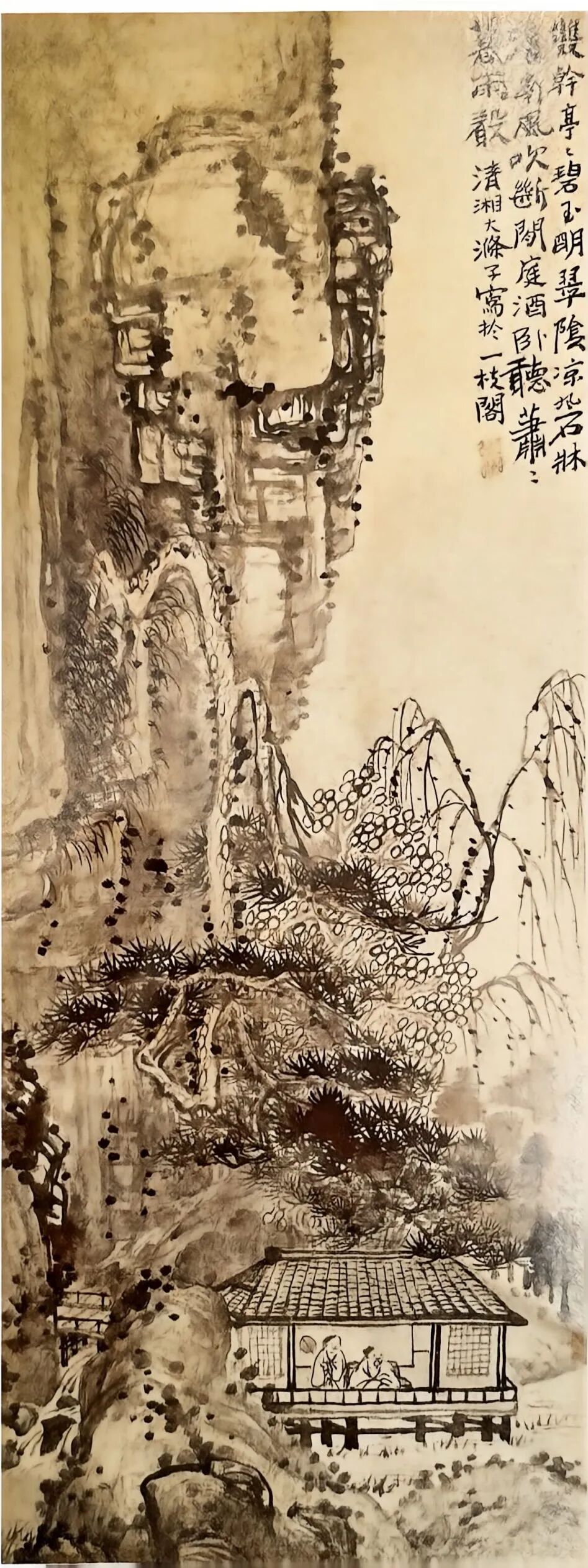
Listening to Rain in a Mountain Pavilion
In the collection of the Shenyang Palace Museum
It can be seen that Shitao still harbored expectations of an official career. As he wished, in 1690 he entered the capital, associating with the princes, nobles, and official notables of Beijing. But the Beijing officialdom proved no small trial for Shitao, especially since his aesthetic path differed from the mainstream manner of painting then prevailing in the capital. Shitao advocated “searching out all the strange peaks to make one’s drafts” and “I use my own method,” stressing sketching from life and individual creation; whereas the mainstream school of the capital, the Four Wangs (Wang Shimin, Wang Jian, Wang Hui, and Wang Yuanqi), prized following the ancients and employing a formula of copying old models. Shitao’s creative philosophy found little acceptance, and in the gengwu year (1690) he inscribed upon a painting the quatrain:
“Bitter Gourd Monk begging his food from every quarter, all precepts abandoned, hastening toward the Lesser Vehicle. Fifty years I have walked alone, and now go forth solitary; a body sick with Chan, colder than ice.”
Shitao had been forced into the monastic life as a child; he had never been single-minded in seeking the fruits of Chan toward the Buddha. He dissected himself thus: entering the world to keep company, rushing about seeking favor, using his painting to petition the powerful — it was like “begging for food.” Now at fifty, still drifting alone, his heart was full of a cold desolation.
In this author’s view, Shitao attained a certain artistic height through Chan practice and his wanderings among mountains and rivers, and for that reason could not sink into the stream of the mainstream archaistic school, nor win the recognition of court and nobles. Yet it was precisely this predicament that led him to lay down his worldly attachments and refine his own unique path of artistic creation, leaving behind the Huayulu, an epoch-making treatise on the art of painting, which has led later generations to break through the shackles of thought and find, within artistic creation, the path of the true self united with nature and the cosmos.
In 1692, after staying in the capital only two years, Shitao traveled south by way of the Grand Canal from Beijing to Hangzhou to Yangzhou, where he settled in his old age. After a period of unsettled lodging, from the winter of the bingzi year (1696) to the spring of the dingchou year (1697), Shitao established his own studio, the “Dadi Caotang” (“Thatched Hall of the Great Cleansing”). The character “di” (“to cleanse”) signified his wish to wash away the weariness of body and mind accumulated in his former pursuit of fame and gain. From then on, Shitao formally renounced the monastic life, grew his hair, and lived as a Daoist lay devotee, styling himself “Dadi Zi” (“Son of the Great Cleansing”).
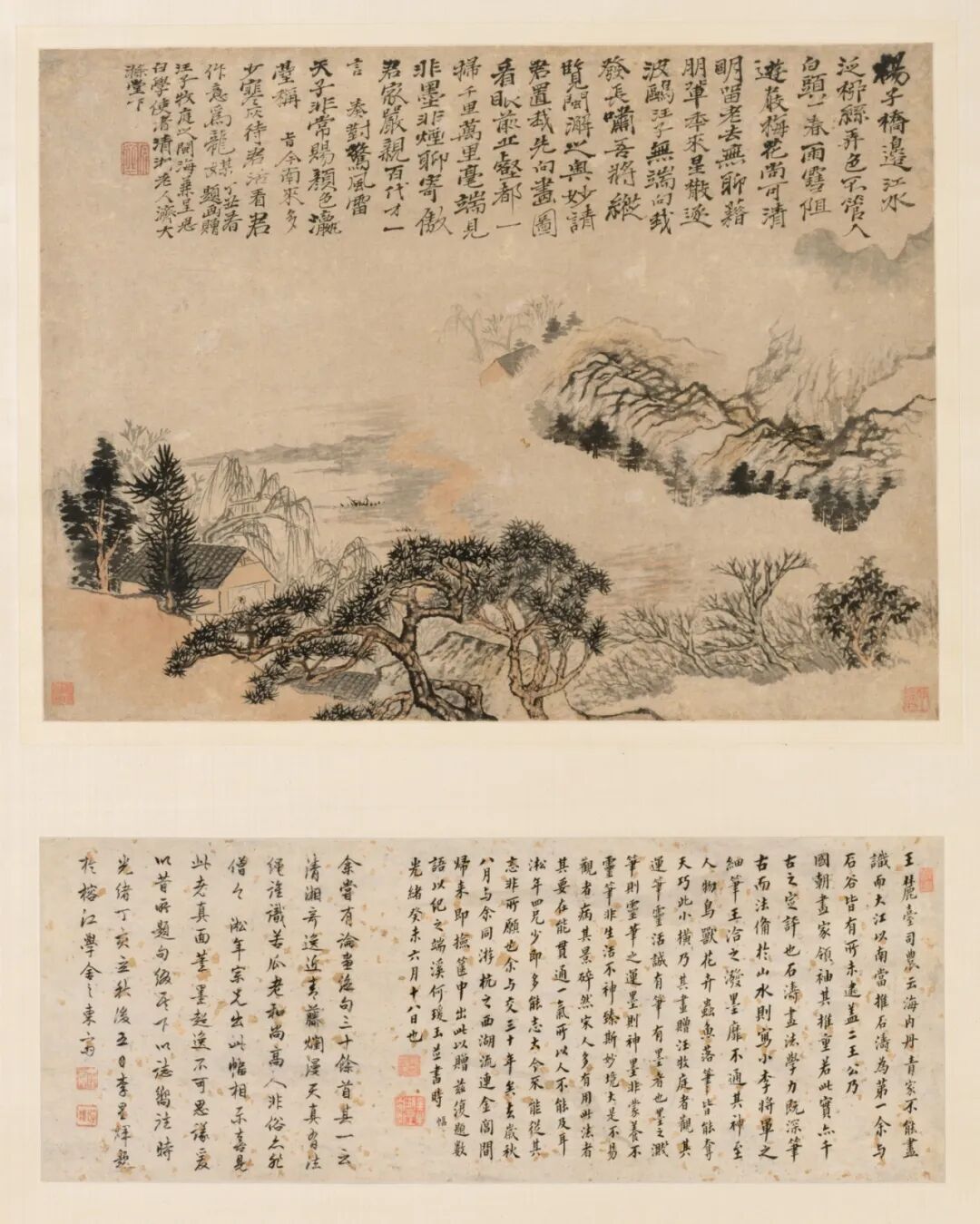
Spring Mist over Jiangnan (Jiangnan Chun’ai Tu), 1697
In the collection of the Cleveland Museum of Art, USA
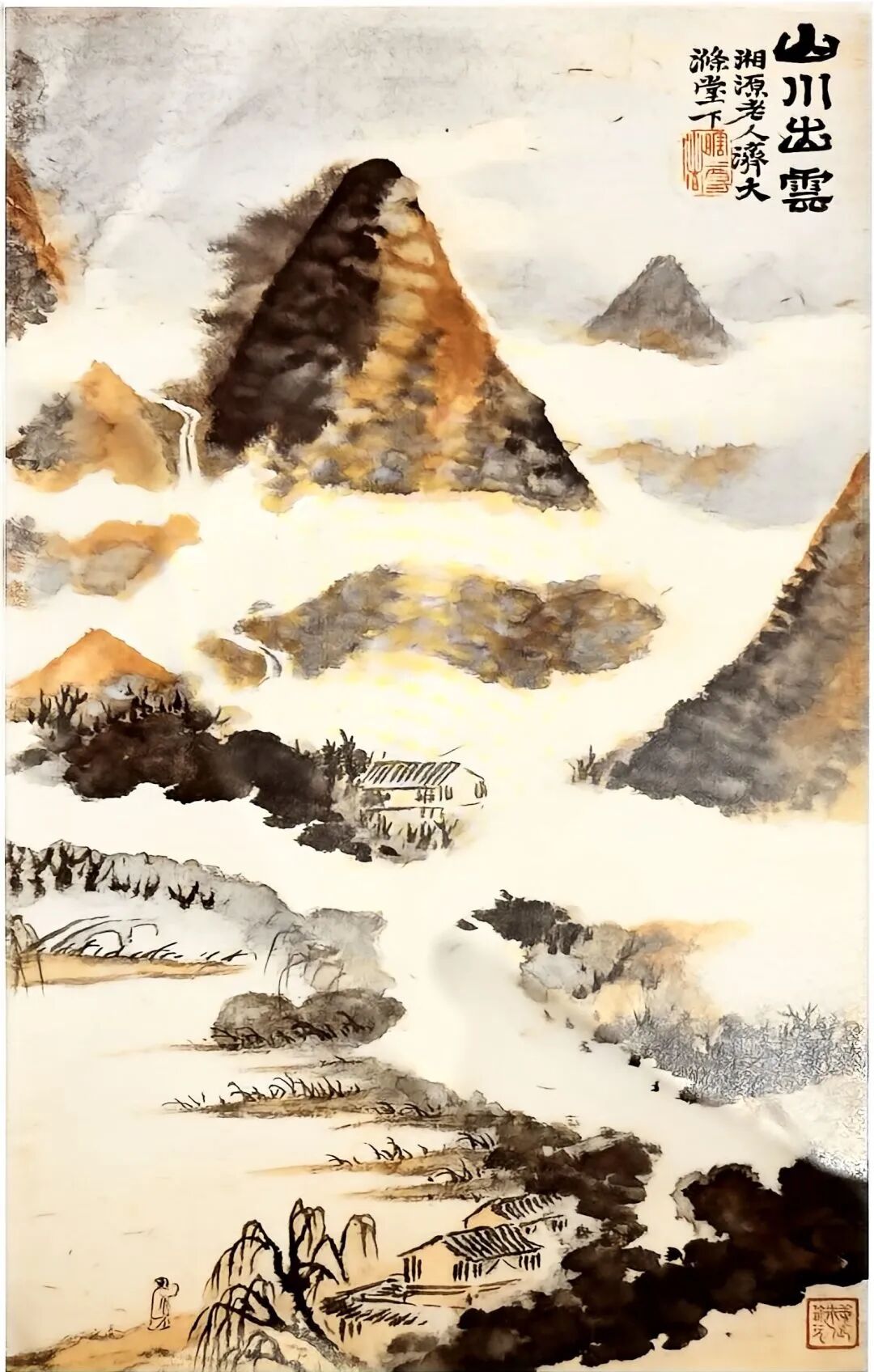
Landscape and Flowers, in the collection of the Tianjin Museum of Art
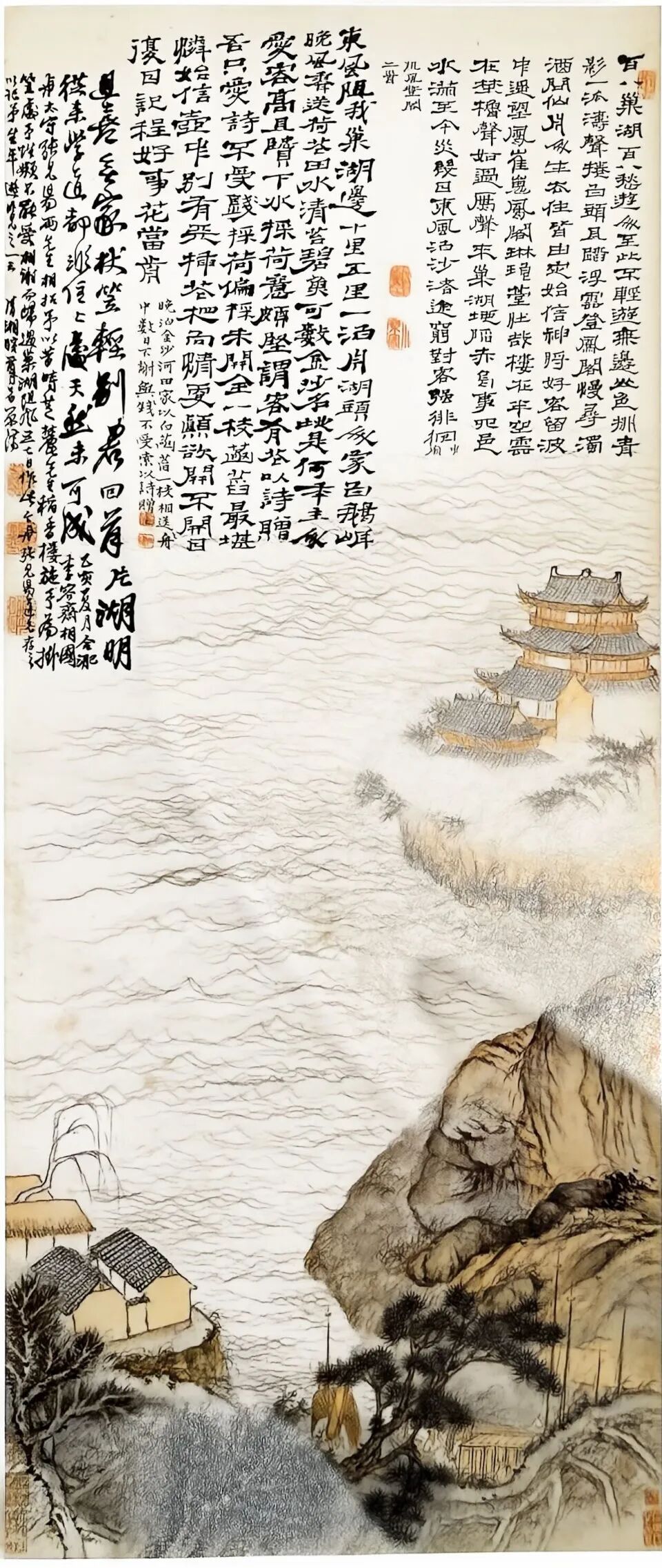
Lake Chao (Chaohu Tu), in the collection of the Tianjin Museum of Art
It is intriguing that Shitao and Bada Shanren also exchanged letters and verses — the refined pastime of exchanging poetry and paintings with one another. “Orchids and Bamboo Painted in Collaboration with Xue Ge” is one such work, in which “Bada painted the orchids and Dadi Zi added the bamboo.” Shitao also requested of Bada Shanren a painting of the “Dadi Caotang.”
It is said that the Huayulu was also completed during the Dadi Caotang period, presumably between 1697 and 1700. From the colophon poem of 1693 — “Once I bade farewell to the Jianghuai, never again did I leave the mountains; I shut my door to study the I Ching, and became a man who communes with Heaven” — one can see that Shitao began his study of the I Ching around the age of 52, which was also the philosophical foundation of the Huayulu.
Beyond appreciating Shitao’s works from various periods, if one wishes to understand his work more deeply, the Huayulu is the most direct instrument.
© JINLAN ART & CULTURE RESEARCH
September 13, 2026
Third day of the eighth month, the bingwu year
The principal references for this article are as follows:
“Treatise on the Philosophy of Painting of the Bitter Gourd Monk” (Kugua Heshang Huayulu), by Shitao; annotated by Wu Danqing
Doctoral dissertation — “A Study of Shitao’s Calligraphy and Painting,” by Guo Huairuo
Author
