
- 0
- 3,221 words
Traditional Flower-and-Bird Appreciation Column
❖ ❖ ❖
Chen Hongshou’s works have been praised as “lofty, archaic, and startling” — possessing both the lofty line of ancient masters and the startling forms that shake convention. His compositions are simple and archaic, his palette deep and somber, drawing the viewer into a state of profound stillness. Chen Hongshou began his early study of painting under Lan Ying and Sun Du, yet his figure painting did not follow directly from any contemporary figure painter; he modeled himself chiefly on the ancients, taking the baimiao (plain-line) technique of the Northern Song master Li Gonglin as his foundation while also absorbing the Tang master Zhou Fang, and so fused the figure traditions of the Jin and Tang dynasties, arriving at a distinctive manner of his own: lofty, archaic, and startling.
The lofty and archaic realm that Chen Hongshou pursued in art was not a return to the past but something with two further meanings — transcendence and restoration. By transcendence, he meant rising above the finitude of time and space to liberate the human spirit; by restoration, he meant never going against the innate heart of human nature, but giving full expression to true temperament.
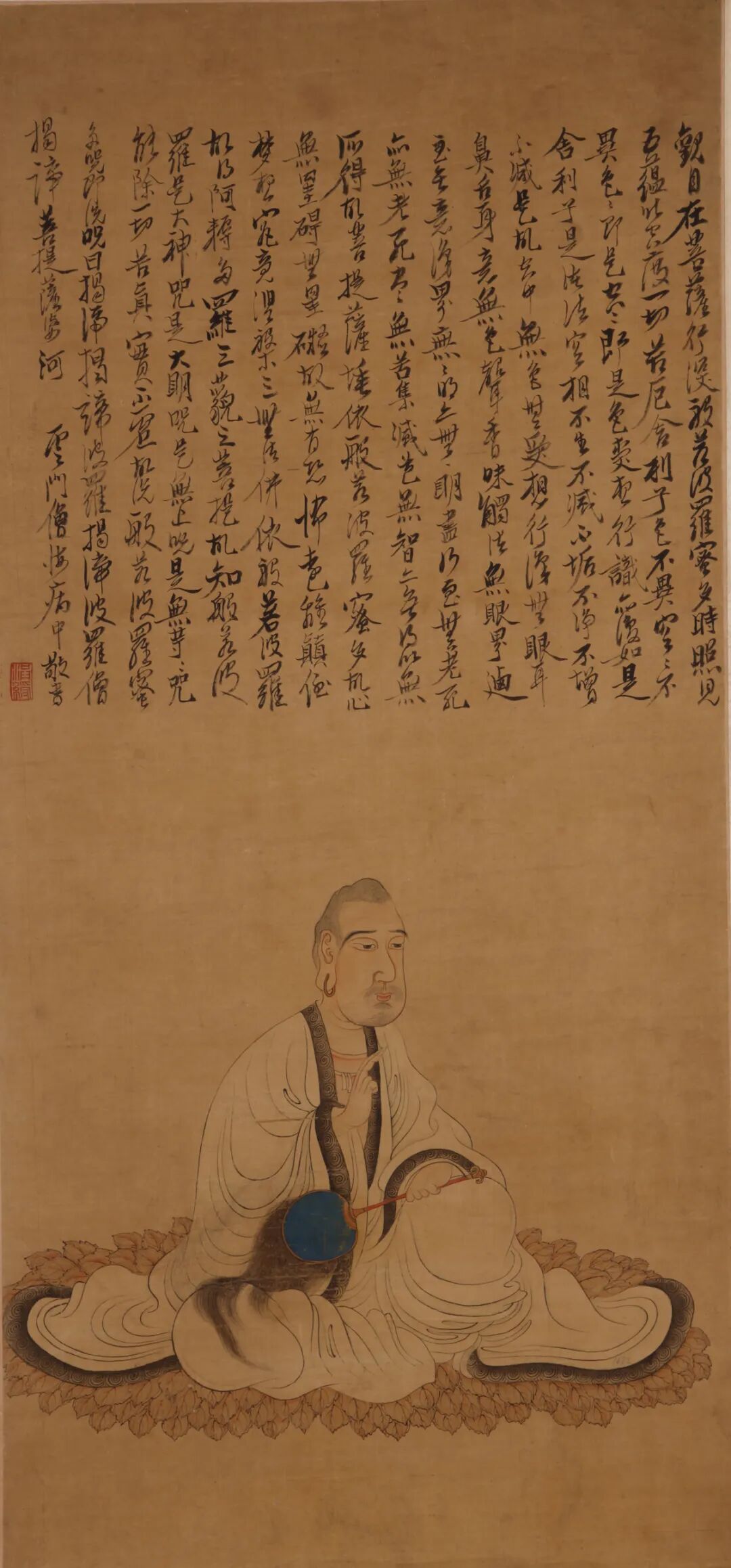
Chen Hongshou, Guanyin, hanging scroll, Jilin Provincial Museum
Chen Hongshou (1598–1652) was a professional painter of the late Ming and early Qing. His courtesy name was Zhanghou; his childhood name was Lianzi; later he took the sobriquet Laolian, and in his later years the additional names Laochi and Huichi, as well as the titles Huiseng and Yunmen Seng. He was a native of Zhuji, Zhejiang province. Though born into a distinguished family whose members had for generations held high office, by the generation of his father, Chen Yuchao, the family had fallen into decline. His father never attained scholarly rank, yet he was a man of refined literary talent and elegant demeanor, celebrated in his day. In his youth Chen Hongshou likewise cherished strong political ambitions, hoping to take the civil examinations and restore the family’s former glory. In the forty-sixth year of the Wanli reign (1618) he passed the examination to become a zhusheng, or licentiate (after the Ming dynasty, the xiangcai, or scholar, was known as a shengyuan), thus gaining his first footing in the status of a man of letters — but there he was to remain for the rest of his life.
It is said that between the forty-seventh year of the Wanli reign (1619) and the second year of the Tianqi reign (1622), Chen Hongshou’s Early Album won unreserved praise from Chen Jiru — courtesy name Zhongchun, sobriquet Meigong (commonly known to later generations as Chen Meigong), a native of Huating in Songjiang (present-day Songjiang, Shanghai), a leading celebrated figure, literatus, painter-calligrapher, and art critic of the late Ming, a fellow townsman and equal in renown of Dong Qichang — who likened the then twenty-five-year-old Chen Hongshou to the great masters of painting through the ages, Wu Daozi, Zhang Zao, Jing Hao, Li Gonglin, and their like. From then on Chen Hongshou’s reputation in the painting world grew year by year.
Having repeatedly failed the civil examinations, Chen Hongshou journeyed north to Beijing in the spring of the thirteenth year of the Chongzhen reign (1640). In 1642, by paying a fee, he entered the Imperial Academy (Guozijian) as a student — in the vernacular, he “bought a seat.” Students of the Imperial Academy enjoyed certain privileges: after graduation they could sit the metropolitan examination directly, without first passing the preliminary test, and those with outstanding results had the chance to rise to become celebrated statesmen and great Confucian scholars. From this one can see how persistent was his pursuit of official rank and how he always hoped to make his mark in an official career. In Beijing Chen Hongshou had two teachers, Huang Daozhou and Liu Zongzhou, but both were arrested and imprisoned for memorializing the throne with blunt remonstrance. Witnessing the political misfortunes of his two teachers, he too was filled with anxiety, though inwardly he quietly sided with them. Although Chen Hongshou was enrolled in the Imperial Academy, he was summoned to serve as a Secretariat Drafter (Zhongshu Sheren), assigned specifically to copy the Portraits of Emperors through the Ages — work vastly remote from his own ambitions — and with the loss of his two teachers’ protection, he served as a mere “brush-holding” official for only three months before returning home.
In the second year of the Shunzhi reign of the Qing (1645), the provincial capital of Hangzhou in Zhejiang was occupied by the Qing army, and the following year Chen Hongshou began his life as a yimin, a loyalist remnant of the fallen dynasty. He first chose to take refuge in Buddhism as his manner of seclusion, yet without formally taking the tonsure; after half a year as a monk he returned to Shaoxing and made his living by selling paintings, thus beginning the life of a professional painter. As a literati remnant of the Ming dynasty, painting became for him an important means of preserving Han culture, and he transformed his former ambition of winning merit and founding achievements into the ideal of establishing a school and founding a lineage.
In this author’s view, Chen Hongshou spent his whole life trudging the arduous road of the civil examinations and reaped nothing, and he also suffered the hardship of being pressed by his livelihood. He could not devote himself wholeheartedly to preparing for the examinations. His inherited farmlands, though considerable, dwindled day by day through repeated sale, and the income from land rent could not support the lives of his six sons and two daughters, so he was compelled to supplement his income by selling paintings. He once wrote of his shame at earning a living by selling paintings:
The achievements of my forebears I have let fall to ruin; my writings have piled up nothing.
My calligraphy and painting I am ashamed to hand down; my grand designs find nowhere, alas, to lodge.
Now rising, now sitting, I beat my breast; my tears stream down and I cannot sleep.
From “Letter to Lai Ji,” Baolun Tang Collection, juan 4
Translation: The achievements founded by my forebears have already been ruined; I devoted myself to writing, yet without rich accumulation, I have accomplished nothing. The calligraphy and painting I have made, I am ashamed to pass down to posterity; the grand strategies and aspirations in my breast, alas, find no place to rest or unfold. Now rising, now sitting still, I beat my chest; my tears flow long and I cannot sleep through the night.
Yet there is no doubt that Chen Hongshou possessed an extraordinary, heaven-given gift for painting. From the long treatise on painting that he inscribed in the eighth year of the Shunzhi reign of the Qing (1651), when he created the handscroll Clear Summer Mountains and Streams for Lin Zhongqing, one can see that he not only had outstanding skill in painting, but also a profound grasp of several generations of literati painting. In that text he set forth the central doctrine of fusing the resonance of the Tang, the principle of the Song, and the manner of the Yuan:
“People today do not study the ancients. Relying on a few scraps of examination learning, or on some trifling, insubstantial fame, they at once take up the brush to paint. We need not even censure their brushwork — they cannot even match the ancients in mere formal likeness. How lamentable! Bent on winning a little fame to be pointed at and discussed by the world, they in turn mock and carp at those mature, accomplished elders. This is what Laolian most despises in the so-called celebrities of his age. (Translation: People today do not emulate the ancients but rely merely on a few fragmentary, shallow scraps of examination learning, or a little worthless, insubstantial fame, and then take up the brush to paint. Setting aside for the moment any demand on their brush-and-ink skill, they fall far short even of formal likeness. How pitiable! Bent single-mindedly on seeking a little fame to be appraised and discussed by the world, they go on to mock and criticize those steady, mature predecessors of deep accomplishment. This is precisely what Chen Laolian found most repugnant in the so-called worthies of his own time.)
Those who today paint and study the Song lapse into mere craftsmanship — why is that? Because they do not inherit the current of the Tang. Those who study the Yuan lapse into crudeness — because they do not trace back to the sources of the Song. If one takes the resonance of the Tang and tempers the rigidity of the Song, and applies the principle of the Song to carry the manner of the Yuan, then one achieves the great perfection.” (Translation: Painters of today, if they devote themselves to Song painting, easily fall into mere craftsmanship, the root of which is that they have not absorbed the qi and resonance of Tang painting; if they blindly imitate the Yuan, they easily become crude and hollow, the flaw being that they do not trace back to the standards and sources of the Song masters. One ought to use the resonance of the Tang to dissolve the rigidity of the Song, and rely on the principle and method of the Song to carry the brush-and-ink manner of the Yuan — only thus can one reach the highest realm.)
“Master Meigong said: ‘The Song masters could not set forth directly with a single thrust of the brush, and so fall short of the spareness of Yuan painting.’ But this is not a definitive judgment. Take such masters as Zhao Danian, Dong Yuan, Juran, Wang Jinqing, Li Gonglin (Longmian), and Mi Fu (Xiangyang) — can one call their manner merely dense? These Song men are the very ancestors of the Yuan masters Wang Meng, Huang Gongwang, Ni Zan, Wu Zhen, Gao Kegong, and Zhao Mengfu. When the ancients inherited old methods and established their canons, there was nothing they did that was not rigorous. Take even Ni Zan, whose few strokes each carry their own order and law. As for the Elder and Younger General Li, Li Cheng of Yingqiu, and Zhao Boju, though their pictures contain a thousand gates and ten thousand doors, a thousand mountains and ten thousand waters, every part holds resonance and charm. It is only that men do not wholeheartedly contemplate and study them. Who can say the Song fell short of the Yuan? If one must find fault with the Song, then Ma Yuan and Xia Gui are the true degenerates among painters — a step backward indeed. (Translation: Chen Meigong said: ‘The Song painters could not write with simple, direct force, and so fall short of the thin, airy lightness of Yuan painting.’ But this is not a fair, settled judgment. Take such former masters as Zhao Lingrang, Dong Yuan, Juran, Wang Shen, Li Gonglin, and Mi Fu — can one say their manner is merely dense and crowded? These Song men are precisely the source of the line of Yuan masters Wang Meng, Huang Gongwang, Ni Zan, Wu Zhen, Gao Kegong, and Zhao Mengfu. When earlier men inherited the old methods and established painting canons, there was not a single place that was not rigorous. Even Ni Zan’s few strokes each carry their own discipline and method. The Elder and Younger General Li, Li Cheng, and Zhao Boju, though their scenes are elaborate and their thousand mountains and waters layered and abundant, yet preserve throughout their resonance and feeling. It is only that people today are unwilling to observe and study them wholeheartedly — so on what ground can one say Song painting is not as good as Yuan painting? If one must speak of what is blameworthy in Song painting, then it is Ma Yuan and Xia Gui, who are truly the inferior grade among painters — a step backward.)
Laolian hopes that the famous literati will study the ancients, browse widely through Song painting, and only then come down to the Yuan; and hopes that professional painters will follow the Song masters and beg to carry along the Tang. If one truly devotes one’s heart to this path, grasps the orthodox lineage, distinguishes the roots of each school’s figure painting, and does not allow the sources of one’s ancestors to remain muddled, then afterward one may set the brush down freely and surpass one’s contemporaries. Laolian is fifty-four this year, and there is still no one in my native place to revive the study of painting. I can but wait.” (Translation: I hope the literati painters will study the old paintings broadly, reaching up to the Song and down to the Yuan; and that professional painters will follow the Song masters while also drawing in the flavor of the Tang. If one truly enters deeply into this way, sorts out the orthodox line, and distinguishes the sources and inheritance of each school, with the line of one’s ancestry clear in mind, then, when one sets down the brush, one can surpass one’s contemporaries. I am fifty-four this year, and there is still no one in my native place who can revive the study of painting; I can only wait for those who come after.)
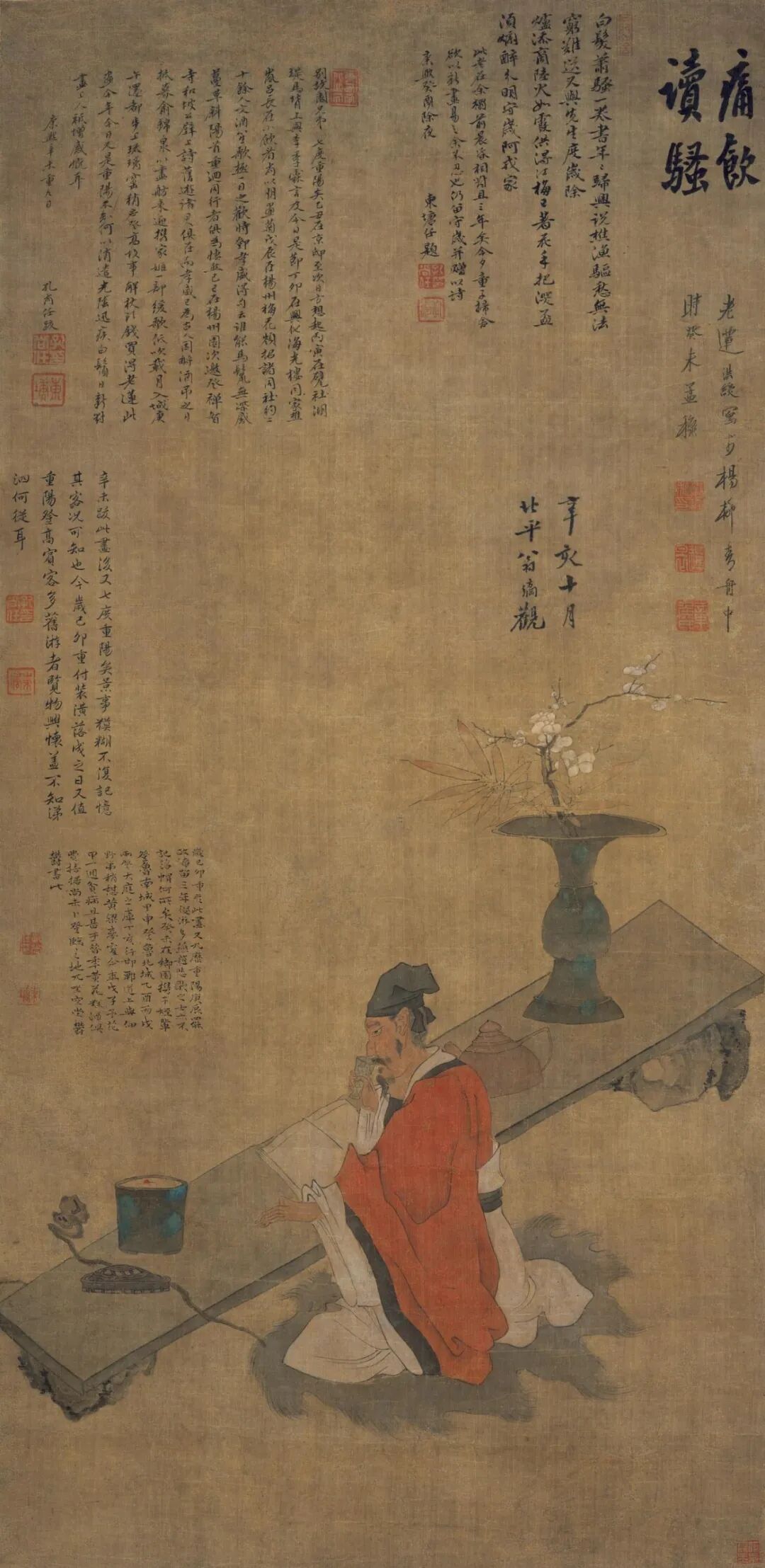
Chen Hongshou, Drinking Wine and Reading, hanging scroll, Shanghai Museum
The lofty recluse in the painting holds a cup while reading a scroll, signifying drinking deep and reading the Li Sao, giving voice to the indignation of troubled times
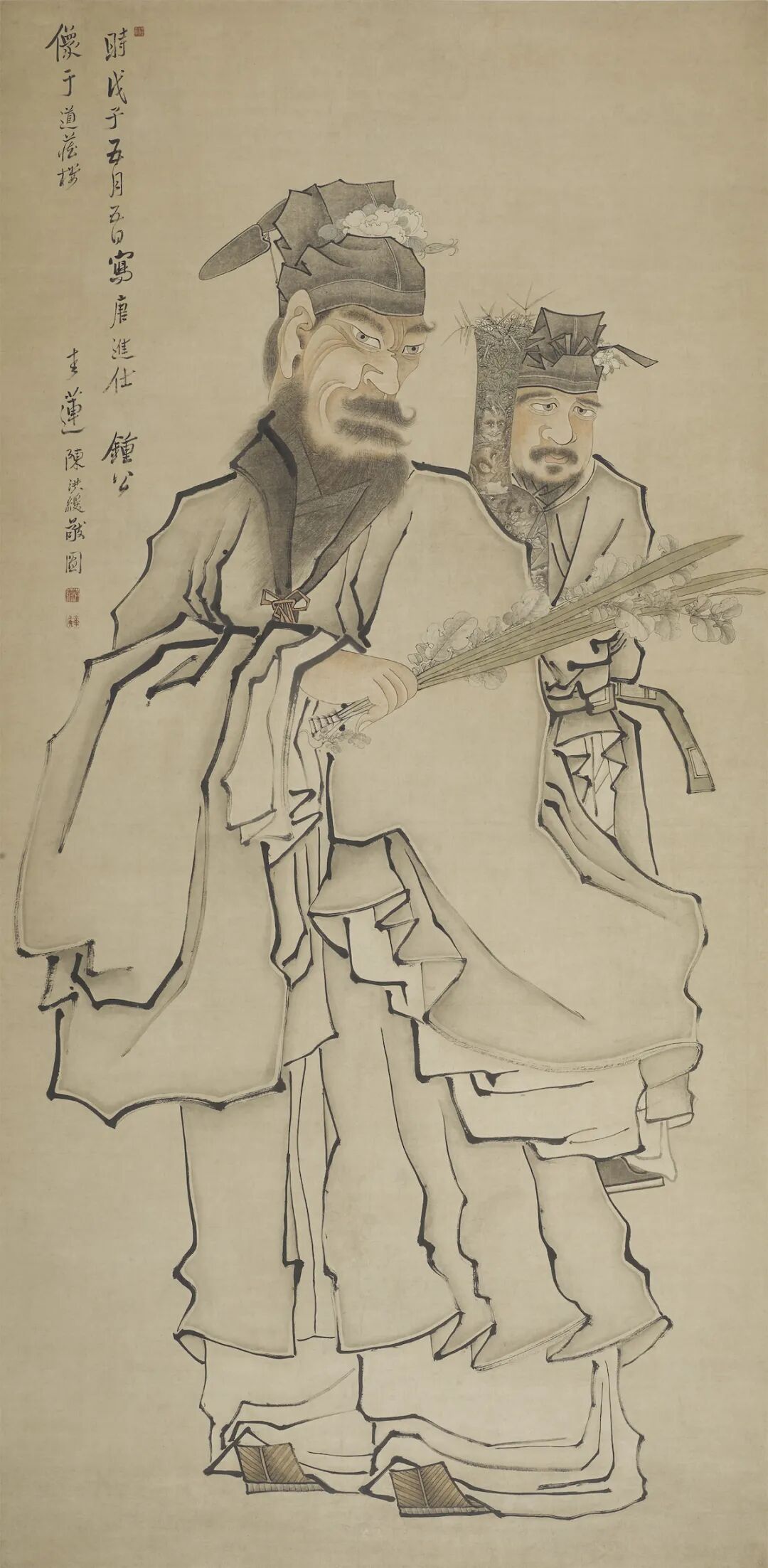
Chen Hongshou, Zhong Kui, hanging scroll, National Art Museum of China
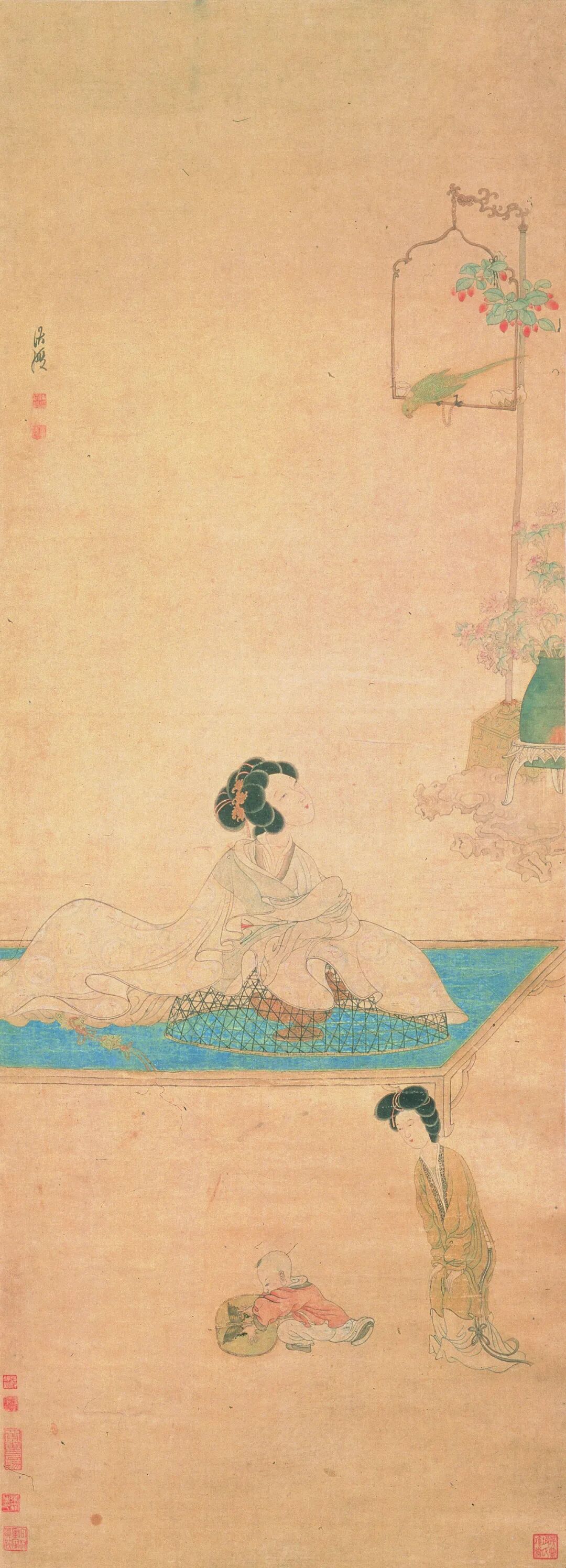
Chen Hongshou, Reclining by the Incense Burner, hanging scroll, Shanghai Museum
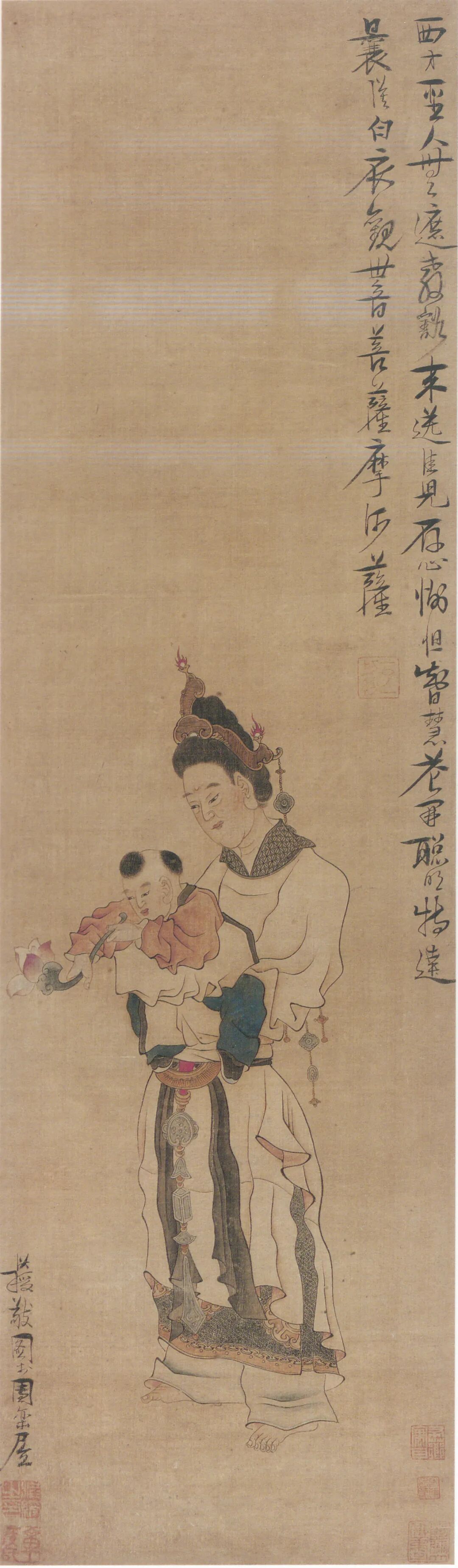
Chen Hongshou, Guanyin, hanging scroll, Palace Museum; the painting depicts Guanyin bestowing a child
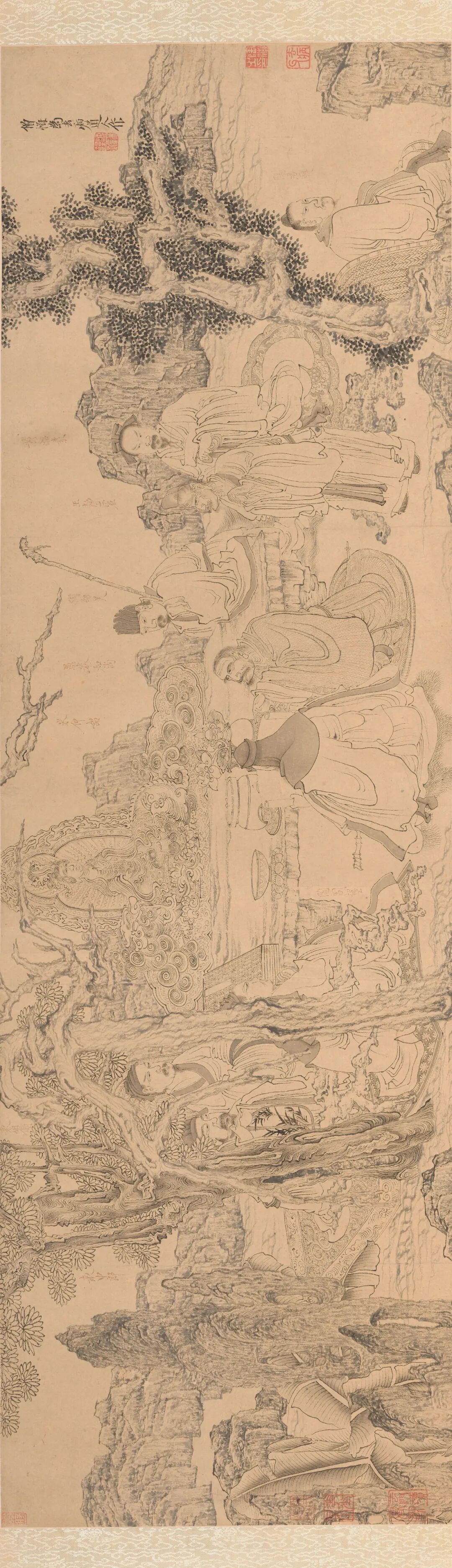
Chen Hongshou, Elegant Gathering, handscroll, Shanghai Museum
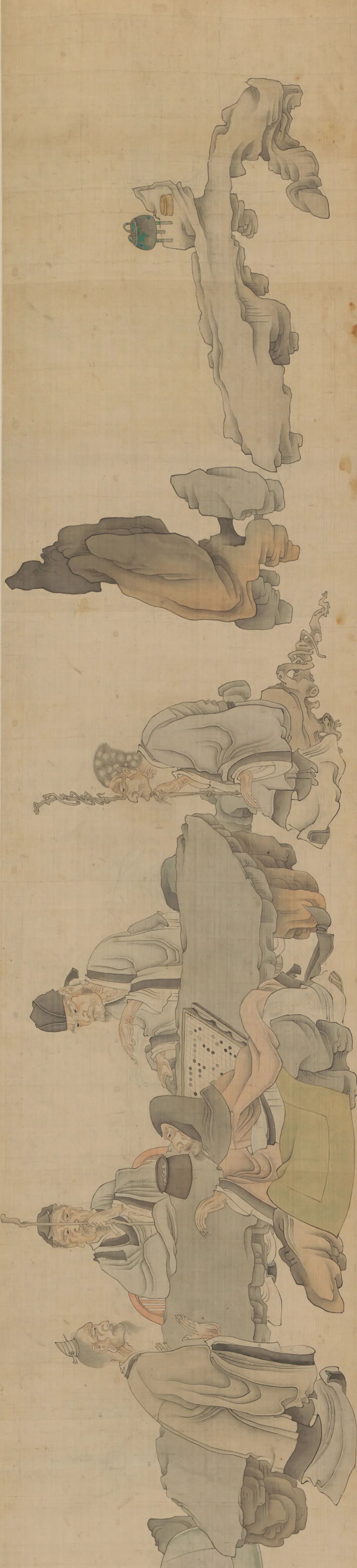
Chen Hongshou, Five Elders of Mount Hua, handscroll (detail), Capital Museum
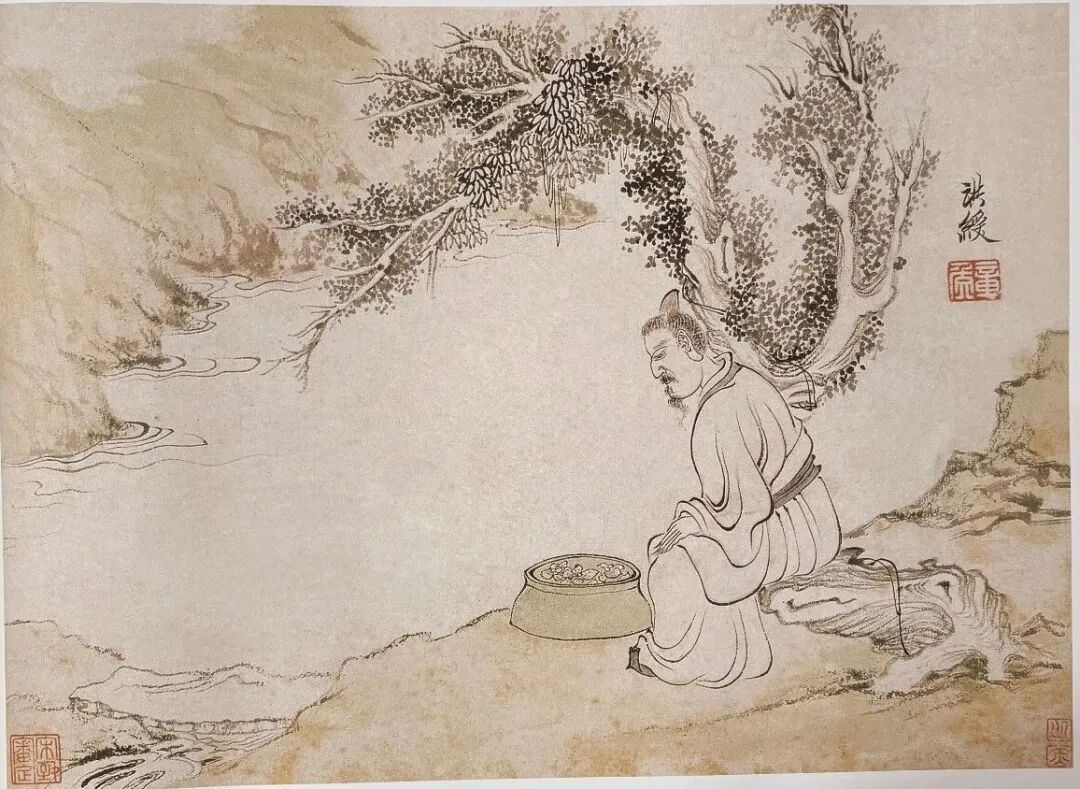
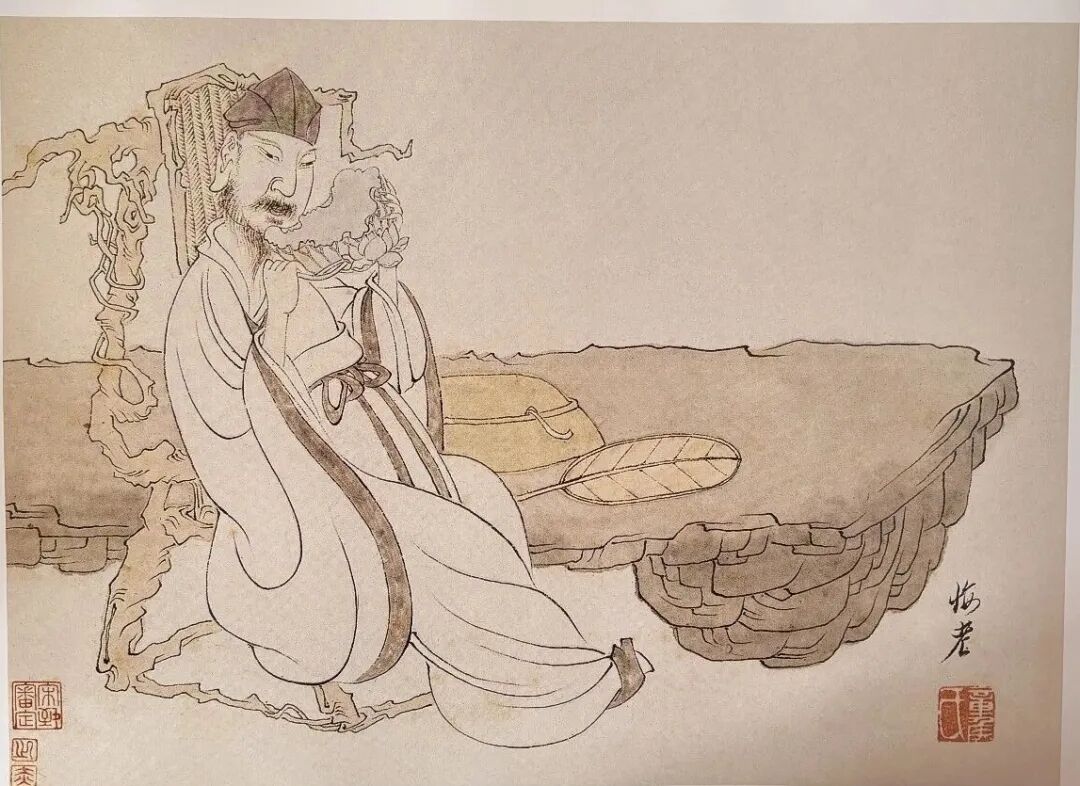
In the year before his death, Chen Hongshou painted sixteen celebrated masterpieces, the Sixteen Views of Reclusion (Yinju Shiliu Guan), which he presented to his close friend Shen Hao (courtesy name Shitian). He and Shen Hao were both loyalist remnants, sharing a kindred melancholy amidst the chaos of the age. Through sixteen scenes of the recluse’s life, Chen Hongshou sought to console each other and give voice to a common resolve. The sixteen paintings comprise: Visiting Zhuang, Brewing Peach Blossoms, Watering the Books, Waking the Stone, Spattering Ink, Savoring the Image, Rinsing the Verses, Staff and Chrysanthemum, Washing the Inkstone, Selling Wine in the Cold, Asking the Moon, Tuning the Spring, Pouch of Seclusion, Wandering Alone, Drifting Fragrance, and Tasting the Dharma. These encompass the three paths of reclusion — Confucian, Daoist, and Buddhist — such as visiting Zhuang to seek the Way, raising a cup over a book, roaming alone through the mountains, and meditating on the Buddhist scriptures, transforming the reclusive life into sixteen kinds of spiritual contemplation. Visiting Zhuang, Waking the Stone, Savoring the Image, Wandering Alone, Brewing Peach Blossoms, Asking the Moon, Tuning the Spring, Pouch of Seclusion, and Selling Wine in the Cold, faced with the helplessness of a world in turmoil, depict carefree recluses and yearn for the transcendent spirit of heaven and earth in Lao and Zhuang, relieving the grief and indignation of his heart; Watering the Books, Rinsing the Verses, Washing the Inkstone, Drifting Fragrance, Staff and Chrysanthemum, and Spattering Ink show Laolian ever steadfast in upholding the lineage of poetry and letters, preserving the Confucian gentleman’s integrity; the closing piece is Tasting the Dharma, in which Laolian lays aside glory and shame, rise and fall, and seeks liberation beyond the world, facing the end of life and seeking a home for his spirit.
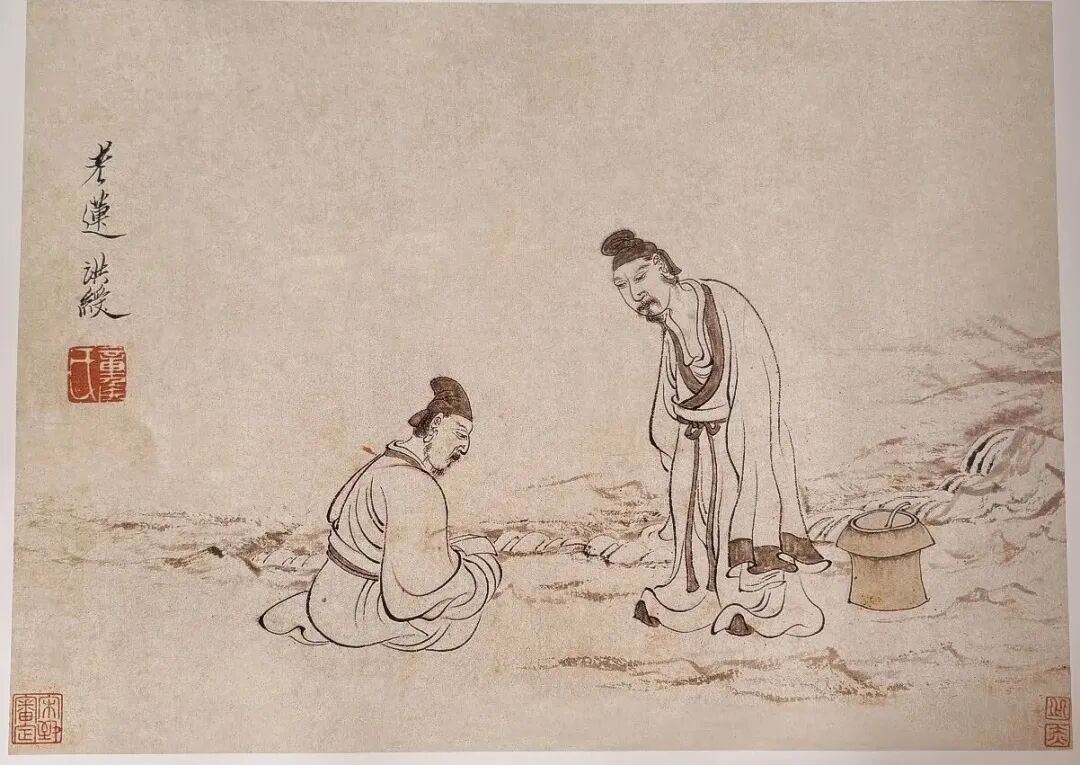
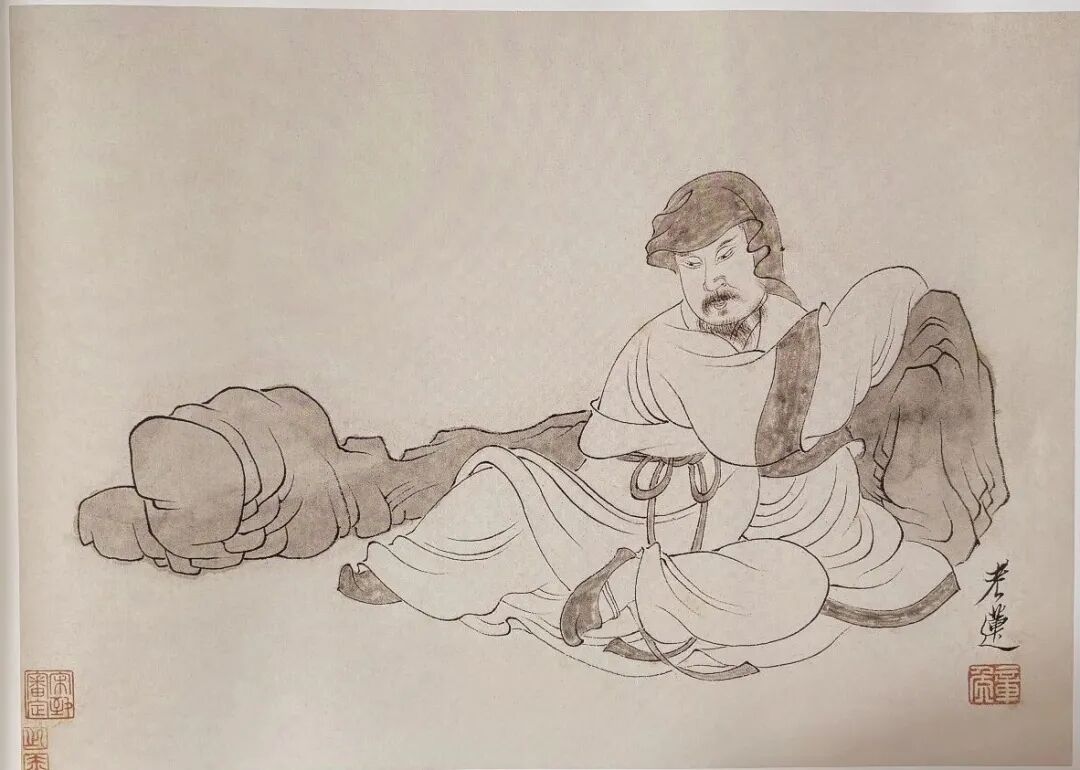
The painting shows a man reclining against a strange rock, his expression hazy and unfocused. The Tang figure Li Deyu was fond of strange rocks, and in his Pingquan villa
there was a stone called the “Sobering-Wine Stone,” upon which one would lie when drunk. Laolian’s painting depicts this episode, yet its intent is not to sober one from wine, but to carry the meaning of “sobering to life.” He had a poem that said: “Through how many dawns of drunken dreaming have I not awakened, / Though I forswear wine I ever seek a covenant with mountains and streams. / When tea steeps and pine winds murmur beneath the falling flowers, / With a stone for a pillow, what feeling is this?” — resting his head upon a stone, before one unchanging truth from ancient times, he seeks an answer to life’s predicaments.
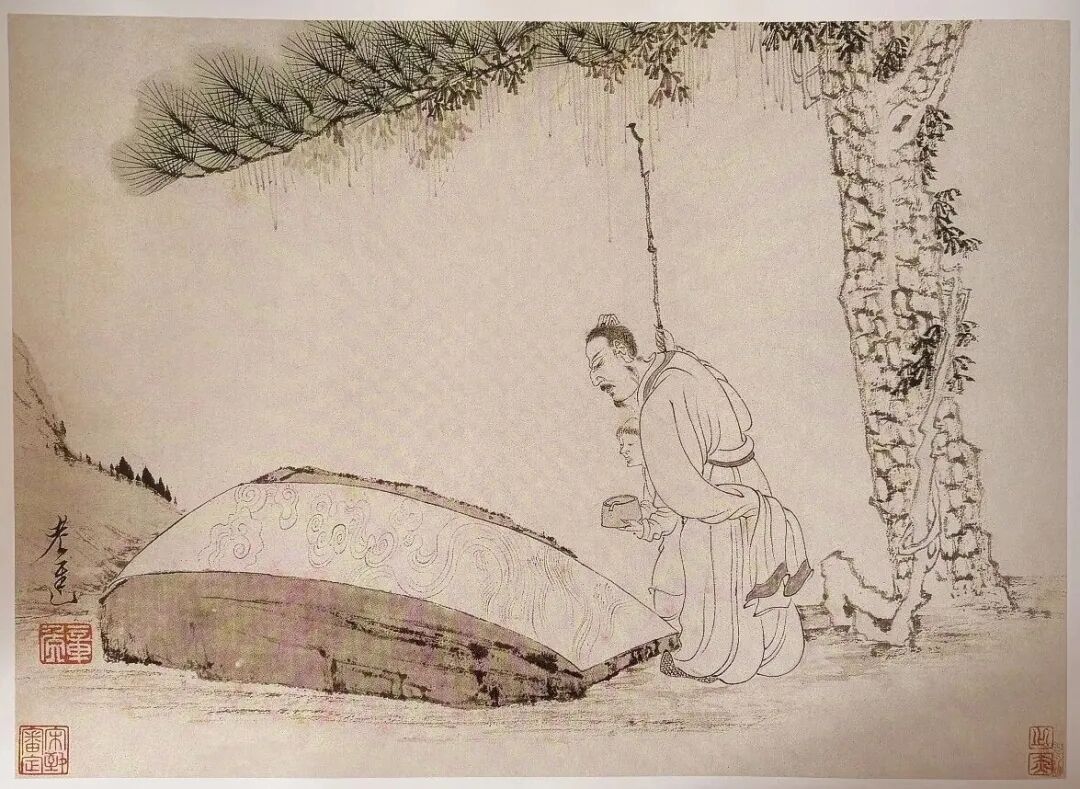
Sixteen Views of Reclusion: Spattering Ink
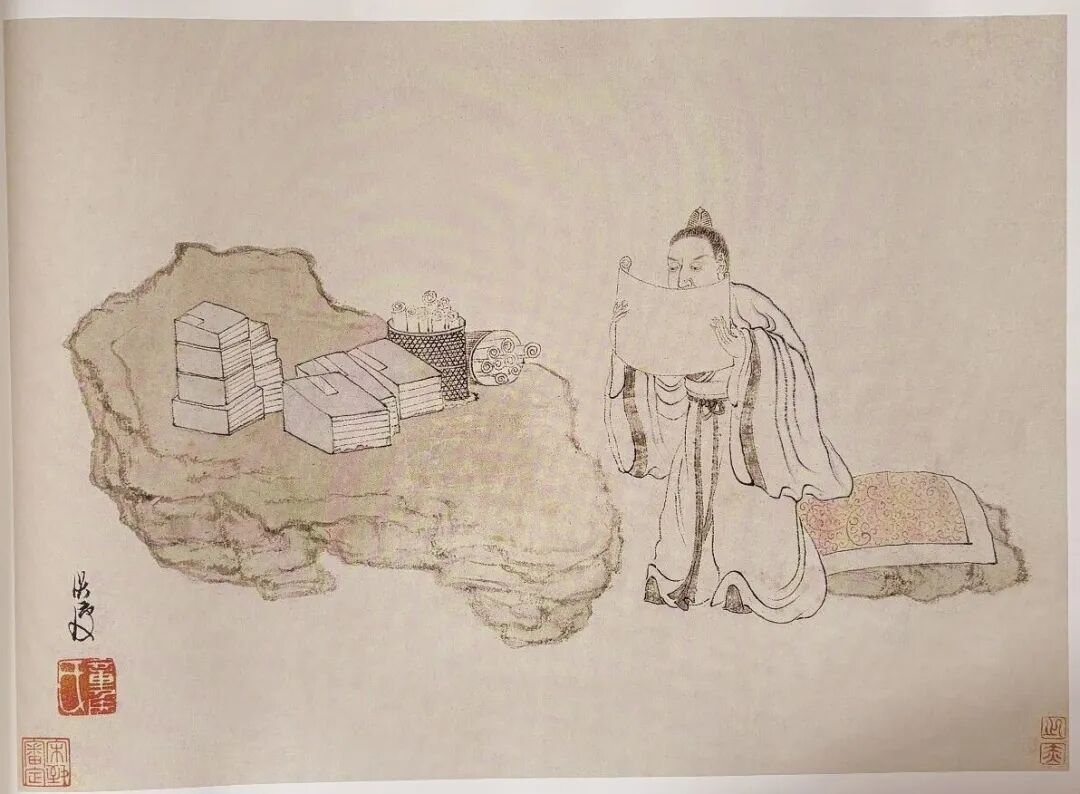
Sixteen Views of Reclusion: Savoring the Image
The painting shows a man seated beside a stone table, holding paper in both hands and gazing at it with rapt concentration, while upon the stone table lie scattered some works of calligraphy, painting, and books. The Southern Dynasties Song painter Zong Bing had the saying “calm the bosom and savor the image” (chenghuai weixiang), and this painting depicts the searching for the inspiration of painted images amid myriad volumes of poetry and books and a stretch of mountains and waters. His “savoring the image” is not the observation of the outer world or the imitation of actual objects, but an inner contemplation of the heart, using his poetry and books and his very life to fuse with the world.
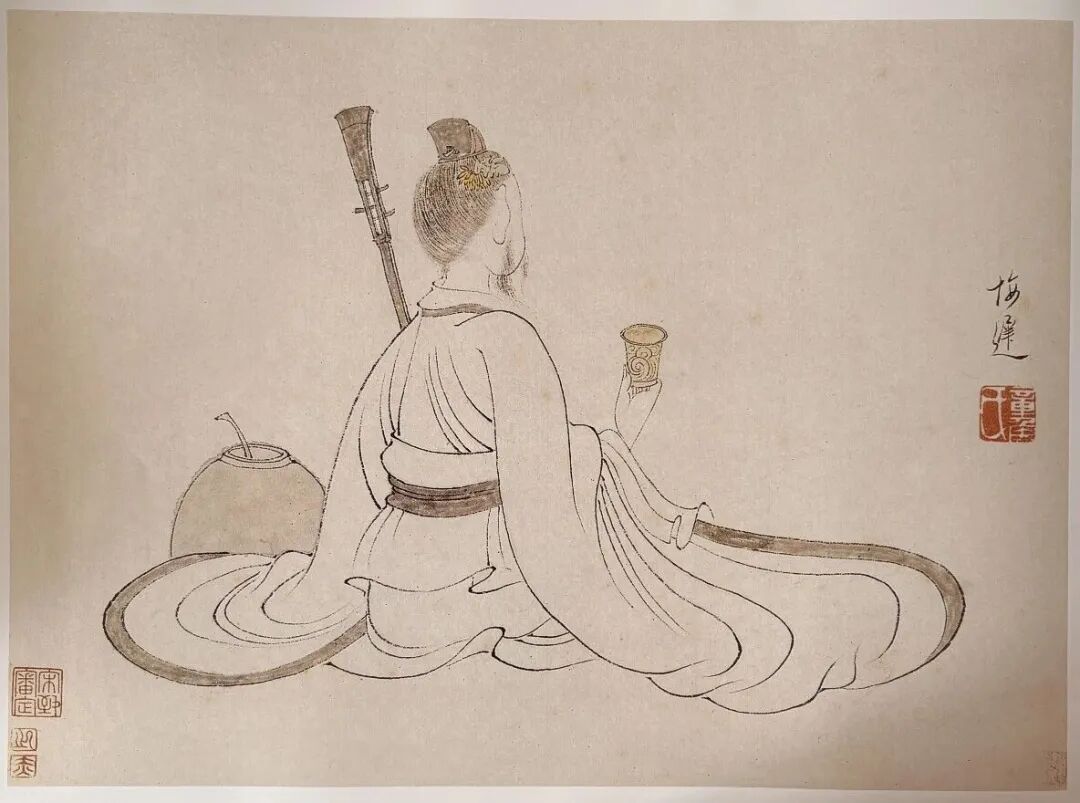
Sixteen Views of Reclusion: Rinsing the Verses
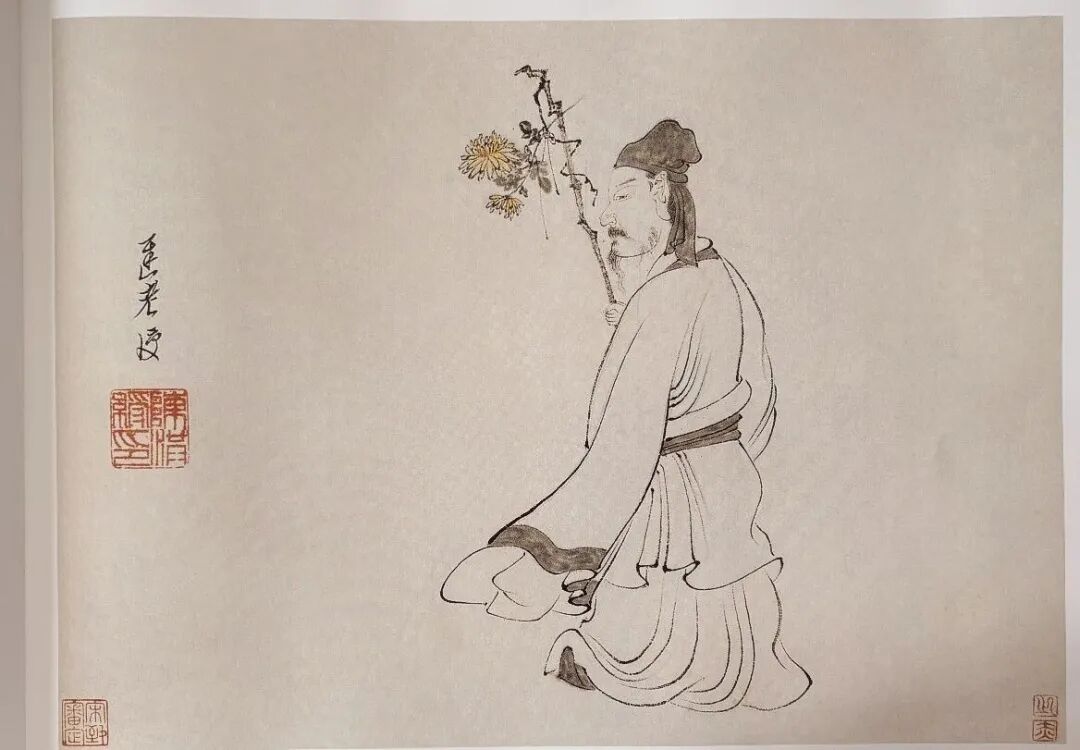
Sixteen Views of Reclusion: Staff and Chrysanthemum
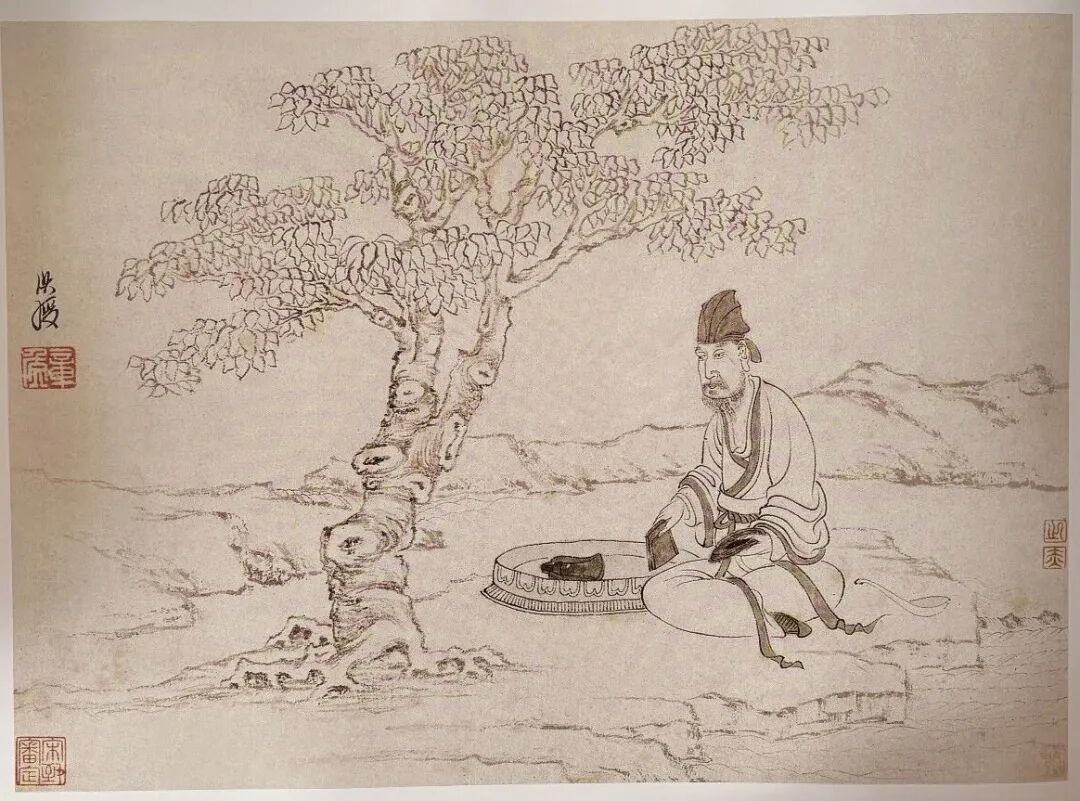
Sixteen Views of Reclusion: Washing the Inkstone
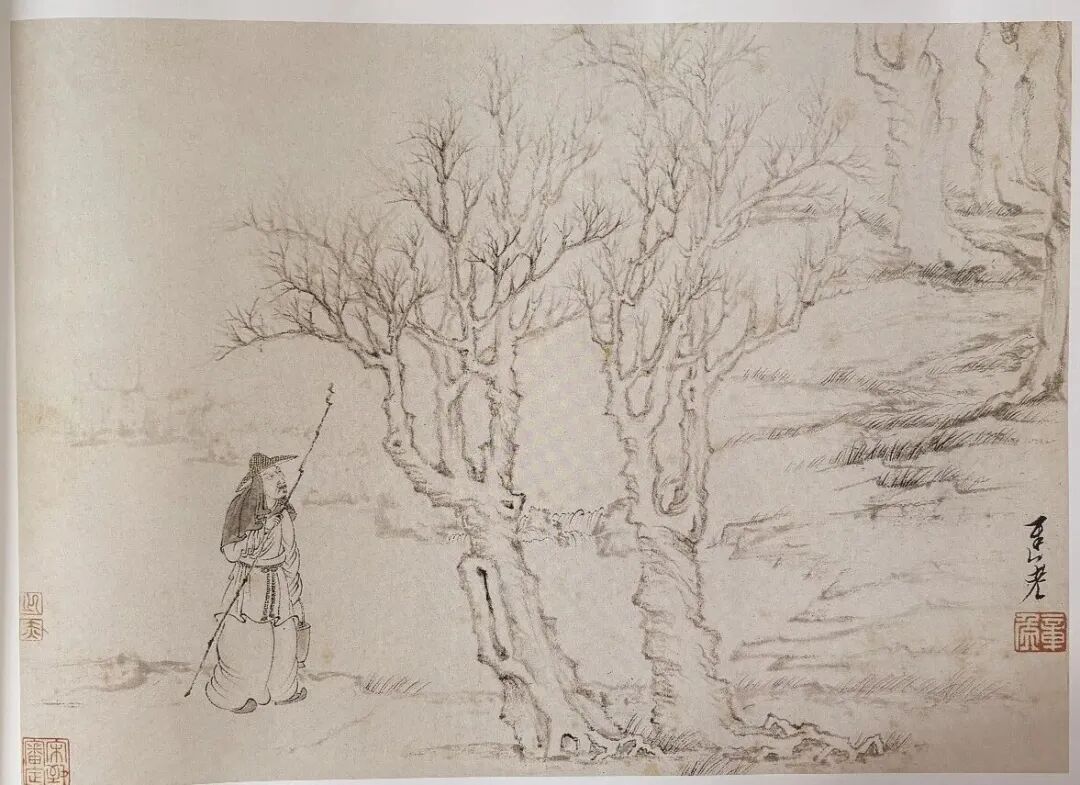
Sixteen Views of Reclusion: Selling Wine in the Cold
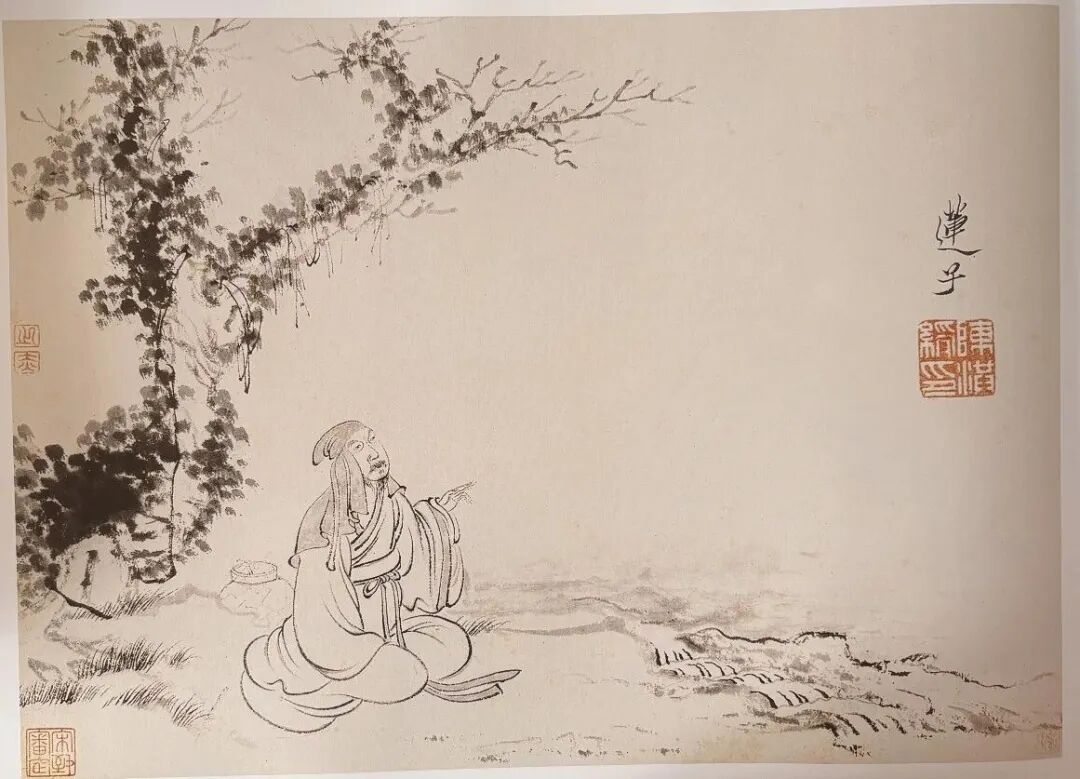
Sixteen Views of Reclusion: Asking the Moon
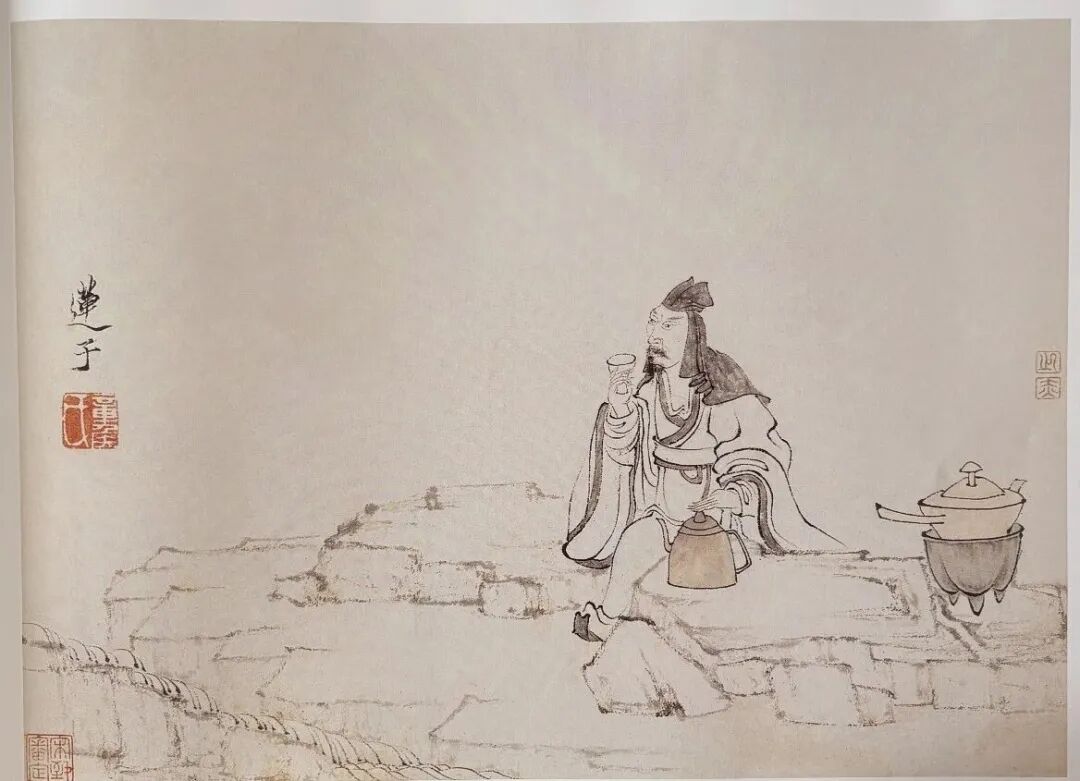
Sixteen Views of Reclusion: Tuning the Spring
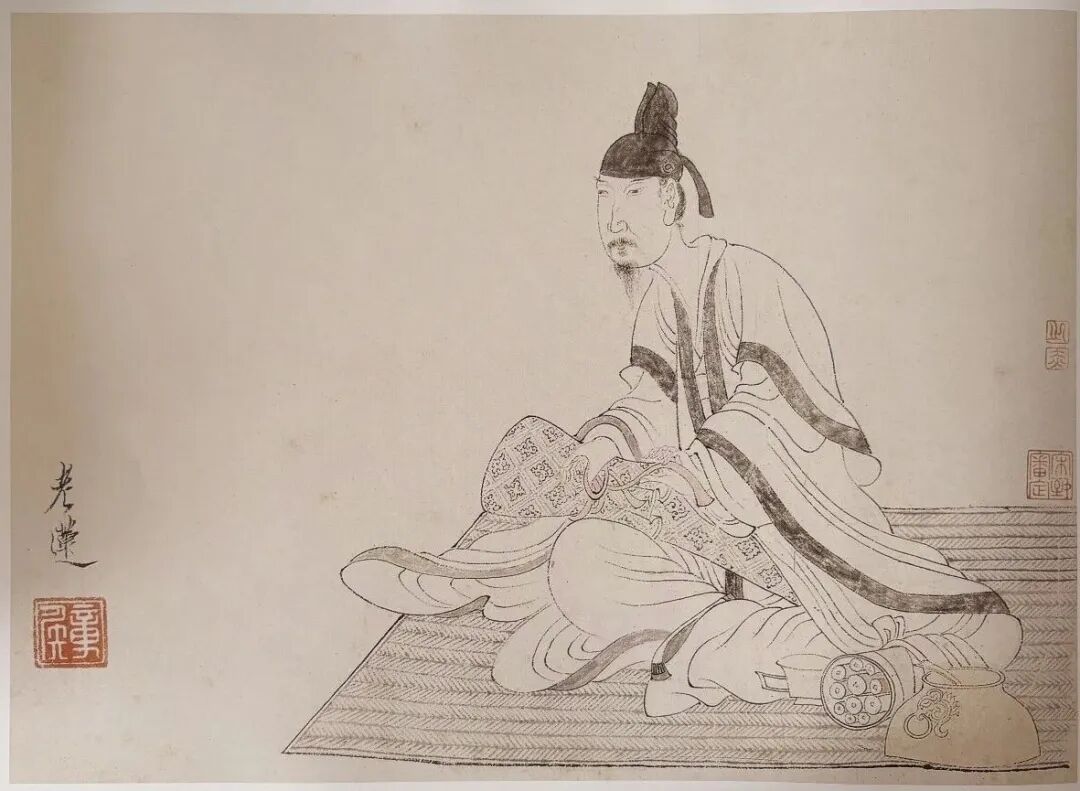
Sixteen Views of Reclusion: Pouch of Seclusion
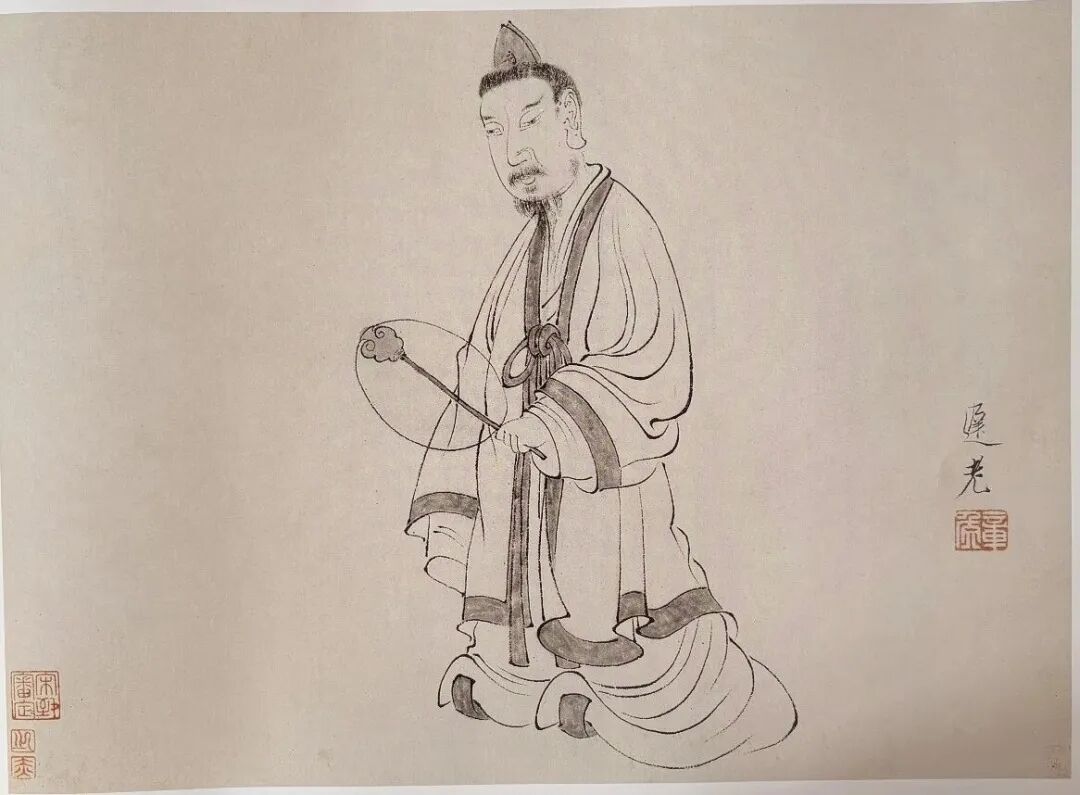
Sixteen Views of Reclusion: Wandering Alone
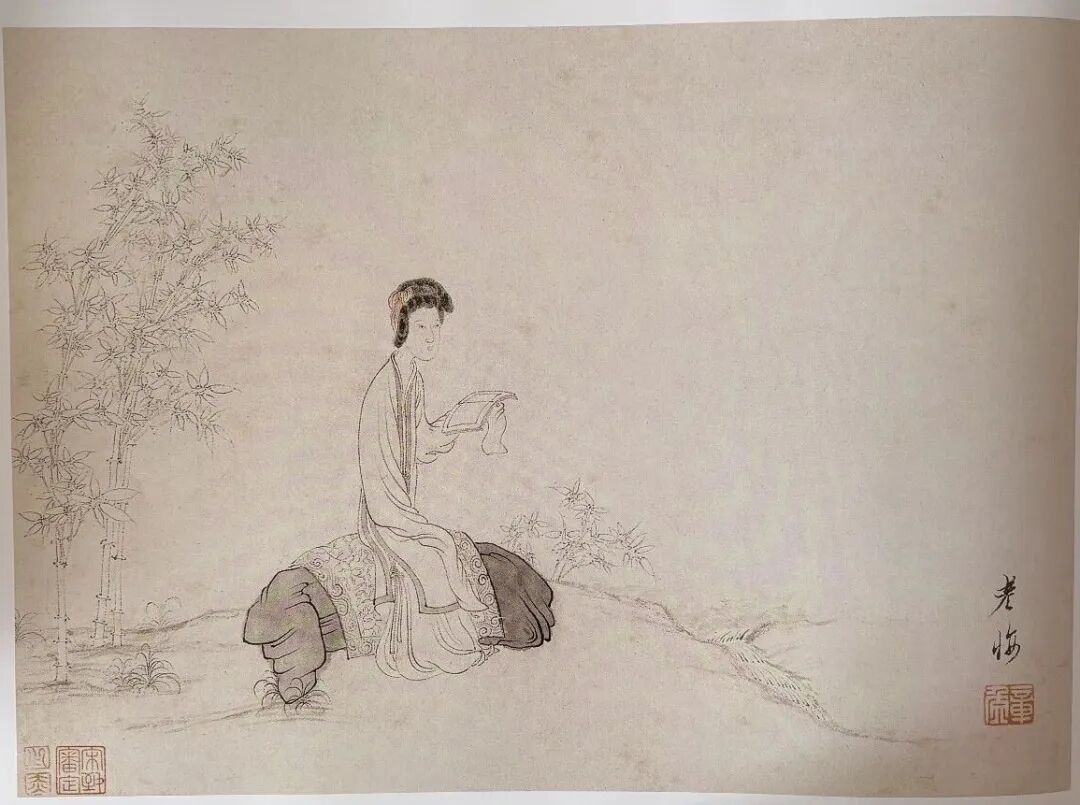
Sixteen Views of Reclusion: Drifting Fragrance
Through the remembrance of a graceful and lovely woman, he gives expression to his lingering attachment to all the splendor and glory of this earthly world; Drifting Fragrance conveys the savoring, in his spirit, of a cool fragrance and a lingering charm. Reading this great book that is the world, he savors, behind the blossoming and fading of flowers, the “fragrance” of life itself.
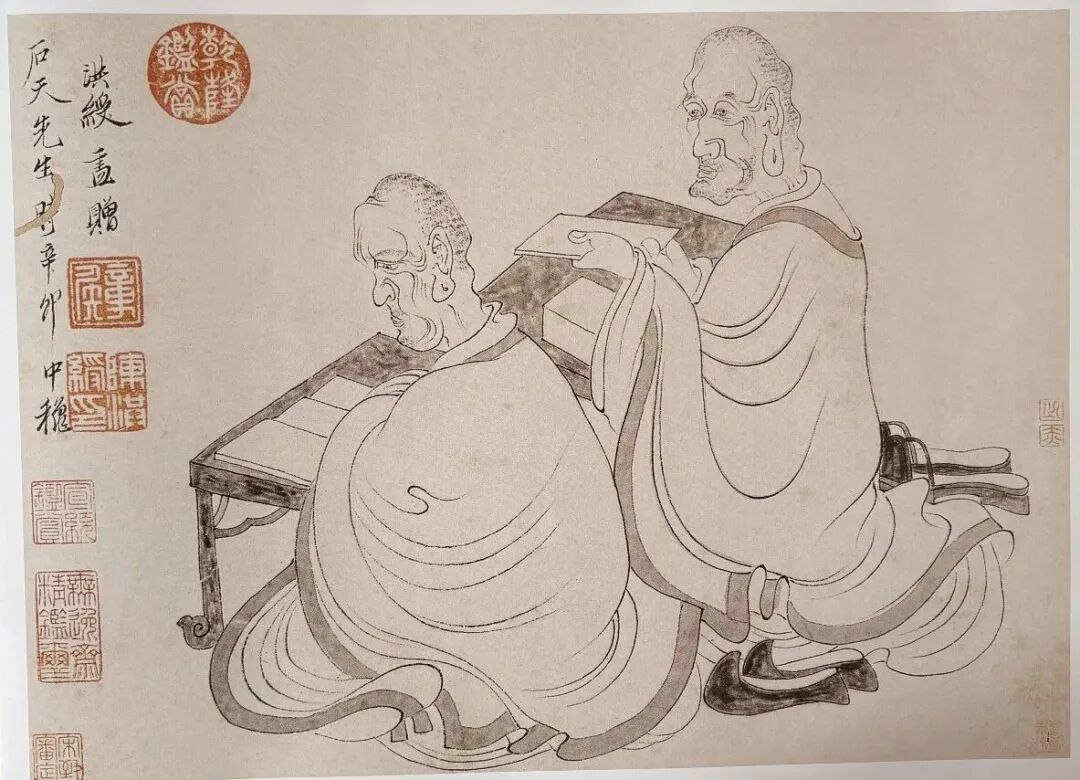
Sixteen Views of Reclusion: Tasting the Dharma
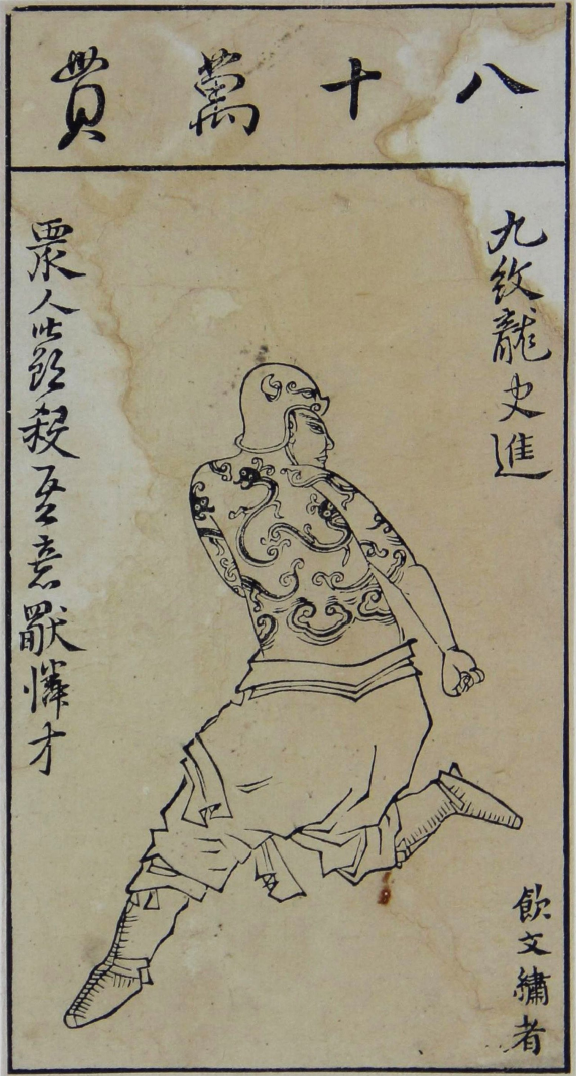
From a commercial standpoint, Chen Hongshou’s printmaking was a catalyst for the spread of literature in the late Ming and early Qing; his print figures were enormously popular. At the age of forty-one (1638, the eleventh year of the Chongzhen reign), he made illustrations for Lai Qinzhi of Xiaoshan’s Commentary on the Chuci; the extant Recitation of Qu Yuan is among his earliest mature print designs and became a classic for the ages. At forty-two (1639, the twelfth year of the Chongzhen reign), he created the figure illustrations for The Romance of the Western Chamber in Shaoxing, marking the peak of opera printmaking. At forty-four (1641, the fourteenth year of the Chongzhen reign), he created Water Margin Leaves (Shuihu Yezi), his most famous set of prints, comprising forty figures in all.
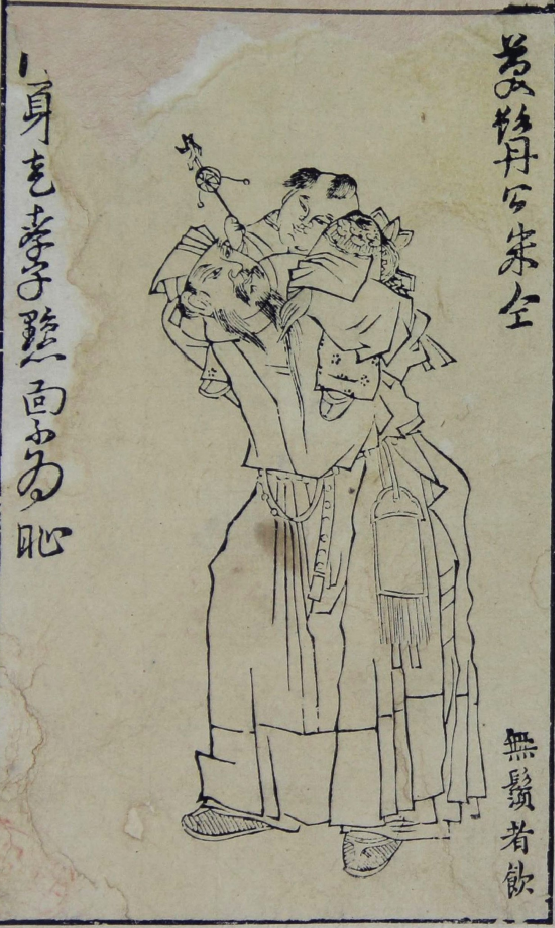
Water Margin Leaves
Zhu Tong, “Lord of the Beautiful Beard” (an archaic character in old woodblock editions; 仝 = 江)

Water Margin Leaves
©Blue Brocade Art and Culture Research
July 27, 2026
14th day of the sixth lunar month, Year of the Horse (Bingwu)
#ChenLaolian #ChenHongshou #FigurePainting #LateMingFigurePainting #NanChenBeiCui #ShuihuPai
References:
Doctoral dissertation – Research on the Relationship between Identity, Dynastic Transition, and the Art of Chen Hongshou, by Liao Yuanyu
Paper – Anutpattika-dharma-ksanti and the Lofty Ancient Painting Realm of Chen Hongshou, by Zhu Liangzhi
Author

jingyu.yuan@bluebrocade.cn